





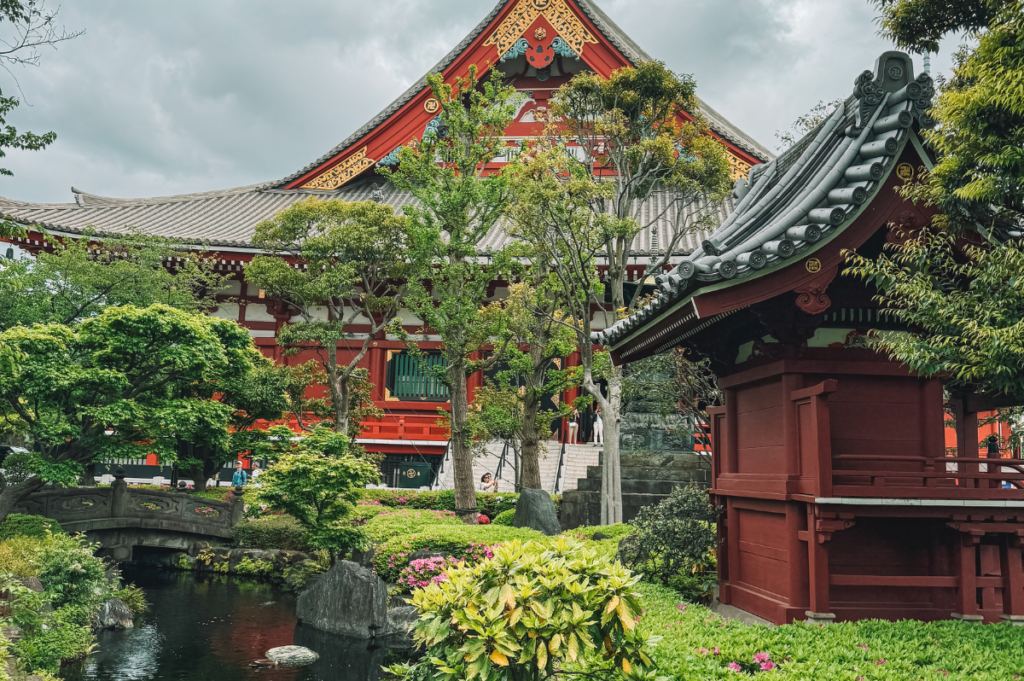
There are so many incredible things to see when visiting Japan! Many of the can-not-miss spots are the various temples and shrines, which are abundant throughout the country. These are 20 I visited during my three-week trip that I believe would be great to add to your itinerary!
Temple vs Shrine
In Japan, shrines are associated with Shinto and are dedicated to kami, the spiritual forces believed to inhabit nature, as well as to ancestral spirits. A clear indicator that it’s a shrine is the presence of a torii gate. Temples belong to Buddhism and serve as places for worship, reflection, and the study of the Buddha’s teachings.
Hasedera Temple
Kamakura
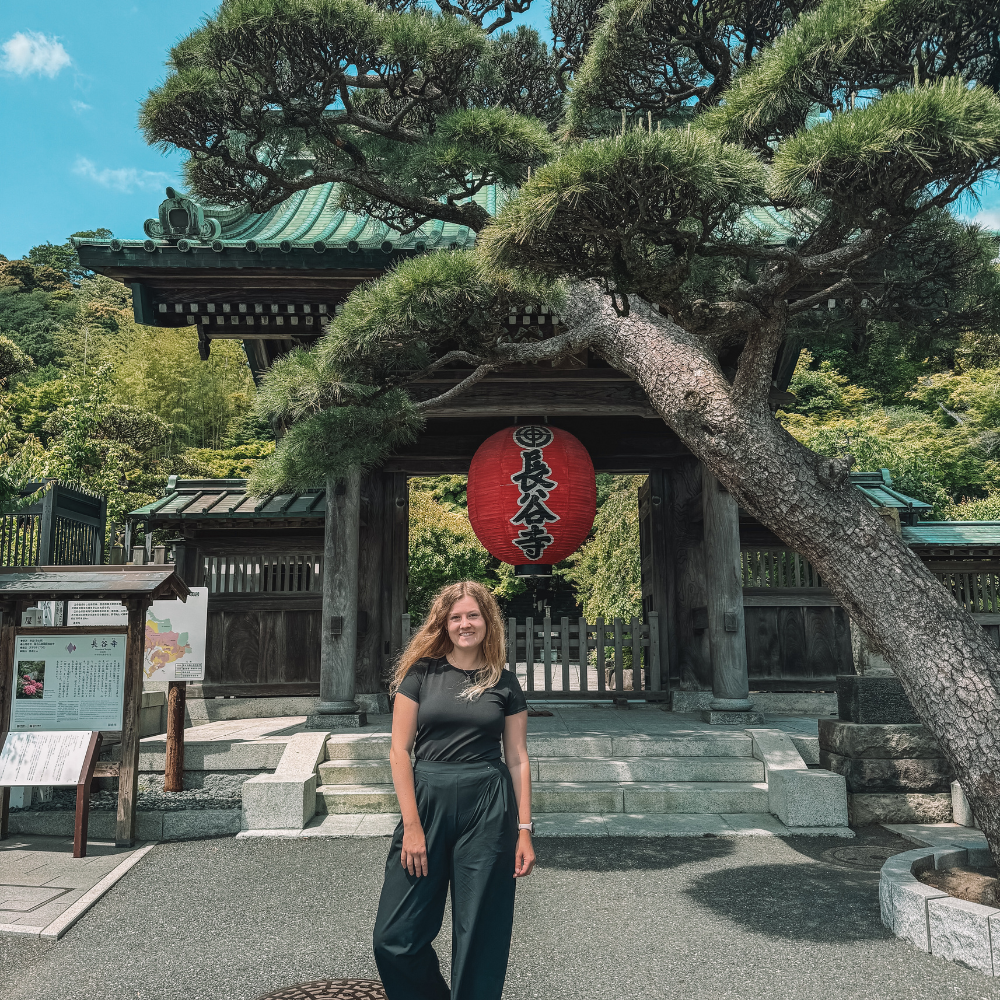
Hasedera Temple, also known as Hase Kannon, is a historic Buddhist temple in Kamakura best known for its massive 9.18-meter wooden statue of the Eleven-Headed Kannon, one of the largest in Japan. The temple is also loved for its beautiful gardens, especially the hydrangeas that bloom along Ajisai Road during the rainy season, as well as its scenic observation deck with views over Sagami Bay and Yuigahama Beach.
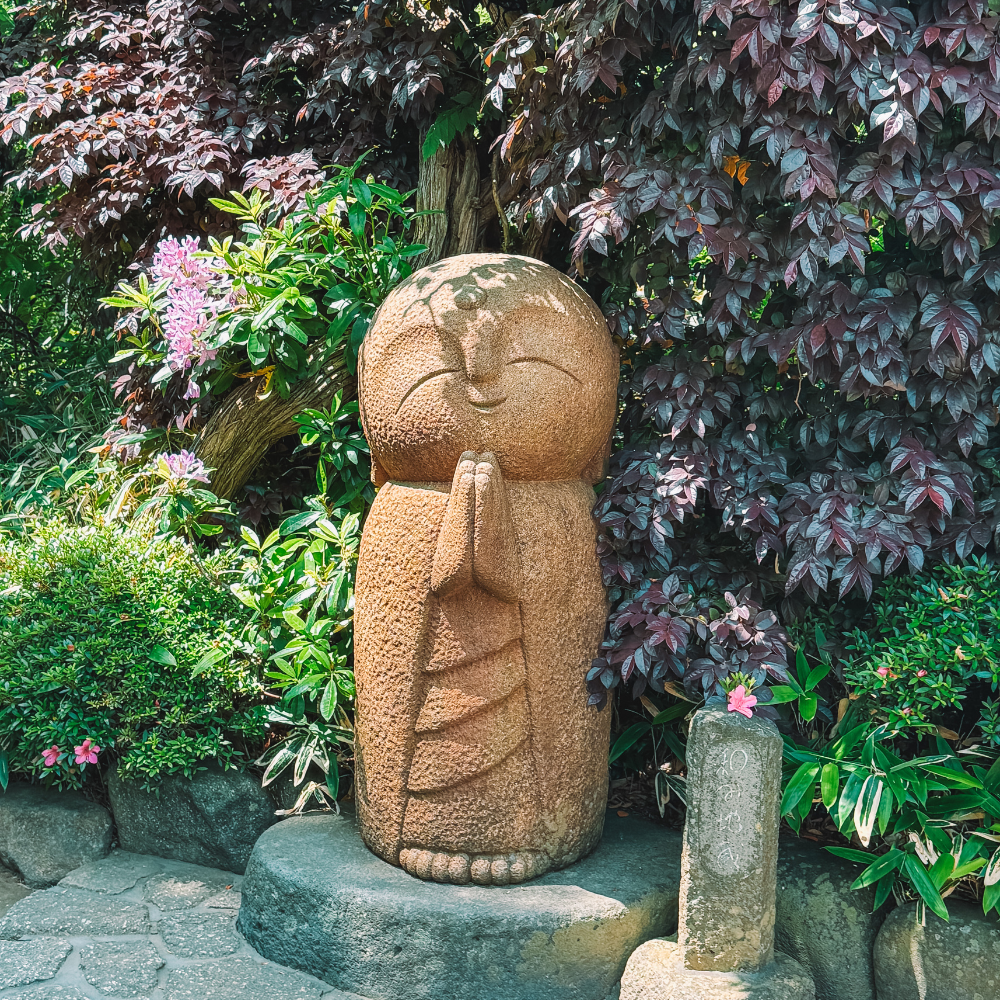

There are tons of very cute statues, and I highly recommend going through the cave, but watch your head!
If you collect stamps, there’s one available near the entrance.
Great Buddha of Kamakura (Kotoku-in Temple)
Kamakura
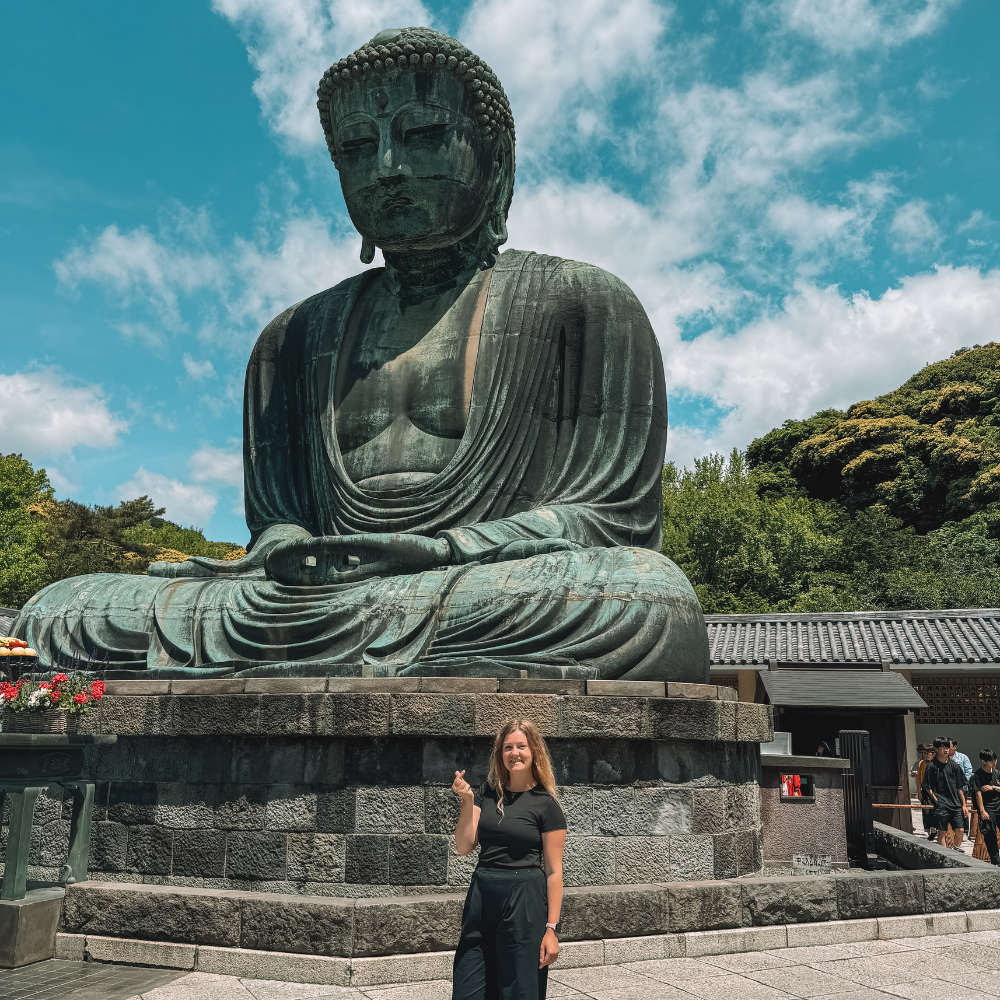
The Great Buddha of Kamakura is a huge bronze statue of Amida Buddha located at Kotoku-in Temple. Standing 13.35 meters tall (including its base) and weighing around 121 tons, it’s the second-tallest bronze Buddha statue in Japan, after the one at Todaiji Temple in Nara.
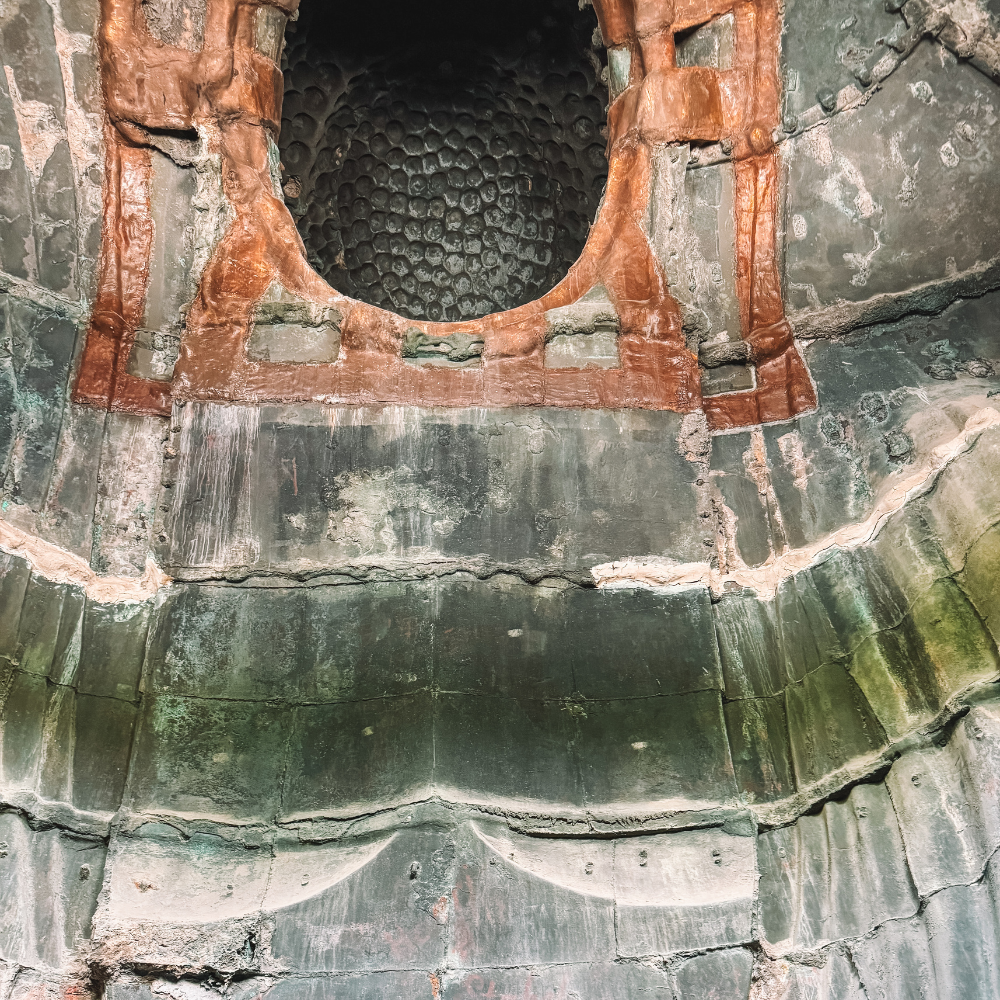
You do need to pay ¥400 in order to enter the grounds with the statue. If you’re interested, you can also go inside the Buddha for an additional ¥50, payable at the sculpture’s entrance. It is quite warm inside, so I wouldn’t stay too long, but it’s worth going inside!
Zeniarai Benten Shrine
Kamakura
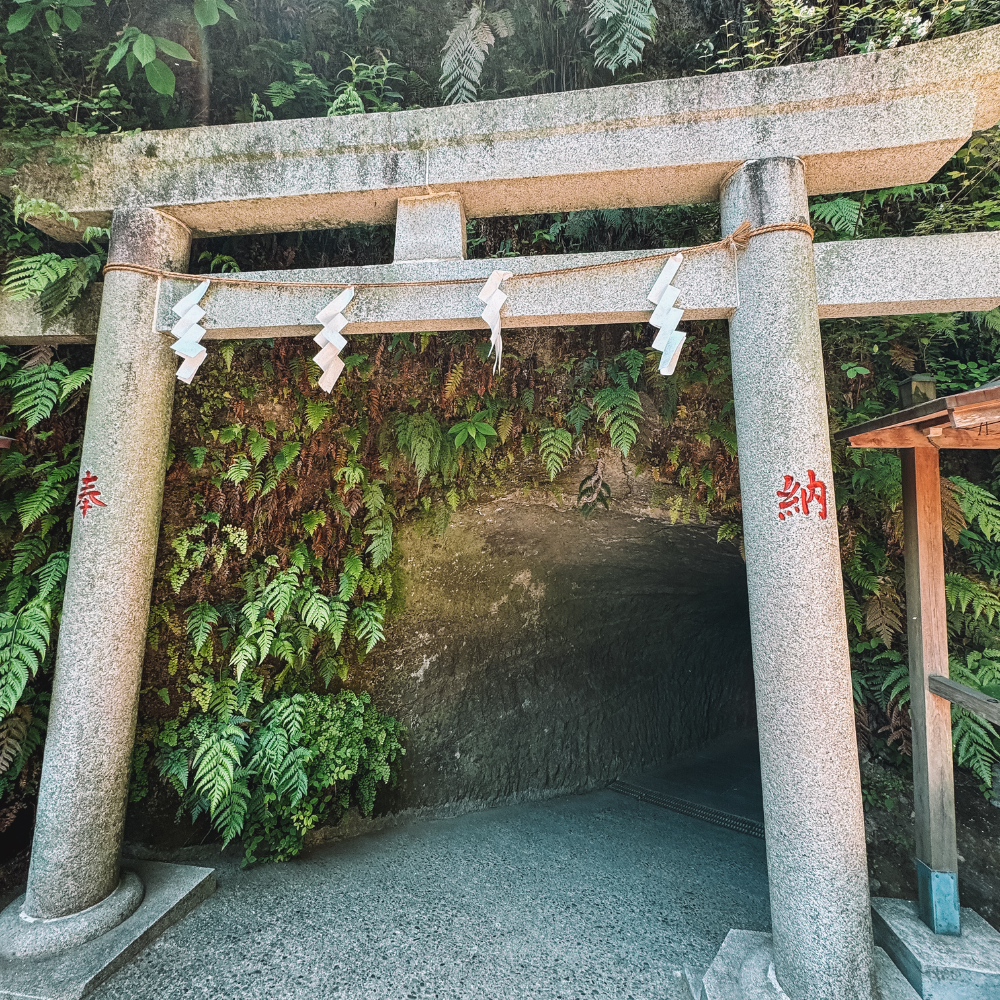
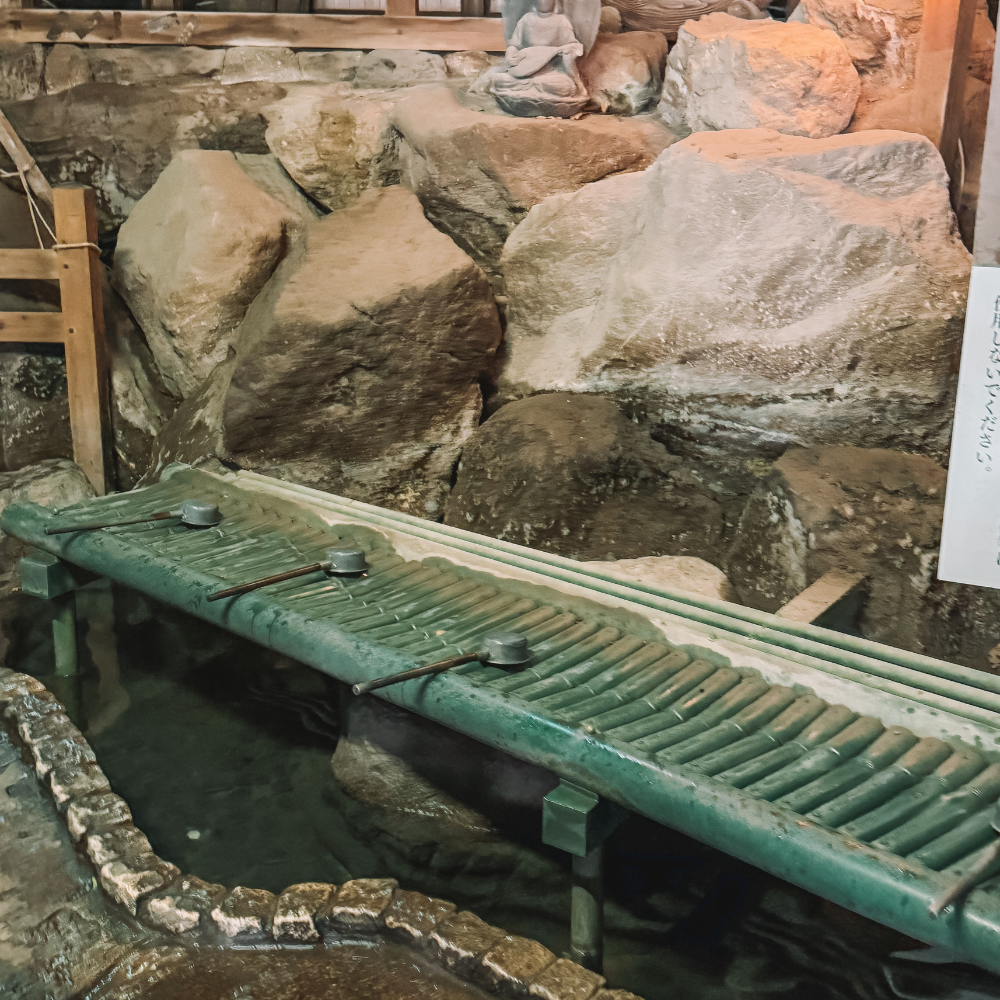
Zeniarai Benten Shrine is a well-known historical and spiritual site in Kamakura, dating back to the 12th century during the Kamakura period, making it one of the area’s oldest shrines. Legend has it that it was founded by Minamoto no Yoritomo after he received a divine message in a dream, instructing him to build a shrine to help bring peace to the country.
The shrine is especially famous for its unique tradition of “money washing,” where visitors rinse money in its spring water in hopes of multiplying their wealth. This practice, along with its history and setting, has made it a popular attraction for both locals and tourists.
If you’re going to walk to this shrine, I just want to note that you do have to climb a large hill.
Kuzuharaoka Shrine
Kamakura
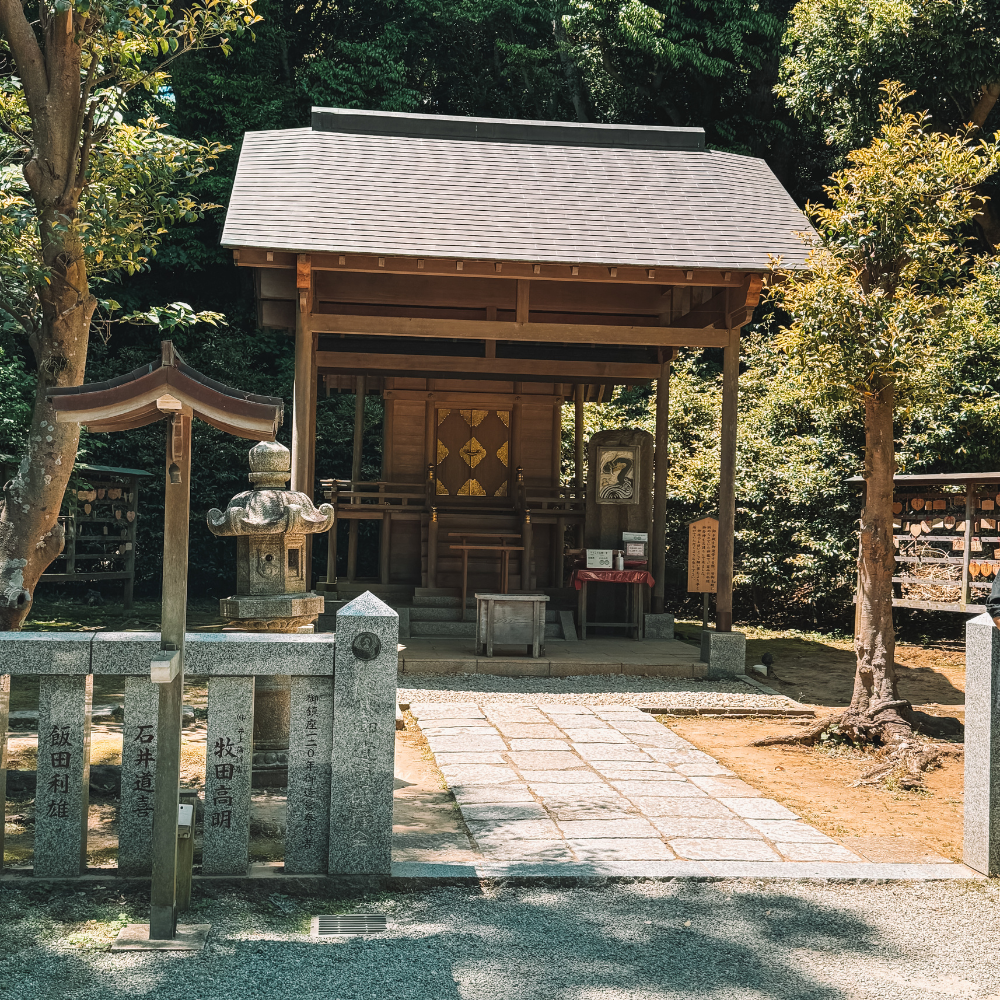
Kuzuharaoka Shrine is a quiet, lesser-known shrine in Kamakura located right along the Daibutsu Hiking Trail. It’s especially known for its unique ritual, in which visitors buy a small ceramic plate for 100 yen and smash it against a stone to symbolically let go of bad luck and worries.
The shrine is easy to reach from Genjiyama Park or while hiking toward Jochi-ji Temple, and it has simple shrine buildings, picnic tables, and a small shop for visitors.
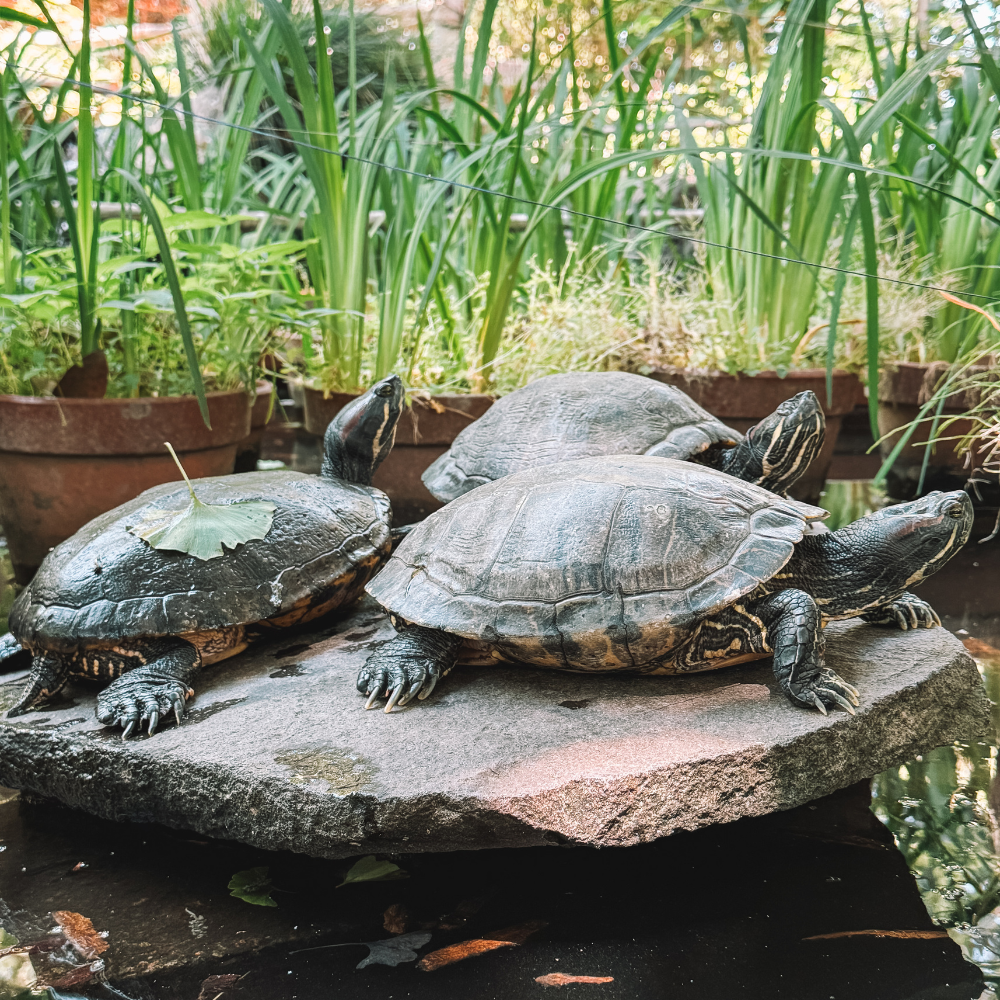
I found this shrine on my way to the park and found it very sweet! There was also a group of turtles hanging out in a small pond, which was adorable.
Tsurugaoka Hachimangu Shrine
Kamakura
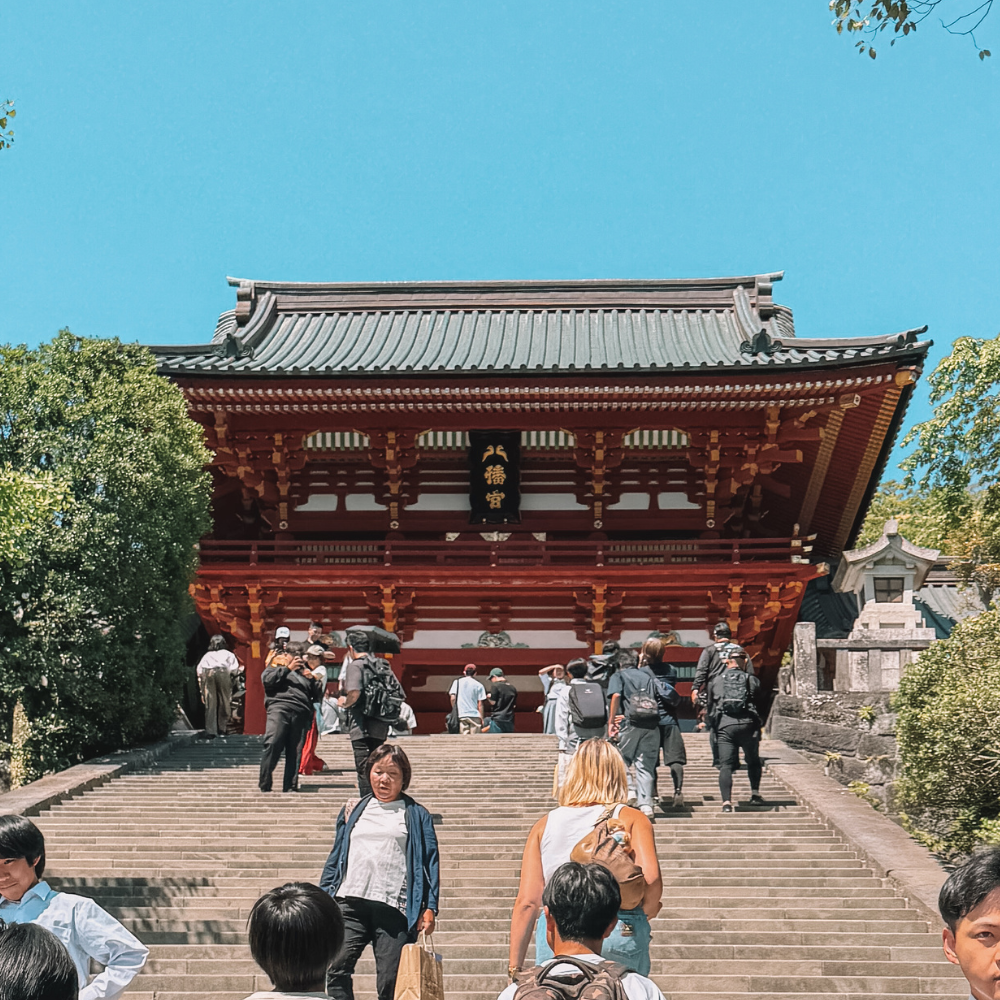
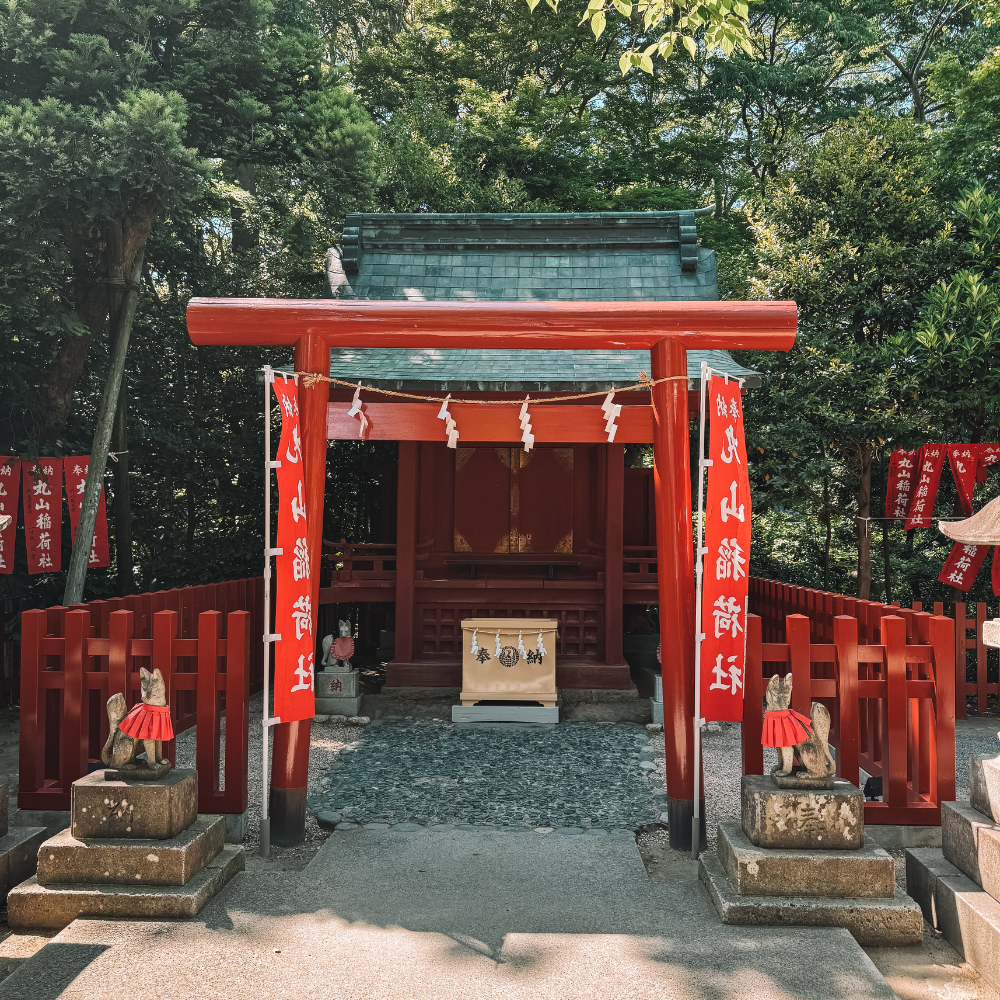
Tsurugaoka Hachimangu Shrine is the most important Shinto shrine in Kamakura, dedicated to Hachiman, the protector god of the samurai. It was first founded in 1063 by Minamoto no Yoriyoshi and later moved to its current spot in 1180 by Minamoto no Yoritomo, where it became a major spiritual center for the Kamakura shogunate.
The shrine is well known for its impressive layout, especially the long approach road lined with red torii gates. Inside, you’ll find highlights like the Genpei Ponds and the main hall, which was rebuilt in 1828. It’s also a lively cultural spot today, hosting events like New Year visits, horseback archery, and seasonal festivals, as well as a museum with historical artifacts you can check out. To be honest, most of the things on display are replicas.
The main grounds are free to see, but the museum has a ¥200 fee, which can be purchased from a vending machine near the entrance.
O-Torii Gate of Itsukushima Shrine
Miyajima
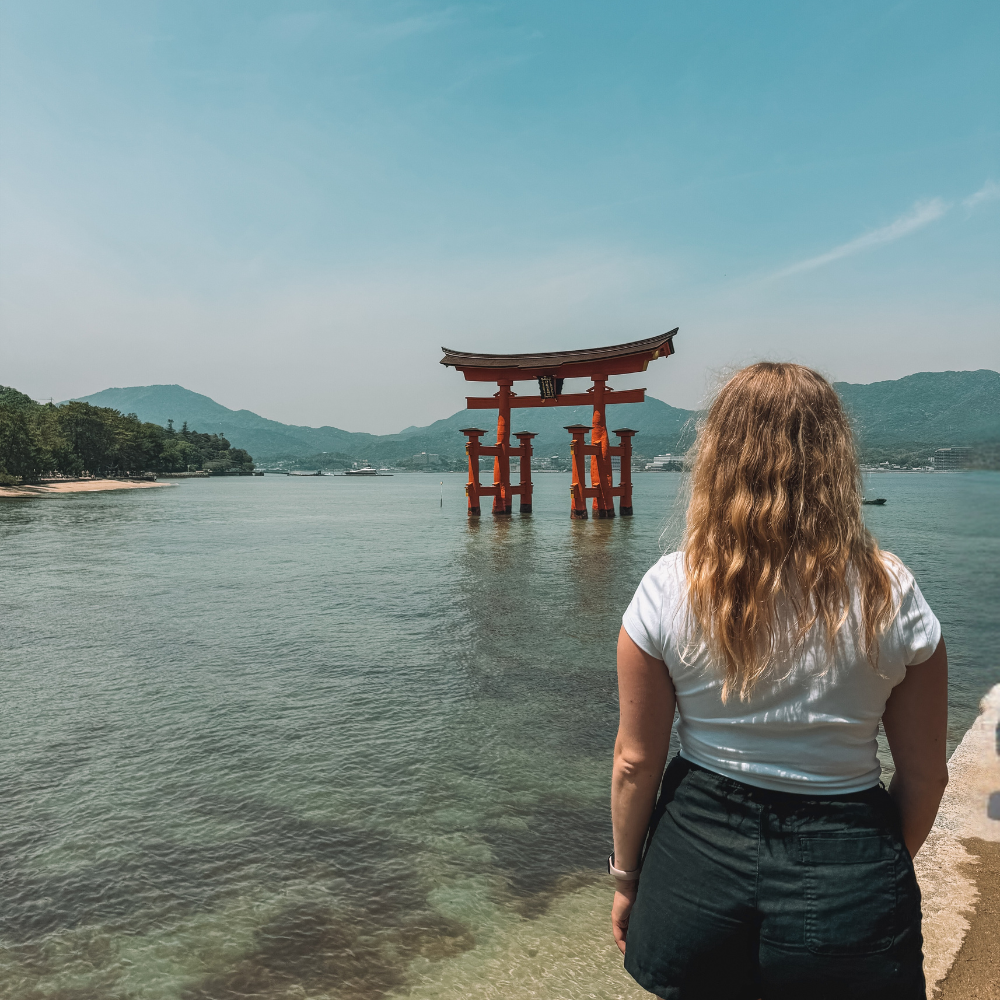
Probably the most recognizable great torii gate in Japan, it stands in the sea, about 16.8 meters high, and during high tide appears to be floating. The present O-Torii construction is based on the Ryobu-torii style, a wooden Shinto gate design characterized by four supporting pillars.
The most popular spot to get a picture is on the dock right in front. However, I visited during Golden Week. So, not only was there an insane line, most likely at least a two-hour wait, but you had to pay to take a photo there. During non-holiday weeks, I was told you can usually go up without issue, free of charge. If you’re ok with a slight angle, there are plenty of other great places to get a picture, which is what I did.
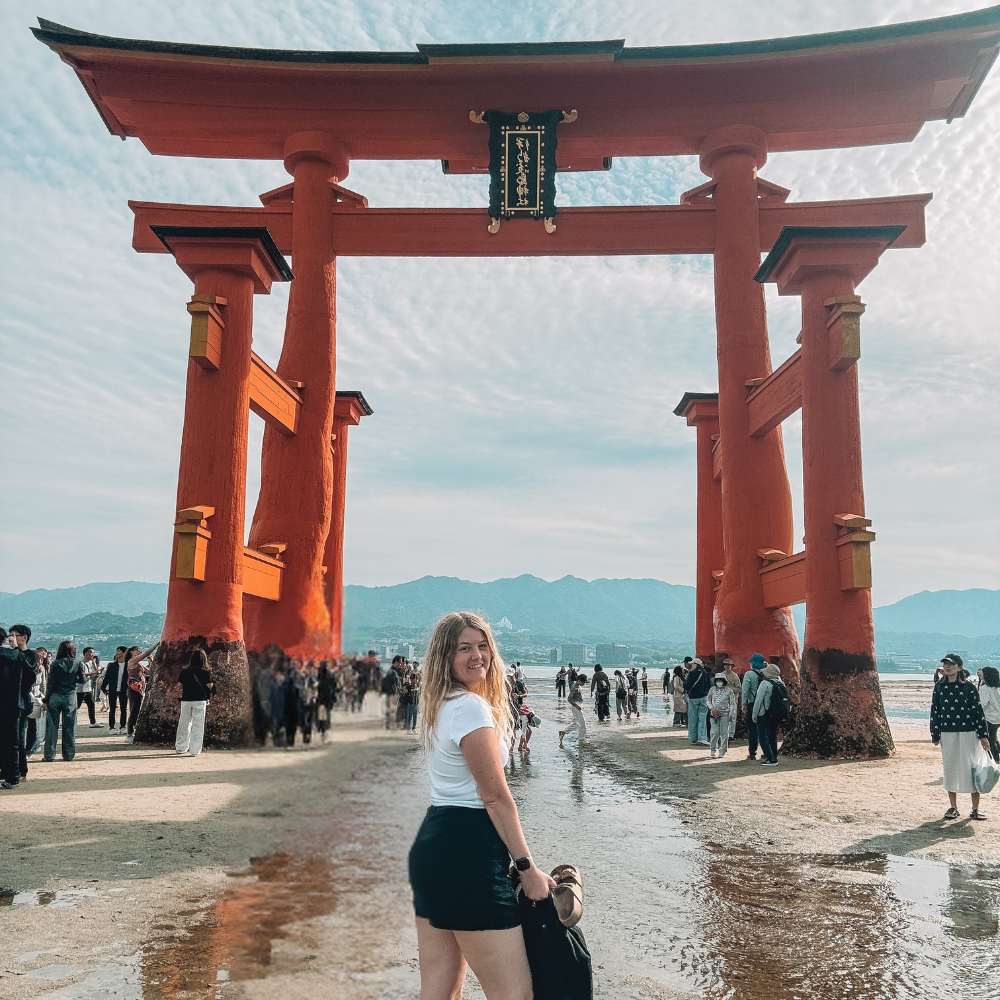
During high tide isn’t the only time to get a picture, either. I wouldn’t wait to get your floating photo if you want one, because the tide shifts during the day, revealing the sand. You can walk straight up to it! It was very cool getting to walk under and get close to the gate!
Daisho-in Temple
Miyajima
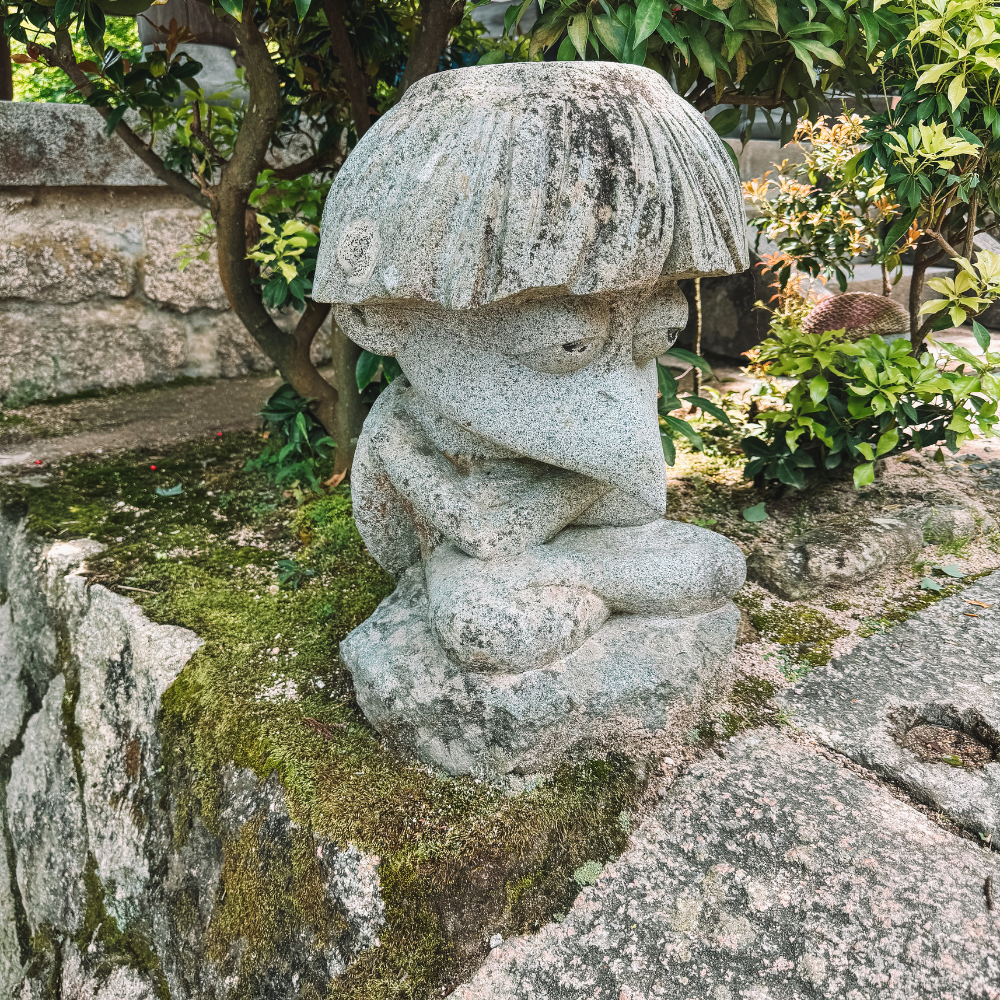
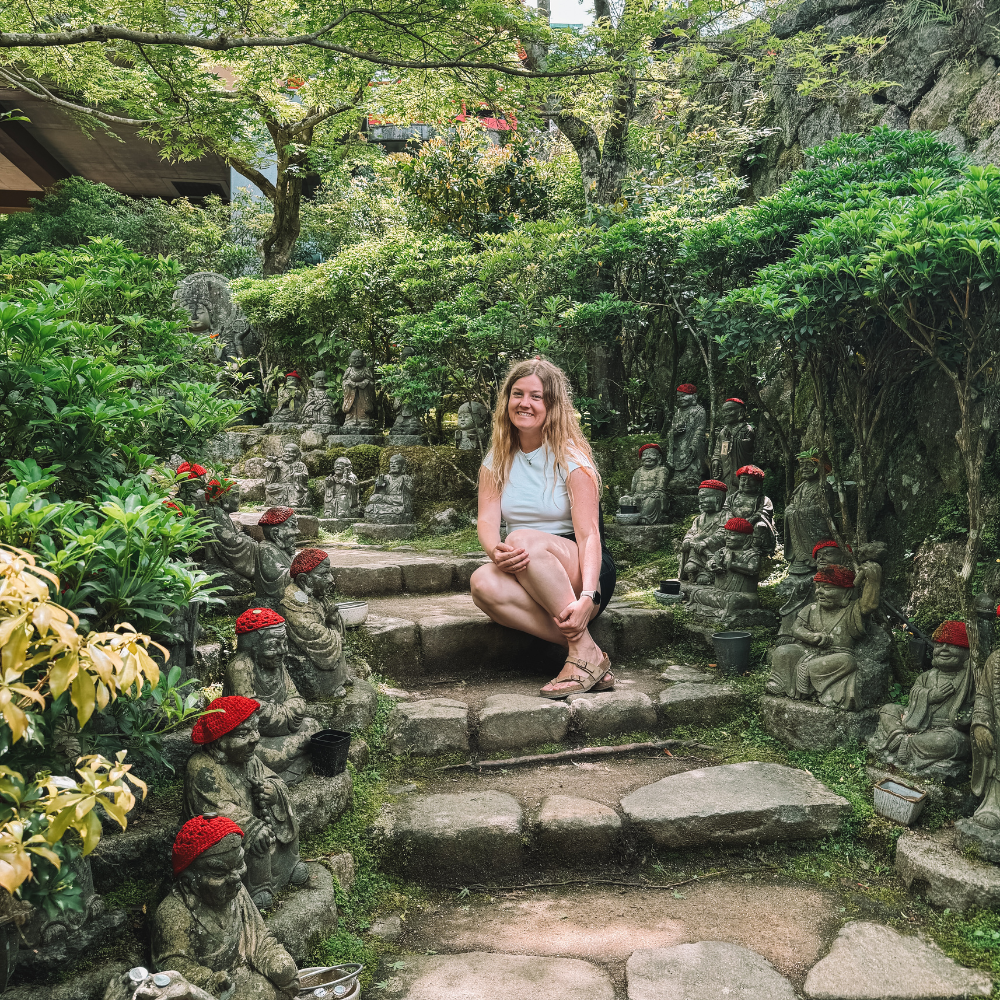
Daisho-in Temple is the oldest and most important Shingon Buddhist temple on Miyajima, dating back to 806 AD. Sitting at the base of Mount Misen, it’s known as one of Japan’s top temples for warding off bad luck and bringing good fortune. It’s accessible via a short hike up stone staircases, with many interesting statues and sights along the way.
My favorite feature of the temple was Gohyaku-rakan, a long stone staircase with 500 statues of Buddha’s disciples. The best part is they’re all wearing little red knitted hats, and it’s absolutely adorable.
There’s also a cafe where the proceeds support the temple. I had an iced matcha latte, which ran me ¥900, not cheap, but I can think of it as a donation with a perk.
Hiroshima Gokoku Shrine
Hiroshima
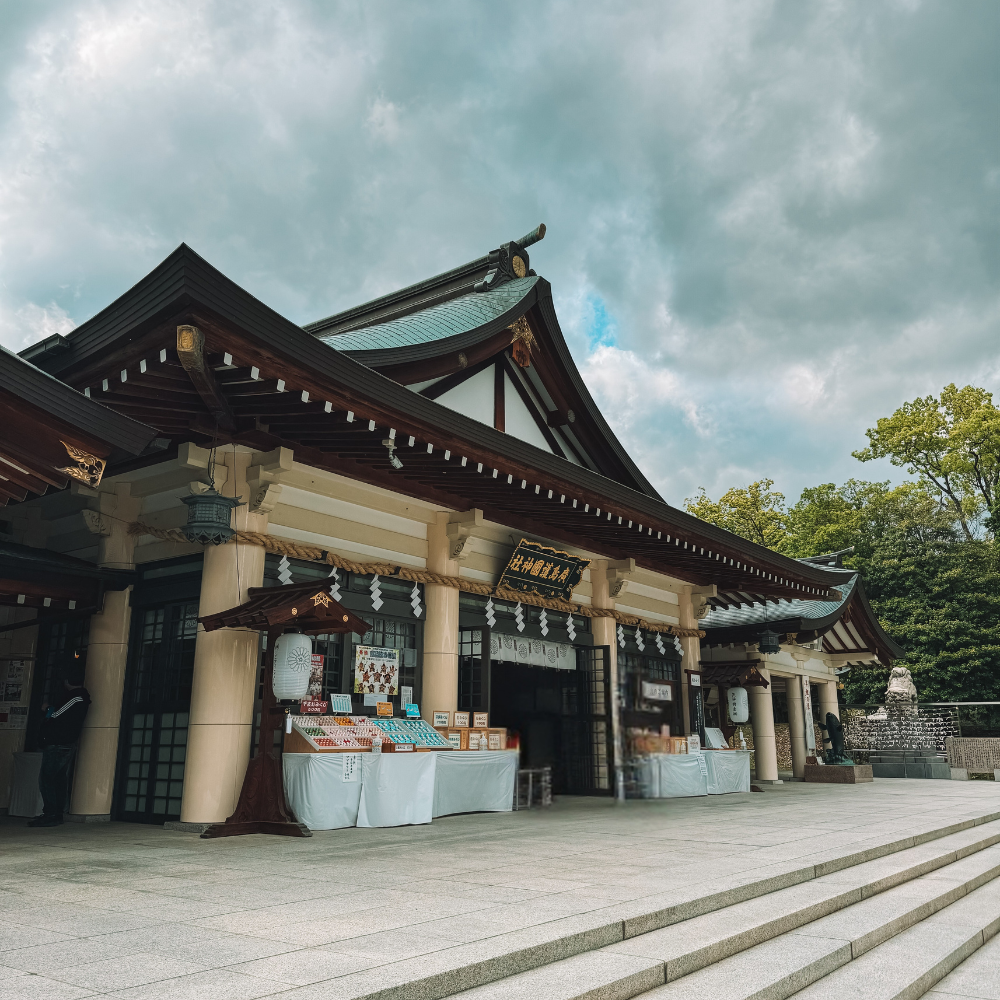
A Shinto Shrine, originally founded in 1869. In 1934, it was dismantled and relocated to the site where the Hiroshima Municipal Stadium now stands. The original was destroyed in 1945, but it was rebuilt in 1965. It’s now within the grounds of Hiroshima Castle.
The area is quite small, but it’s an easy stop if already visiting the castle.
Namba Yasaka Jin-ja Shrine
Osaka
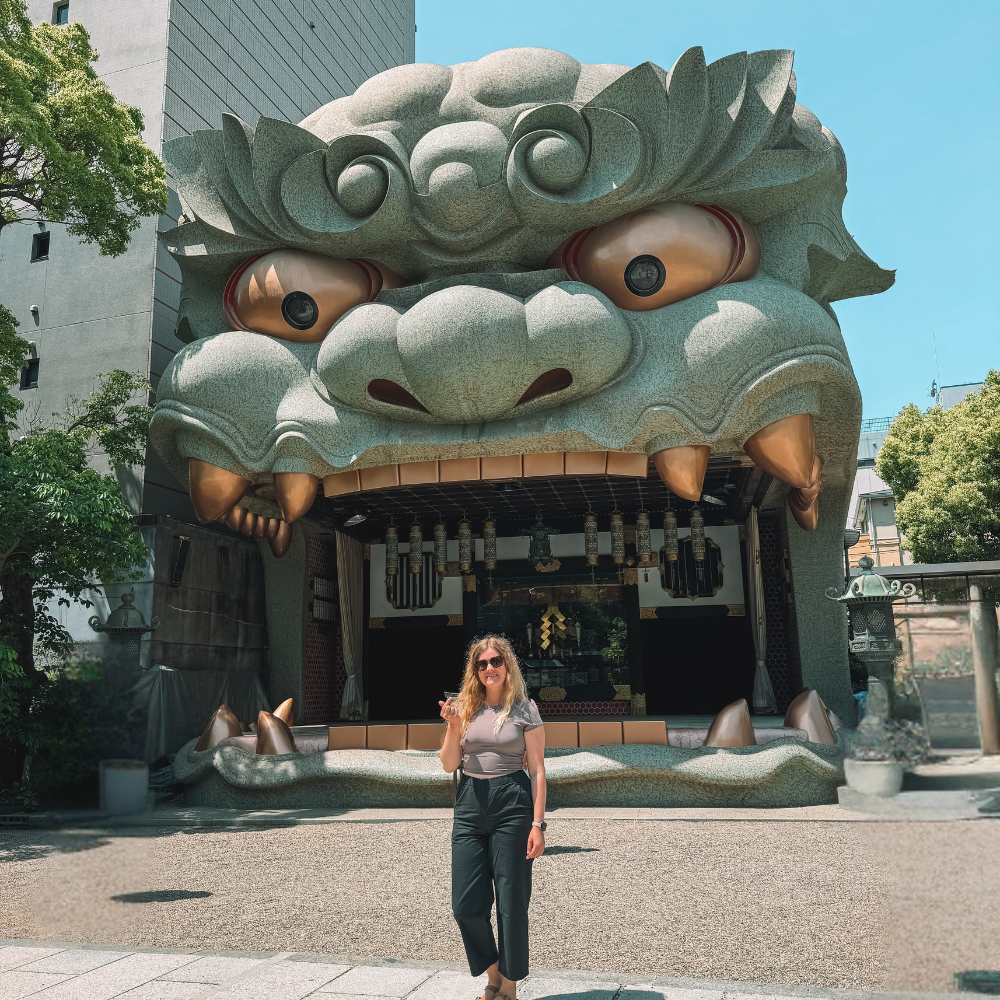
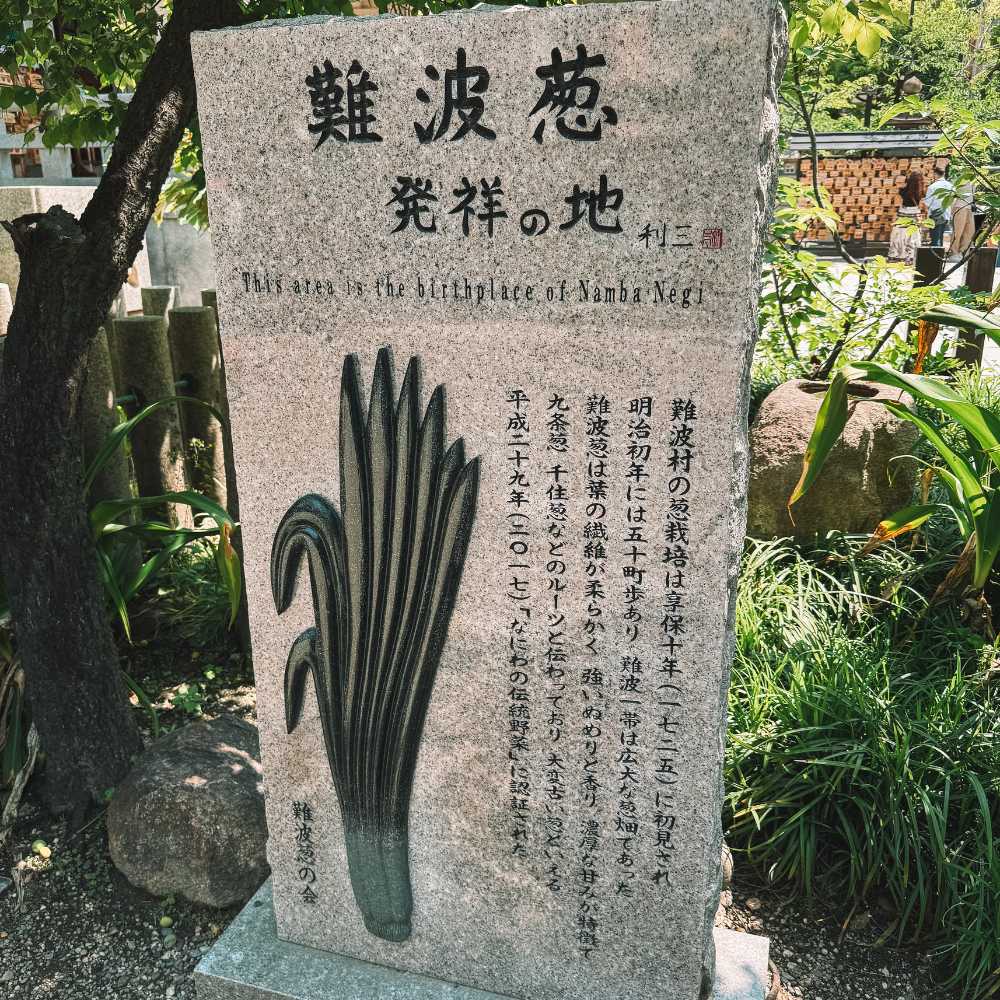
One of the most show-stopping shrines right in the middle of Namba, and home to Namba’s guardian deity. This shrine is quite small, but it is well known for its lion-shaped stage, which is its main draw. A unique place of worship, the stage was built in 1975 with a distinctly retro Osaka feel. The lion’s mouth is believed to swallow evil spirits and bring good luck, particularly to those in school and business matters.
You probably don’t need more than 20 minutes here, tops, since it’s such a small area. Between getting pictures, reading a few signs, and my sister getting her Goshuin, it’s a nice and easy stop!
Hokoku Shrine
Osaka
A Shinto shrine inside Osaka Castle Park, dedicated to Toyotomi Hideyoshi, who built Osaka Castle. The shrine was originally established in 1879 and moved to its current location in 1956. Overall, it’s a more modern feeling and a small area. I’d recommend stopping if you’re already in the area, but no need to make a special visit.
Shitenno-ji Temple
Osaka
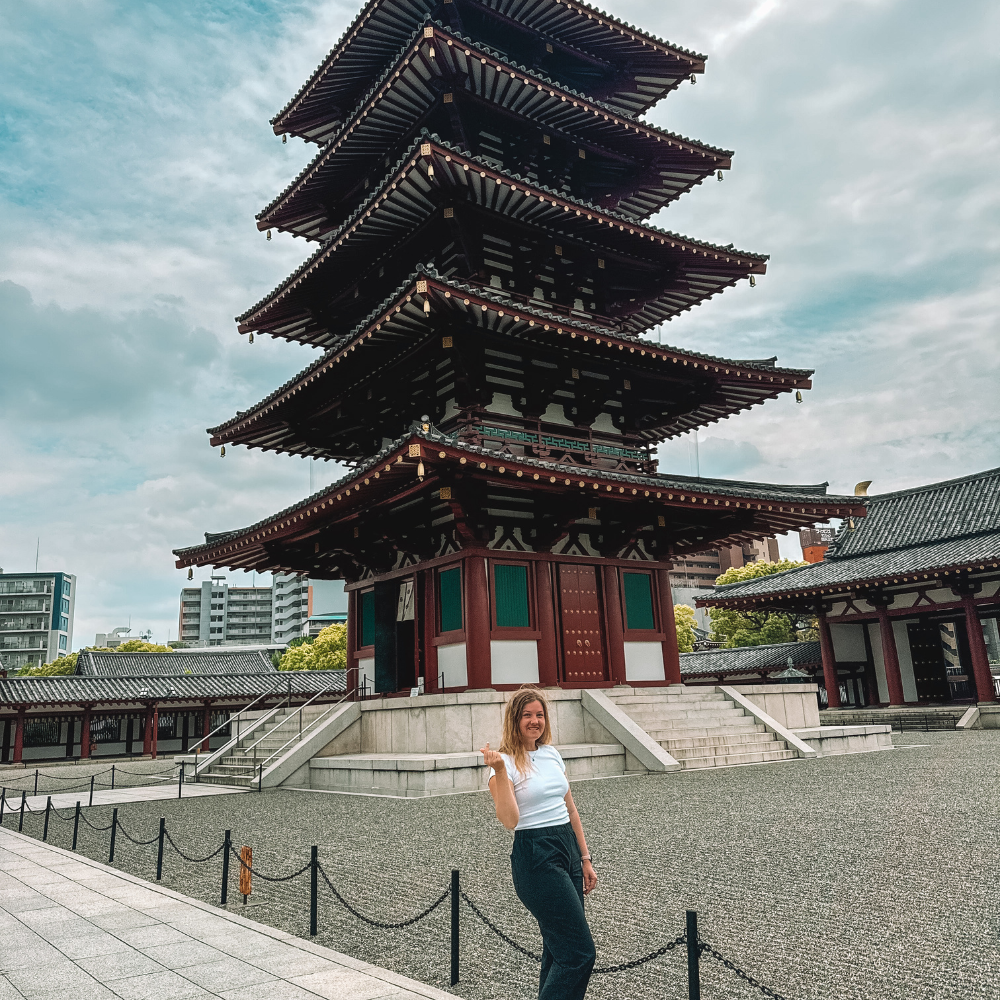
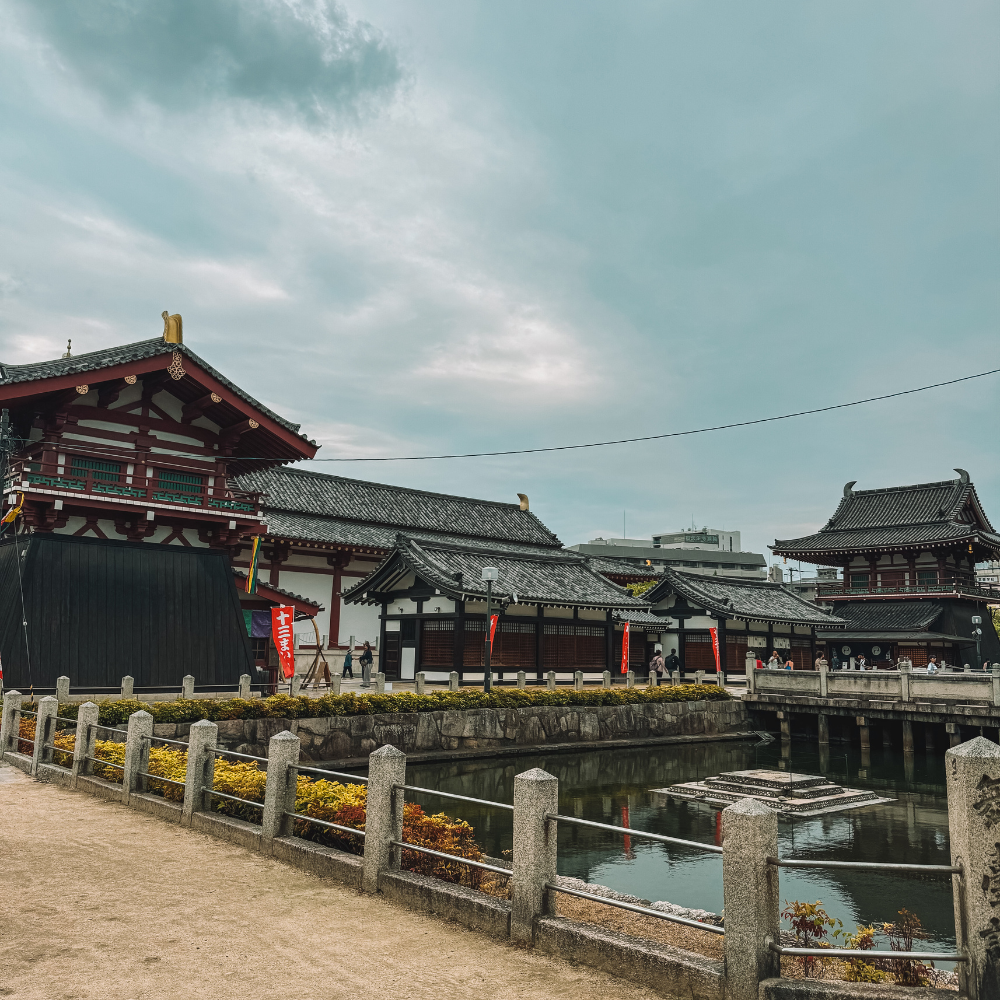
Shitenno-ji Temple is a historic Buddhist temple, founded in 593 AD by Prince Shotoku. It’s recognized as Japan’s first state-sponsored Buddhist temple and the head temple of the non-sectarian Wa-shu school of Buddhism. Unfortunately, the temple’s buildings burned down several times over the centuries. However, they were always carefully reconstructed to reflect the original 6th-century design. So what you see today is not original.
The outer grounds are free to enter! However, admission to the inner precinct, the Gokuraku-jodo Garden, and the treasure house is paid. I only visited the inner precinct and was able to go inside each building, including the five-story pagoda. You can also walk to the top of the pagoda, but you must remove your shoes and carry them in one of the provided bags. It’s a very cool experience, and the stairs aren’t too bad.
Flea markets are held monthly on the outer grounds. They had a used book market during my visit!
Todai-ji Temple
Nara
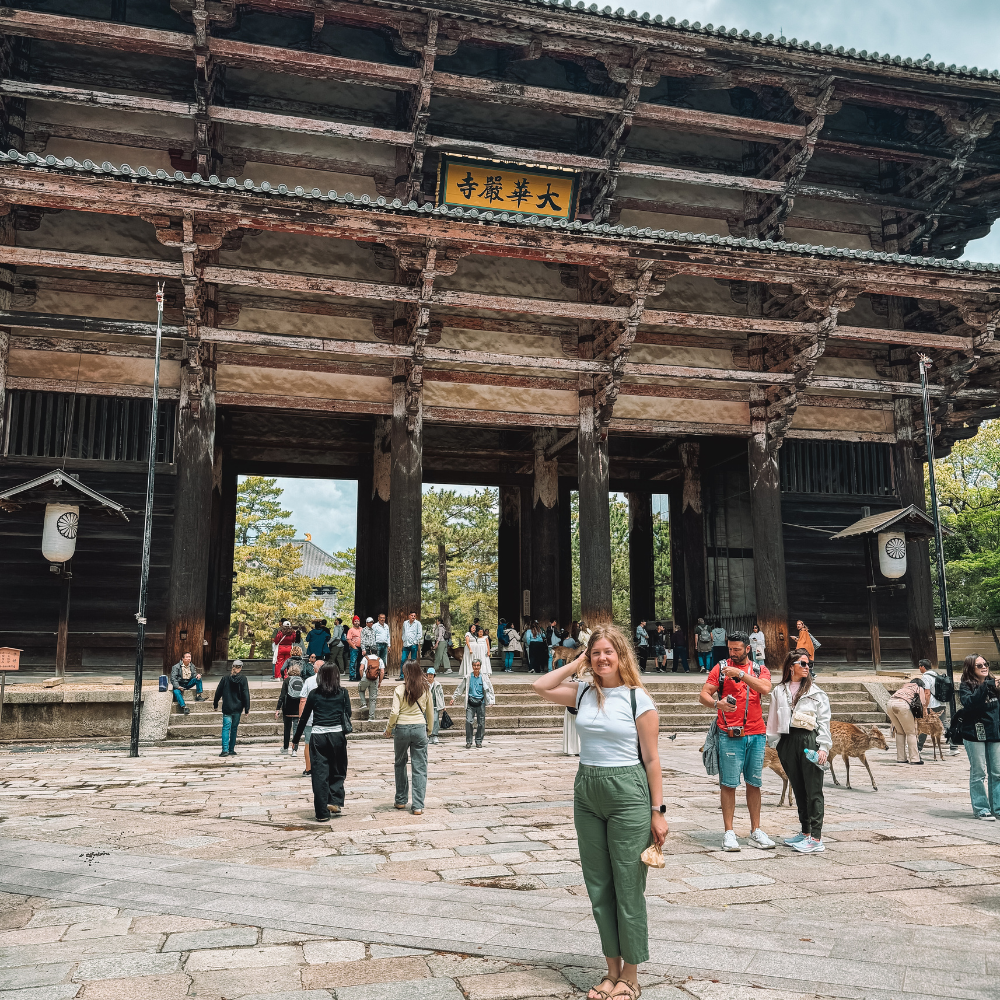
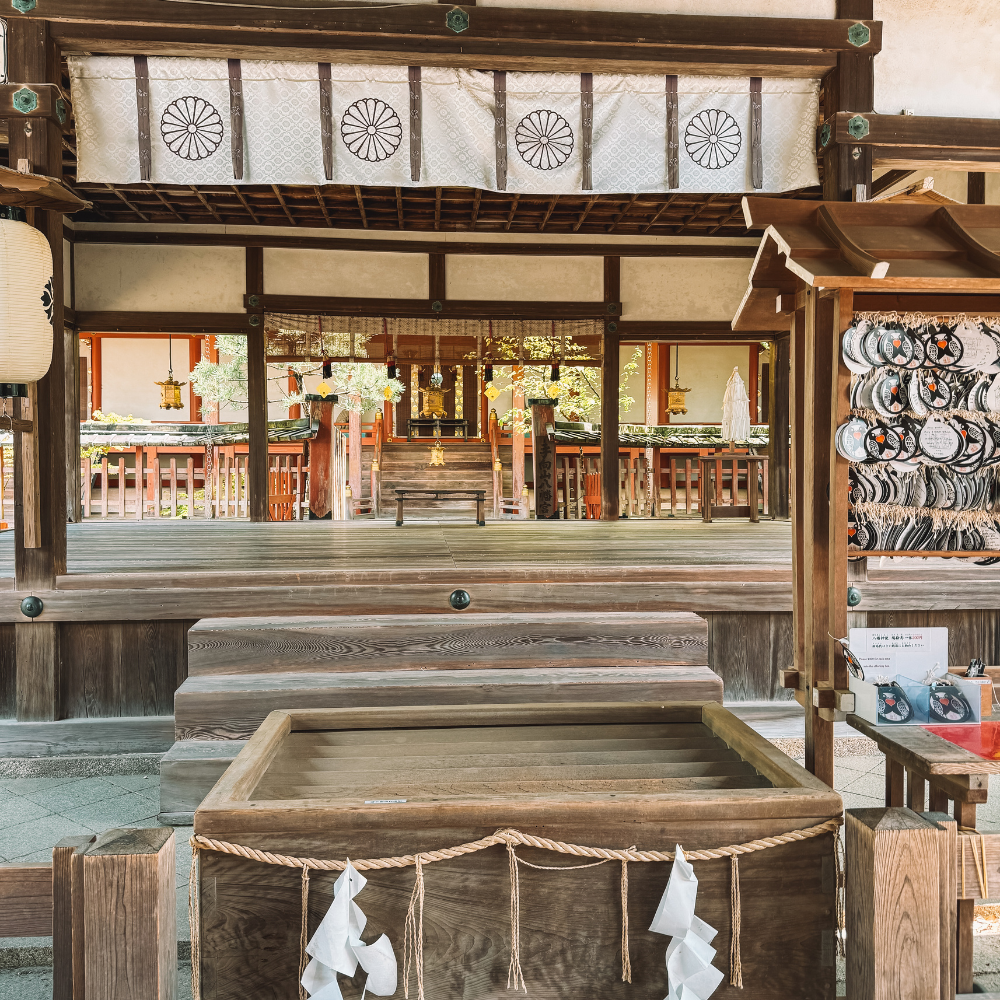
One of Japan’s most significant Buddhist complexes, established in 752 CE by Emperor Shomu. It served as the head temple for all provincial Buddhist temples in Japan. At one point wielding so much power that the capital was moved away from Nara to Kyoto.
The temple is renowned for the Great Buddha Hall. It houses one of the largest wooden structures in the world, at 57 meters wide, 50 meters deep, and 48 meters high. Inside the hall is the Great Buddha, a 15-meter-tall bronze statue of Vairocana Buddha cast from over 400 tons of bronze. It’s one of the largest bronze Buddha statues in the world!
Kasuga Taisha Shrine
Nara
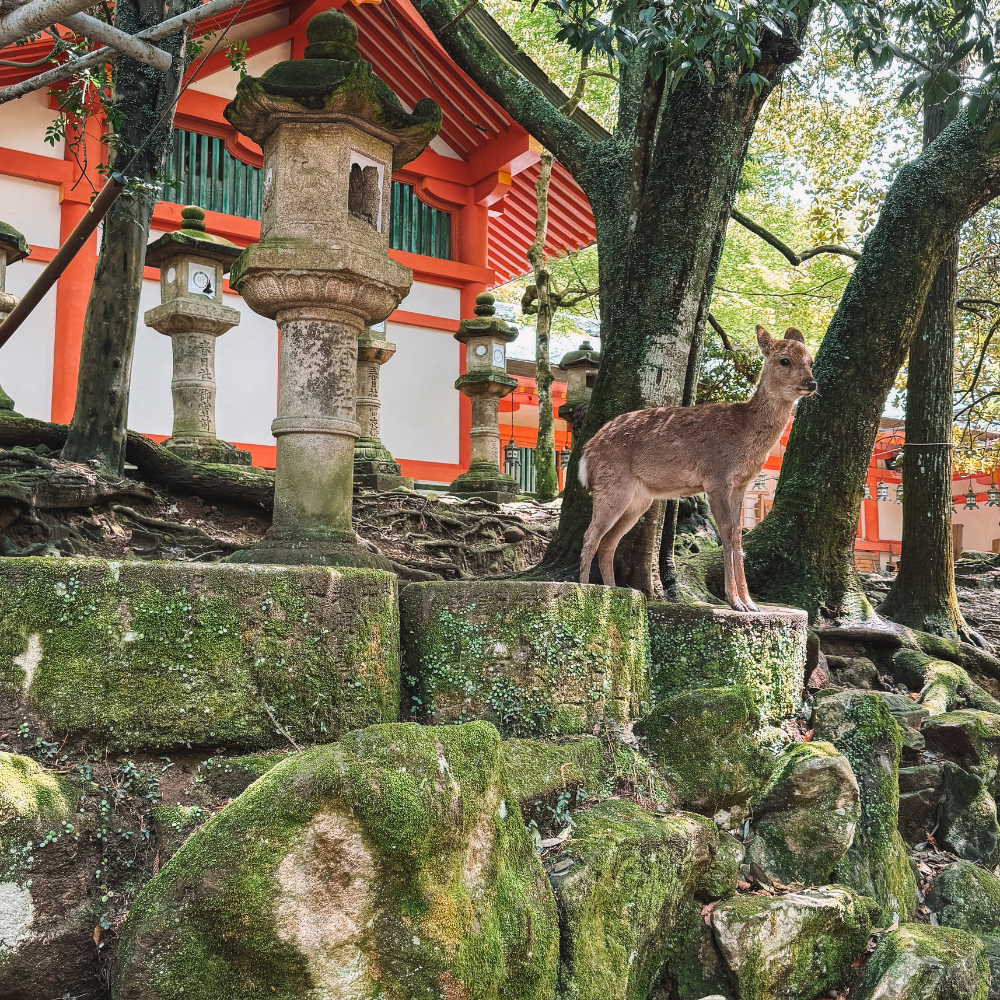
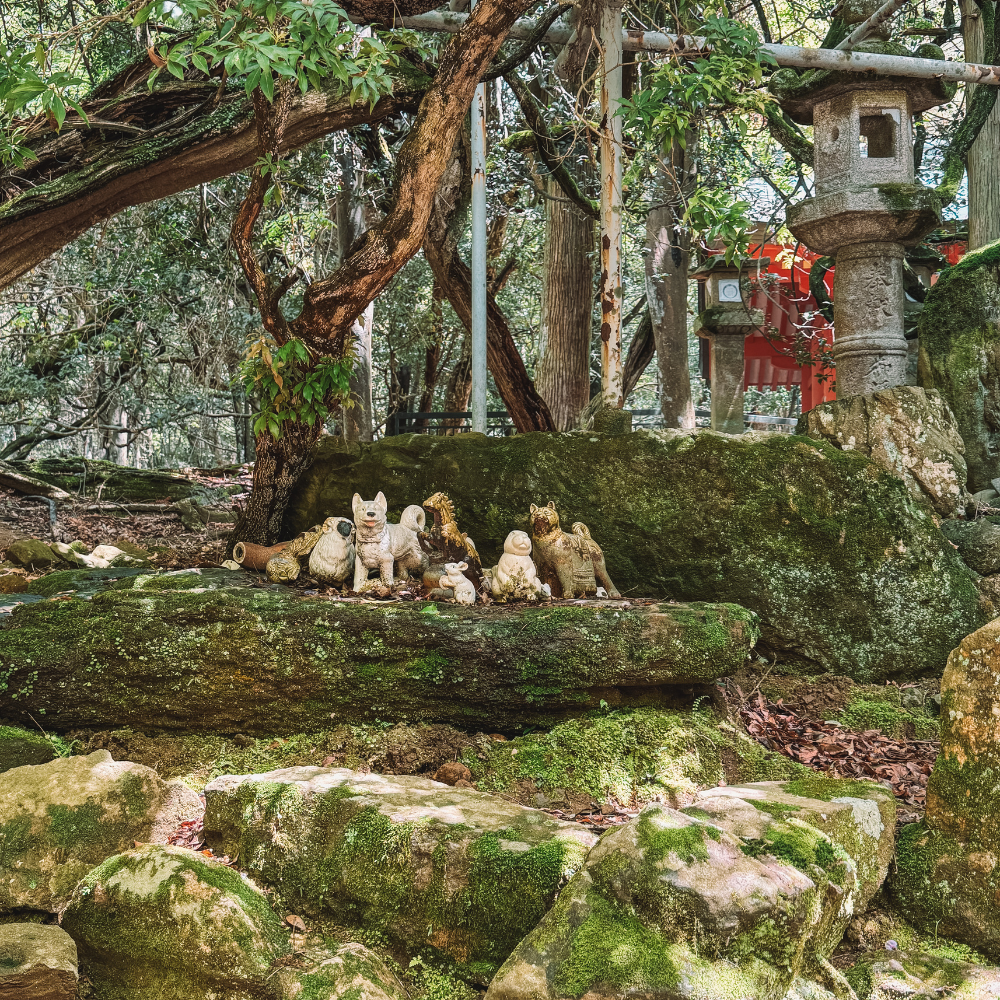
Kasuga Taisha is a historic Shinto shrine in Nara Park, founded in 768 CE as the shrine of the influential Fujiwara clan. It’s part of the UNESCO-listed Historic Monuments of Ancient Nara and is famous for its bright vermilion buildings, the nearby Kasugayama Primeval Forest, and the thousands of stone and bronze lanterns that line the pathways. You’ll also find more sacred deer that roam the grounds.
Wakamiya Shrine
Nara
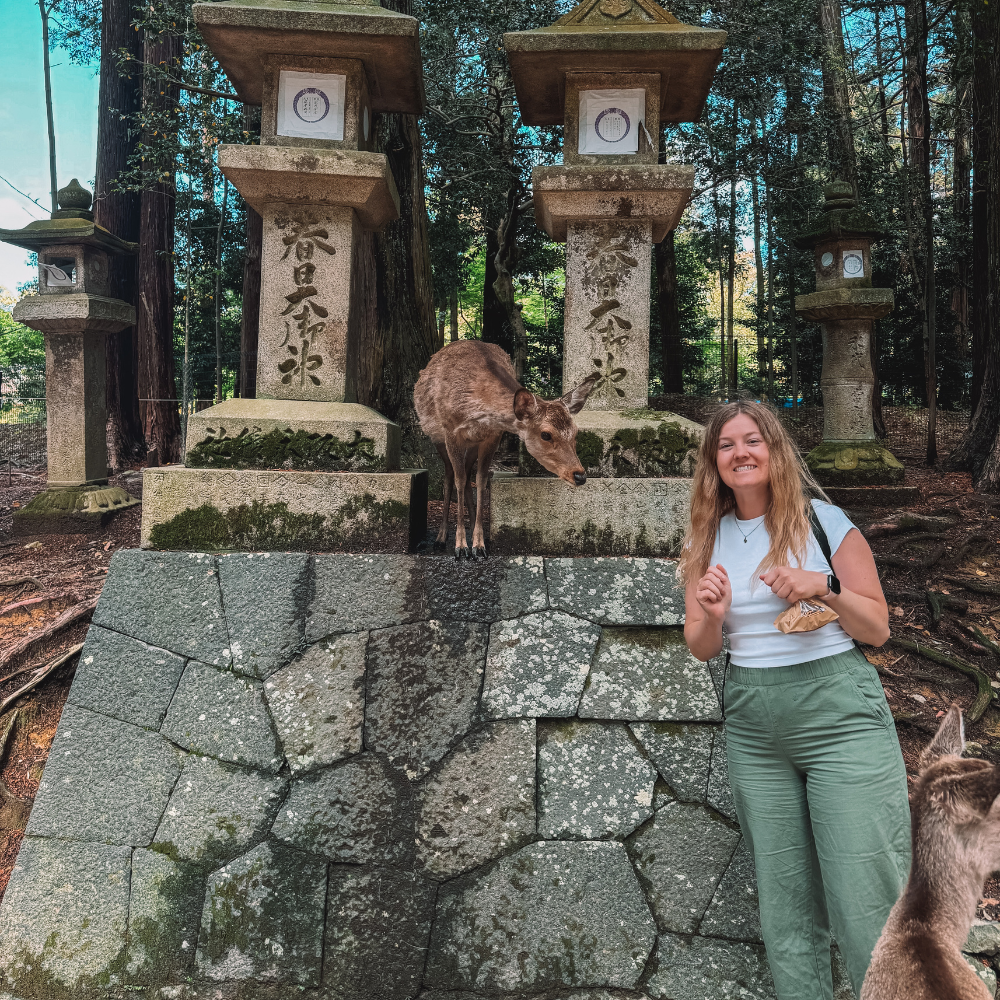
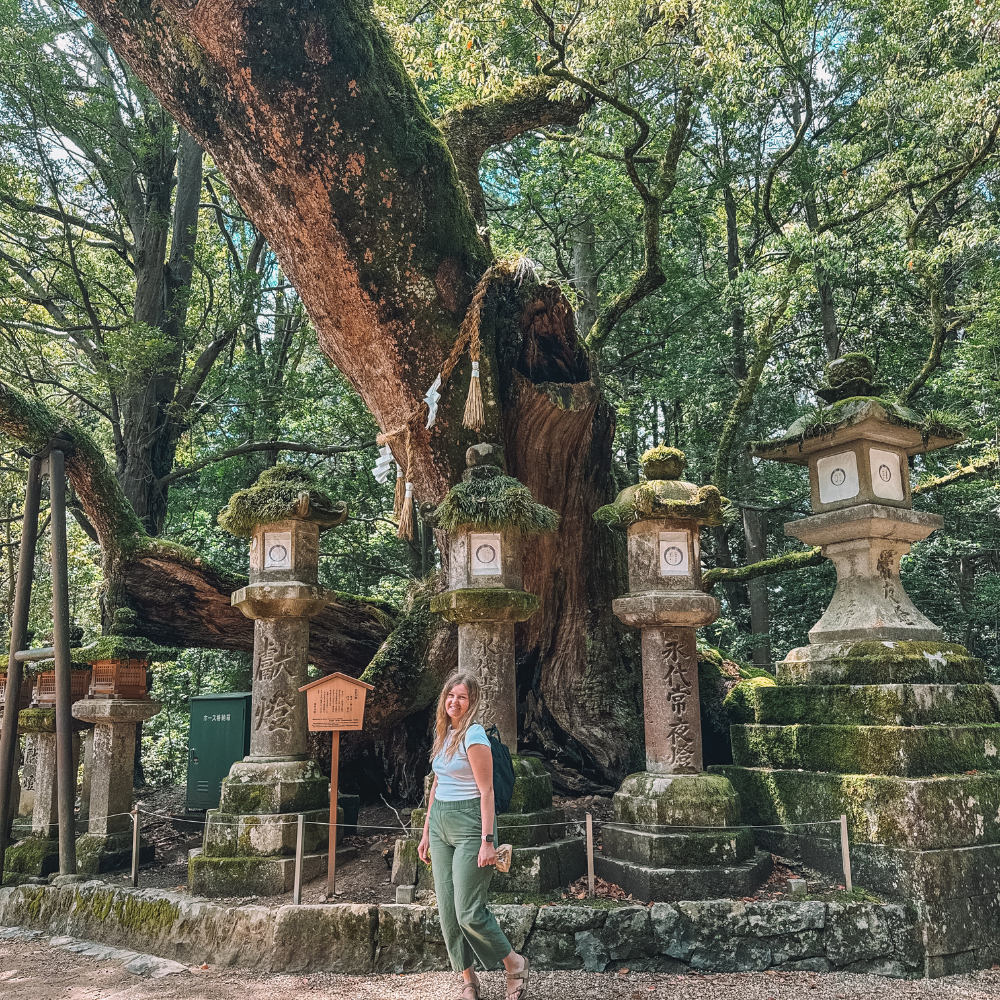
Wakamiya Shrine is a smaller shrine located within the Kasuga Taisha complex in Nara. Founded in 1135, it’s dedicated to Ame no Oshikumone no Mikoto, the Shinto deity associated with water and purification. Compared to the main shrine, it has a quieter, more peaceful atmosphere, with 15 smaller shrines scattered across the grounds. It’s best known as the main site of the annual Kasuga Wakamiya Onmatsuri festival held each December.
Fushimi Inari-taisha
Kyoto
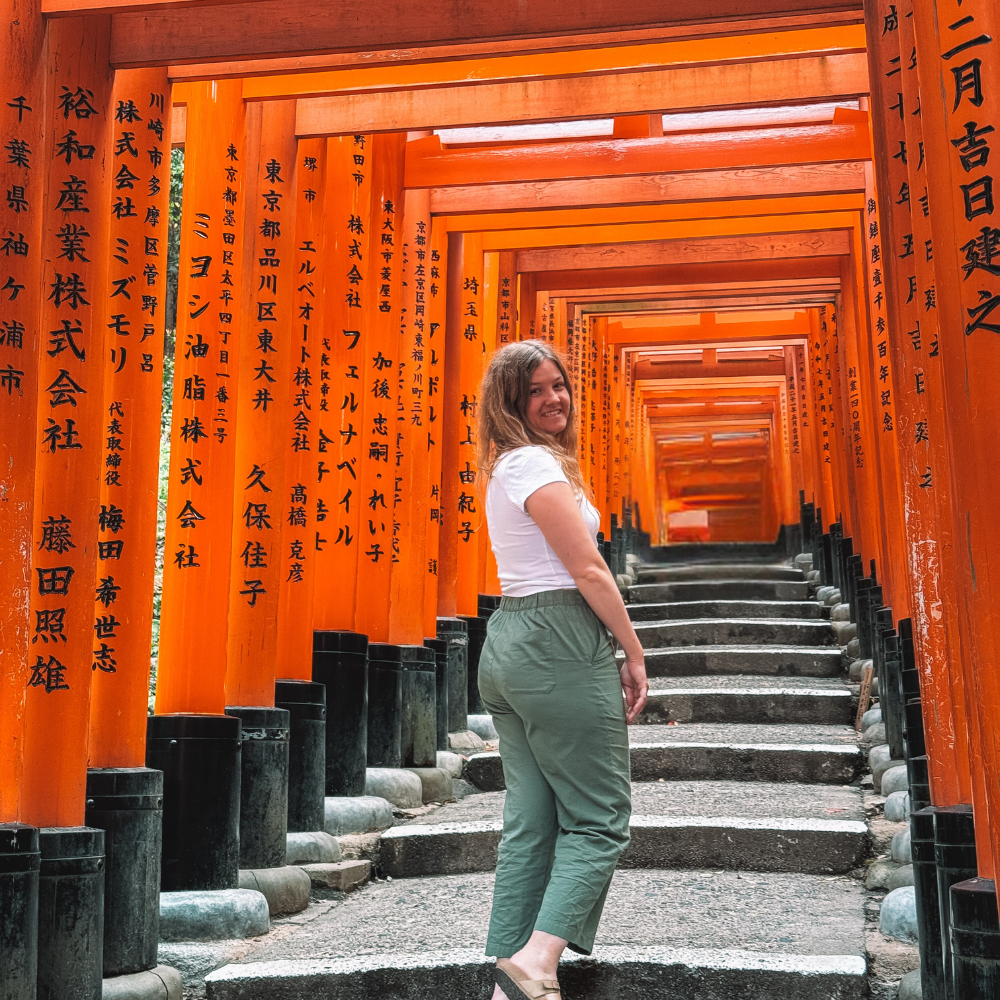
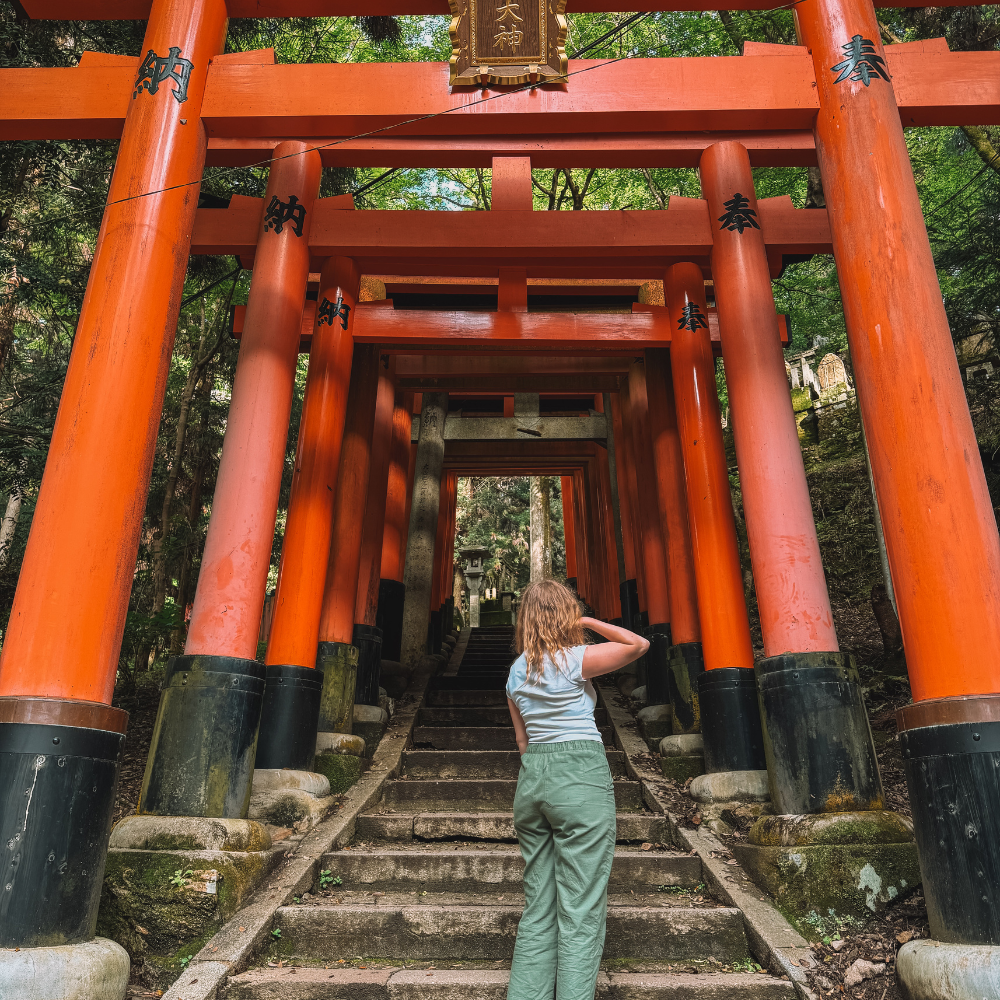
The home of the thousand torii gates, this shrine is way bigger than I realized and positively breathtaking! This is an extremely popular spot for getting photos with the gates as they go on and on. Unless you want to get there super early to try and beat the crowds, your best bet would be to pass the first few sets and to get much deeper into the mountain, where there’s less foot traffic.
This shrine does sit on a mountain, so there can be quite a bit of uphill climbing. I did all of this successfully in Birkenstocks, but my lungs weren’t the most thrilled. Just an FYI for those like myself who haven’t been keeping up with their cardio. Do also remember this is a sacred place where people leave offerings and pray. While it might be an amazing place to visit, also be respectful of those trying to pray and keep an eye out for “private property” signs, as there are a few.
I was there in the middle of the day, which was fine, but this would have been a better morning activity to try to avoid crowds. Truly believe this is one of the cannot miss spots here!
Tenryu-ji
Kyoto
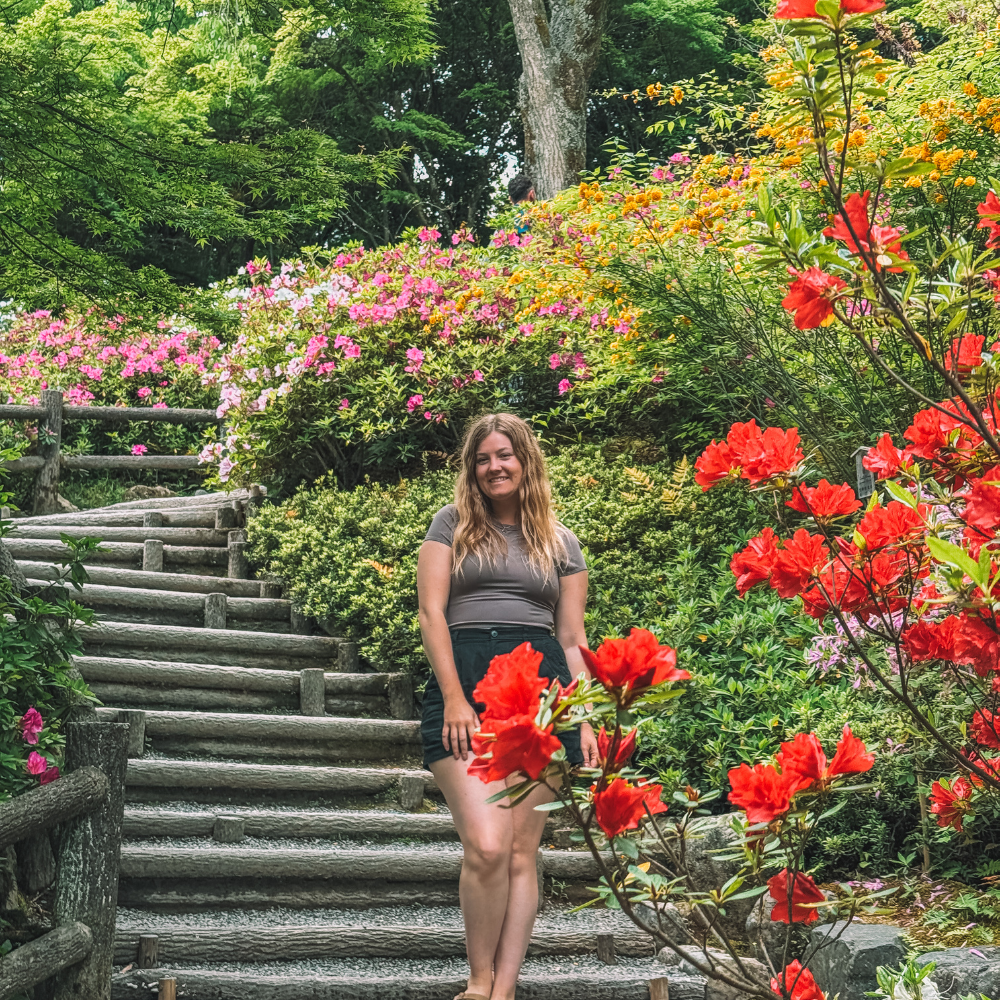
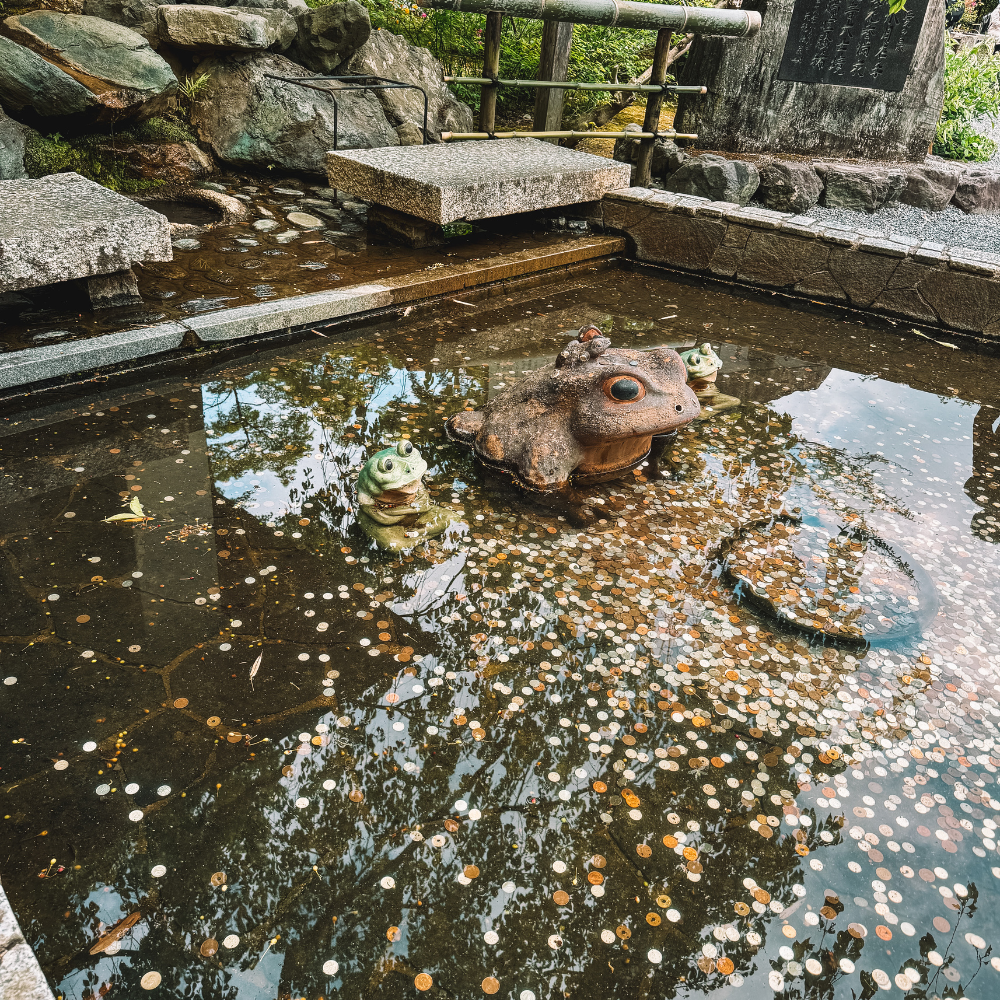
These grounds, home to a major Rinzai Zen temple and a UNESCO World Heritage site, are pretty incredible! Each piece of the temple is priced individually, and we opted to just take a stroll through the gardens. There are a lot of really beautiful flowers, and since they’re all along the main building, you don’t feel like you’re missing much, as there are many spots where you can see inside.
Stopping here was a bit of “it’s right there, so let’s just go.” However, I’m glad we did, because it was a really nice time. The gardens also lead into the bamboo forest!
Senso-ji Temple
Tokyo
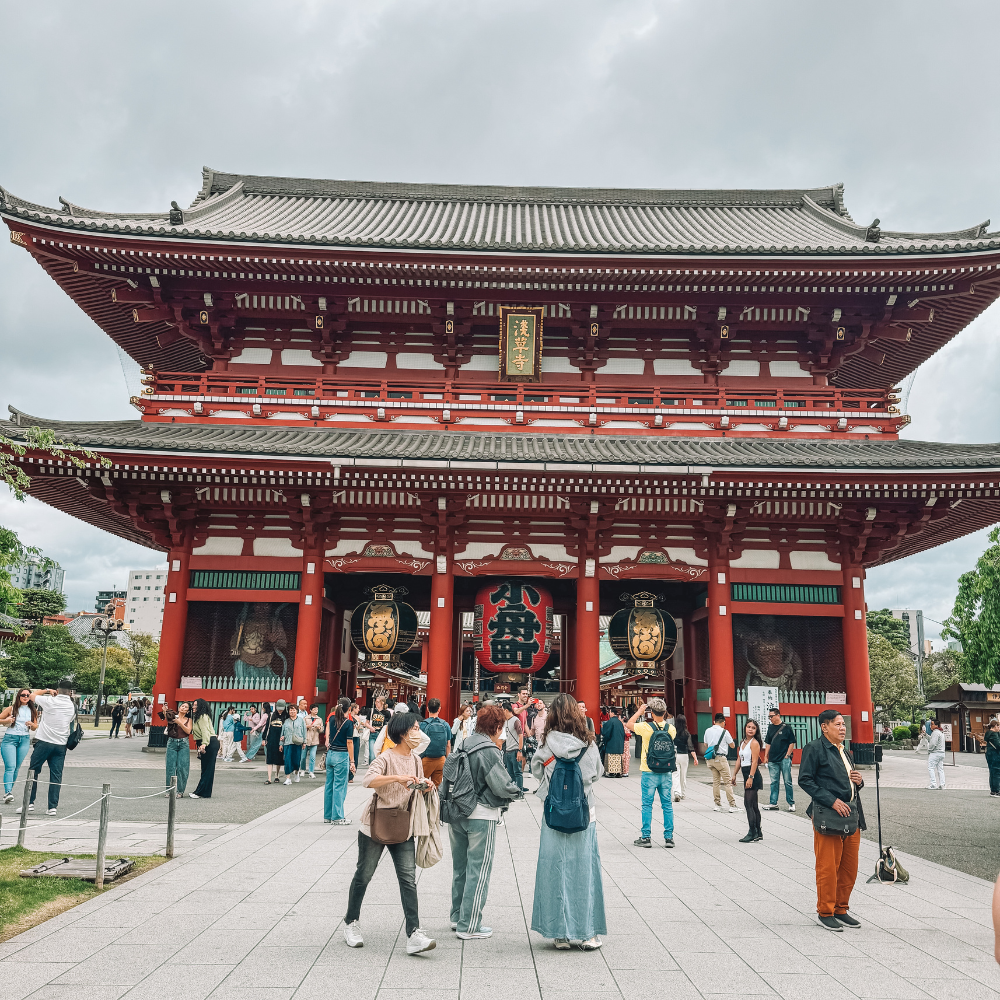
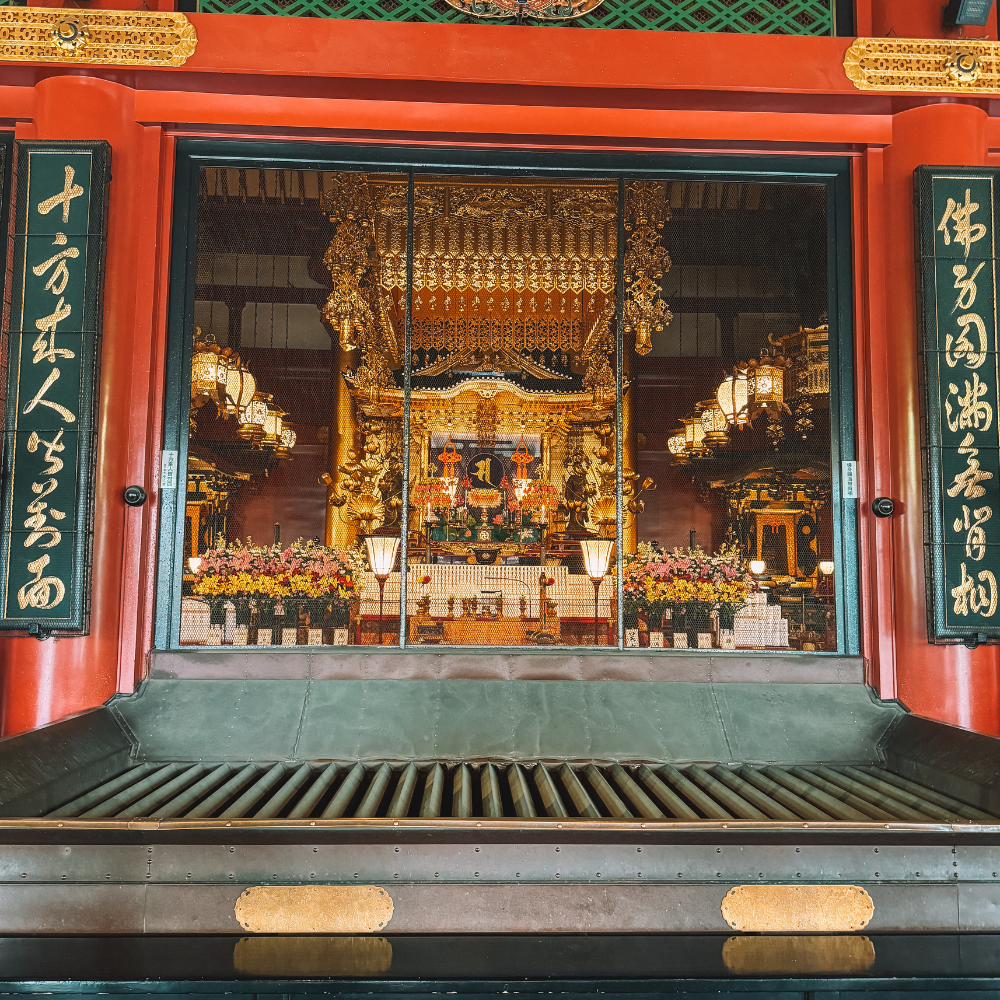
Sensoji, also known as Asakusa Kannon Temple, is a Buddhist temple in Asakusa, Tokyo, and one of the city’s most colorful and popular temples. The temple was finished in 645, making it the oldest in the city!
Before you approach the temple, you’ll encounter the Kaminarimon (Thunder Gate), which is also the symbol for the entire city. You’ll go down a massive shopping street with over 200 stores, with a history dating back several hundred years. At the end, you’ll find the main hall as well as the five-storied pagoda.
This was packed around 10 am, so I’d arrive early to avoid the larger crowds.
Asakusa Shrine
Tokyo
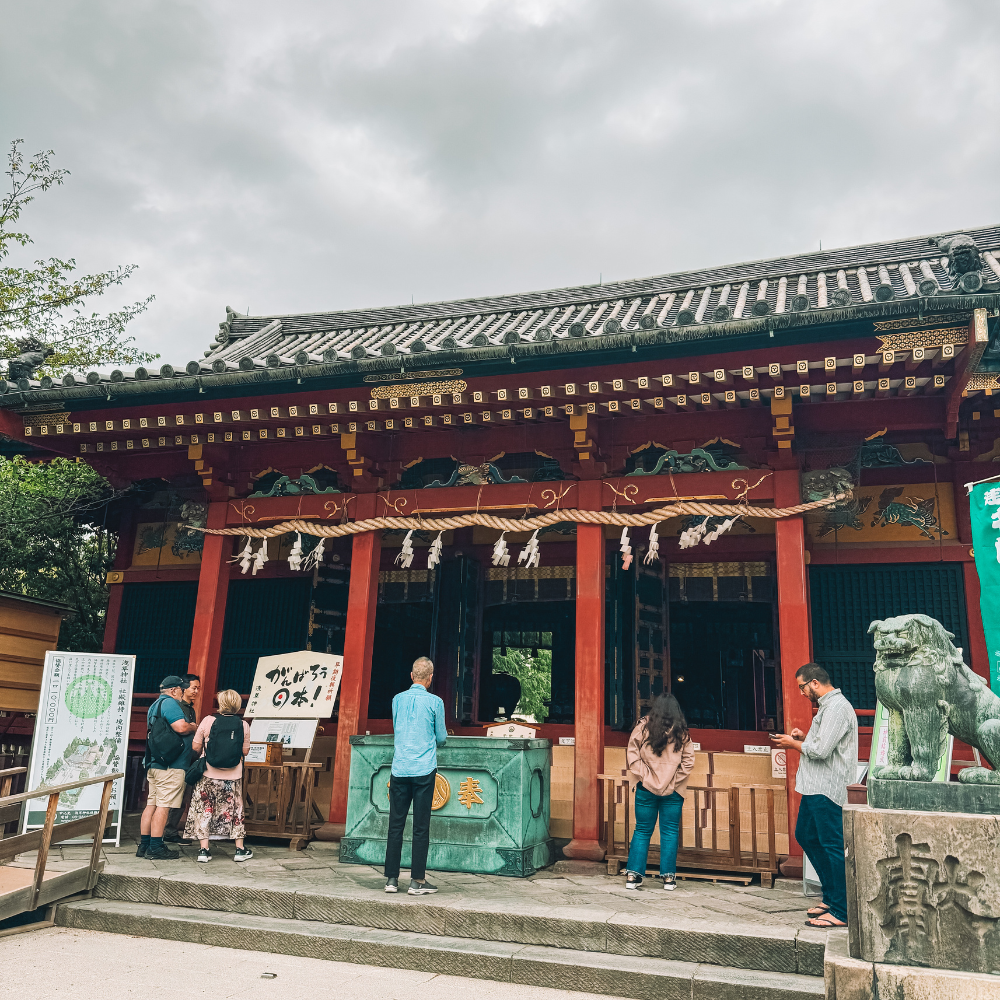
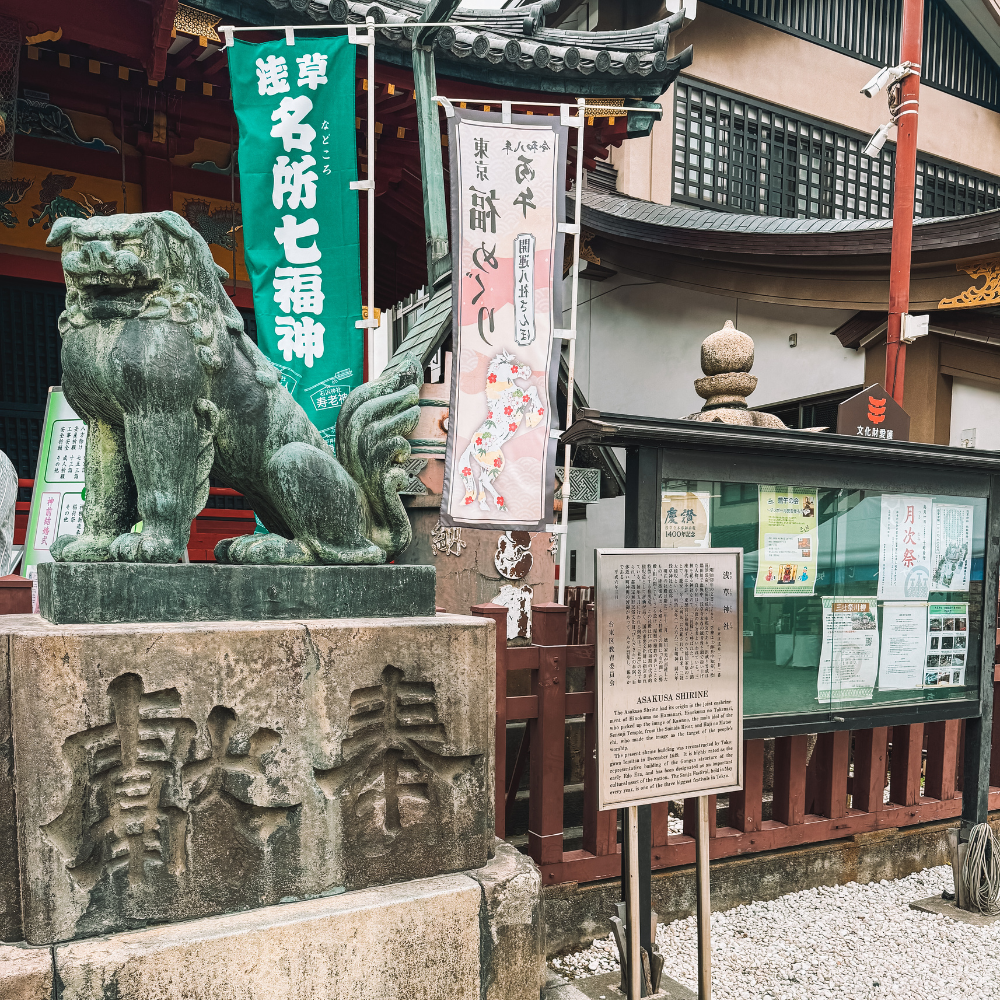
Asakusa Shrine, also known as Sanja-sama, is a well-known Shinto shrine in Tokyo’s Asakusa district. It sits right next to the famous Senso-ji Temple and is dedicated to the three men associated with the temple’s origins: the fishermen brothers, Hinokuma Hamanari and Hinokuma Takenari, along with Haji no Matsuchi.
I personally don’t think this is something you should go out of your way for, but if you’re already at Senso-ji Temple, it’s nice to stop by.
Zojo-ji Temple
Tokyo
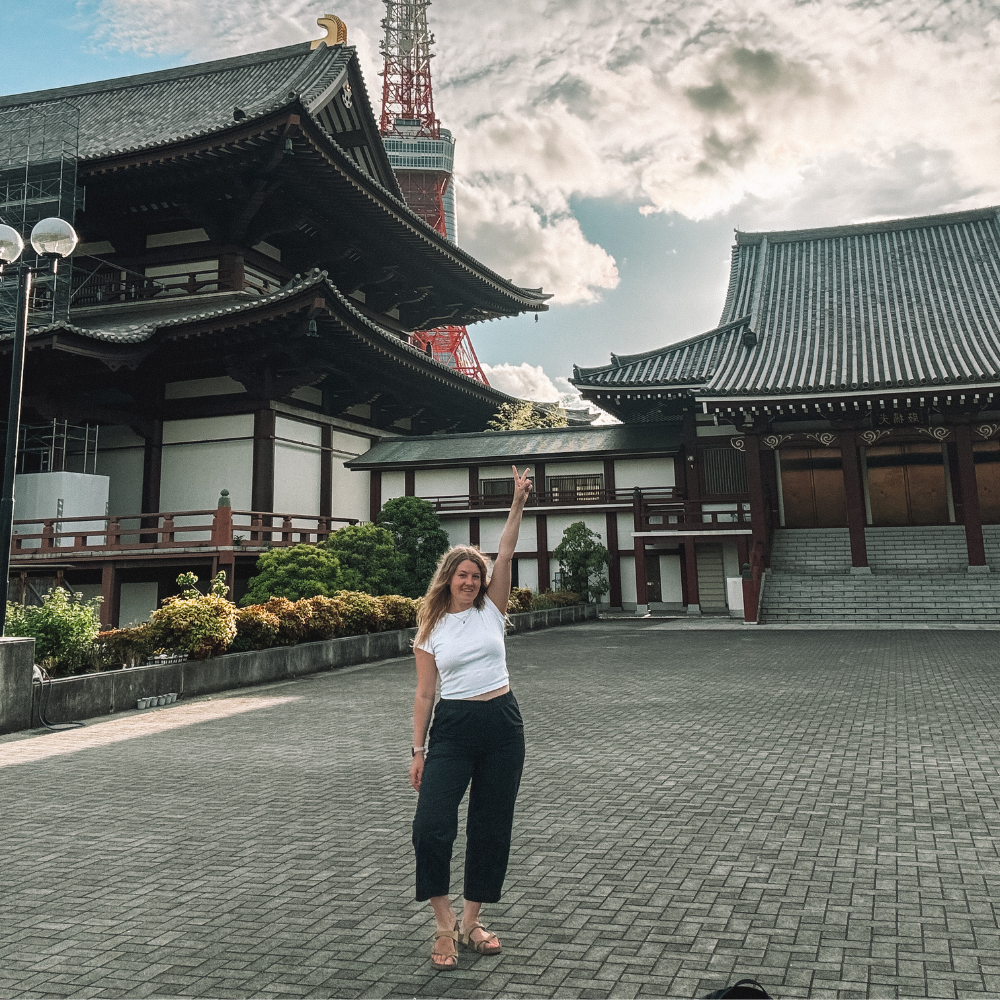
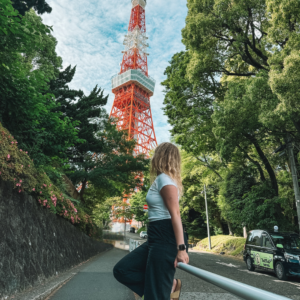
Zojo-ji Temple is a historic Jodo-shu Buddhist temple located near Tokyo Tower and Shiba Park. Originally founded in 1393, it moved to its current location in 1598 by Tokugawa Ieyasu and became the main temple of the Jodo-shu Chinzei sect in the Kanto region, as well as the family temple of the Tokugawa clan.
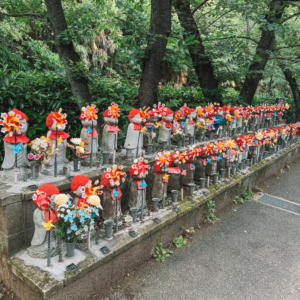
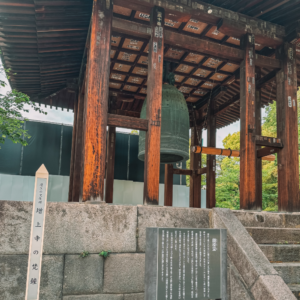
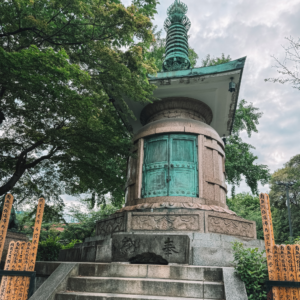
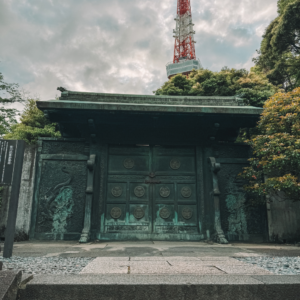
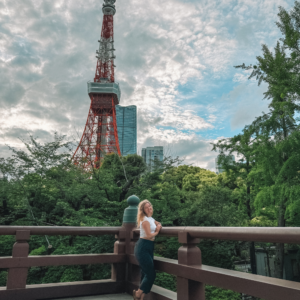
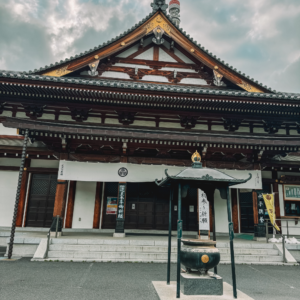
I arrived later in the day, so there weren’t many people around, and the buildings had closed. However, you can still check out: the Bell Tower, Cemetery for Tokugawa Shoguns, Grand Ossuary, Koshoden, and Tokugawa Graveite Bronze Gate.
This is a beautiful spot for evening photos! On the second level of the temple, you can take a cool shot of Tokyo Tower in the background.
Meiji Jingu
Tokyo
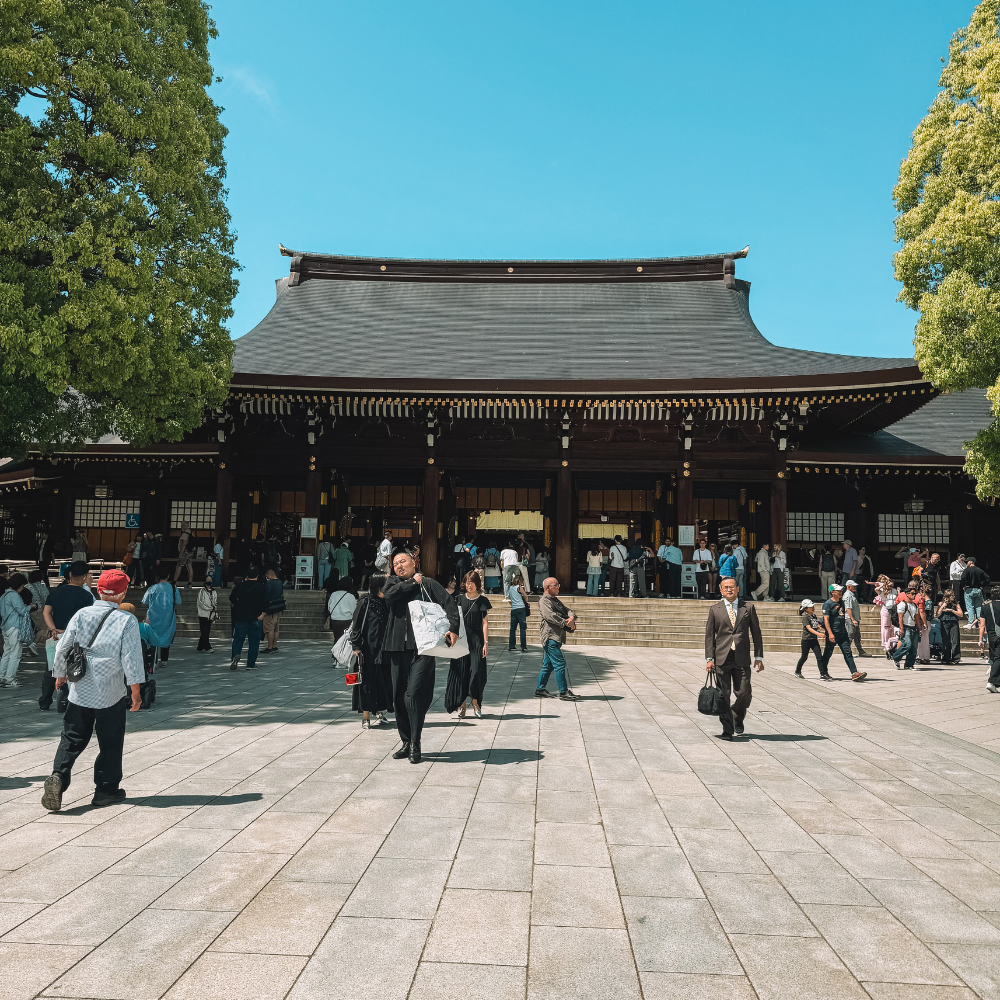
Meiji Shrine is a famous Shinto shrine in Shibuya dedicated to Emperor Meiji and Empress Shoken. Even though it honors them, it’s not where the emperor is actually buried. His tomb is near Kyoto in Fushimi-Momoyama.
The main shrine is deep within the forest-lined park, with many torii gates and gardens (viewable for ¥500). The general grounds are free to roam.
Final Thoughts
Temples and shrines are extremely important cultural and spiritual locations. They range from grand architectural works to small structures you might not even know are there. I also believe they’re among the most important things to see while visiting Japan.
For many of the bigger, more popular spots, definitely try to get there as early as you can to avoid the crowds and really take in the beauty. This is less of an issue for the small ones, but that’s entirely up to your preference!
Great content! Keep up the good work!
Thank you!