



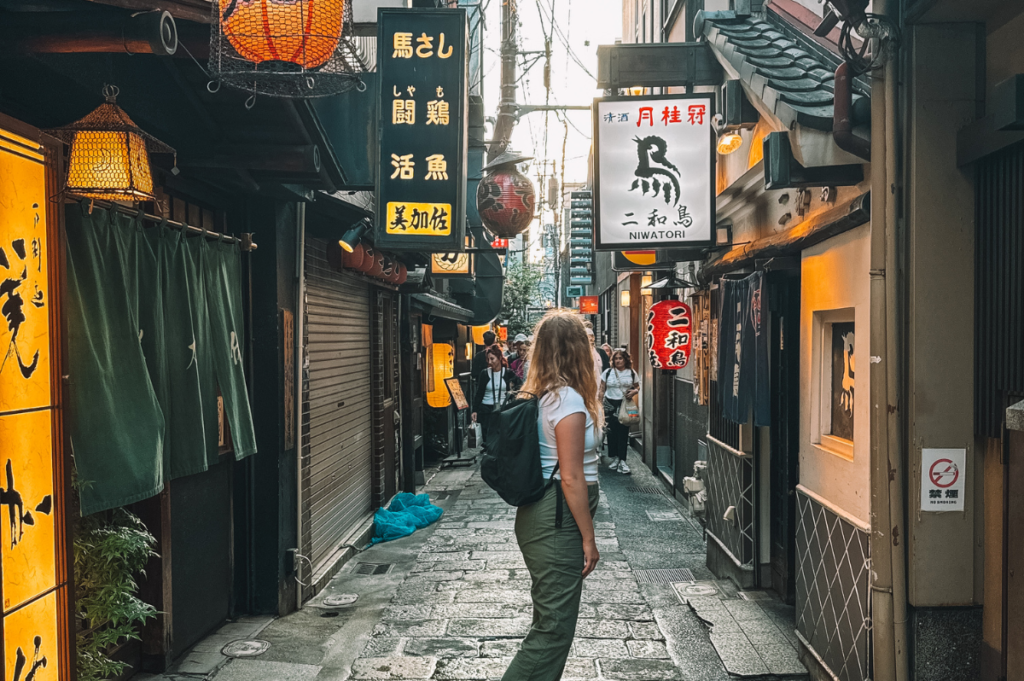
Just a quick hop over from Kyoto and a totally different retro vibe, Osaka took a moment to grow on me. However, now I get why it should be part of everyone’s itinerary on a first trip to Japan!
A Brief History of Osaka
Osaka’s history goes back over 1,500 years, growing into a key trade hub thanks to its location along major waterways. It was even briefly Japan’s capital in the 7th century, back when it was called Naniwa. In the late 1500s, Toyotomi Hideyoshi put the city on the map by building Osaka Castle, turning it into a major political center.
By the Edo period, Osaka became Japan’s economic hub, earning the nickname “Nation’s Kitchen.” It later grew into an industrial powerhouse, was heavily damaged in World War II, and was quickly rebuilt into the vibrant, food-loving city it is today.
Osaka Station City
This is one of the most intense train stations I’ve ever been to in my life. If coming in on a Thunderbird train, this is most likely where you’ll get off. The Shinkansen stops at Shin-Osaka, not Osaka Station.
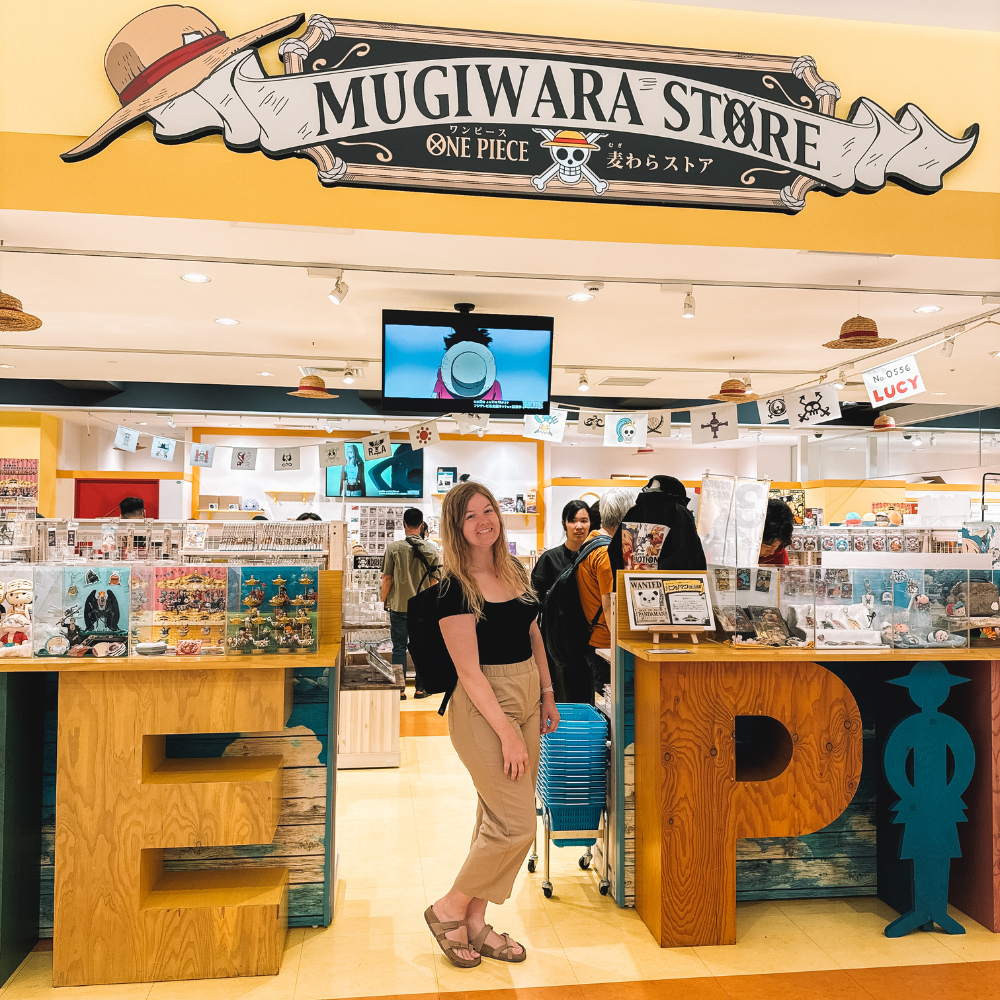
Not only is this the main train station, but it’s also home to multiple malls, such as LUCUA and Daimaru, which feature over a dozen levels and over 500 stores for shopping and dining. If you’re an anime and gaming geek, you’ll absolutely want to go to LUCUA South up to the 13th floor. There you’ll find Nintendo Osaka, the Pokémon Center Osaka, One Piece Mugiaware Store, Tomica, Capcom, and more to still open (as of April 2026)!
Half-Day Trip to Nara
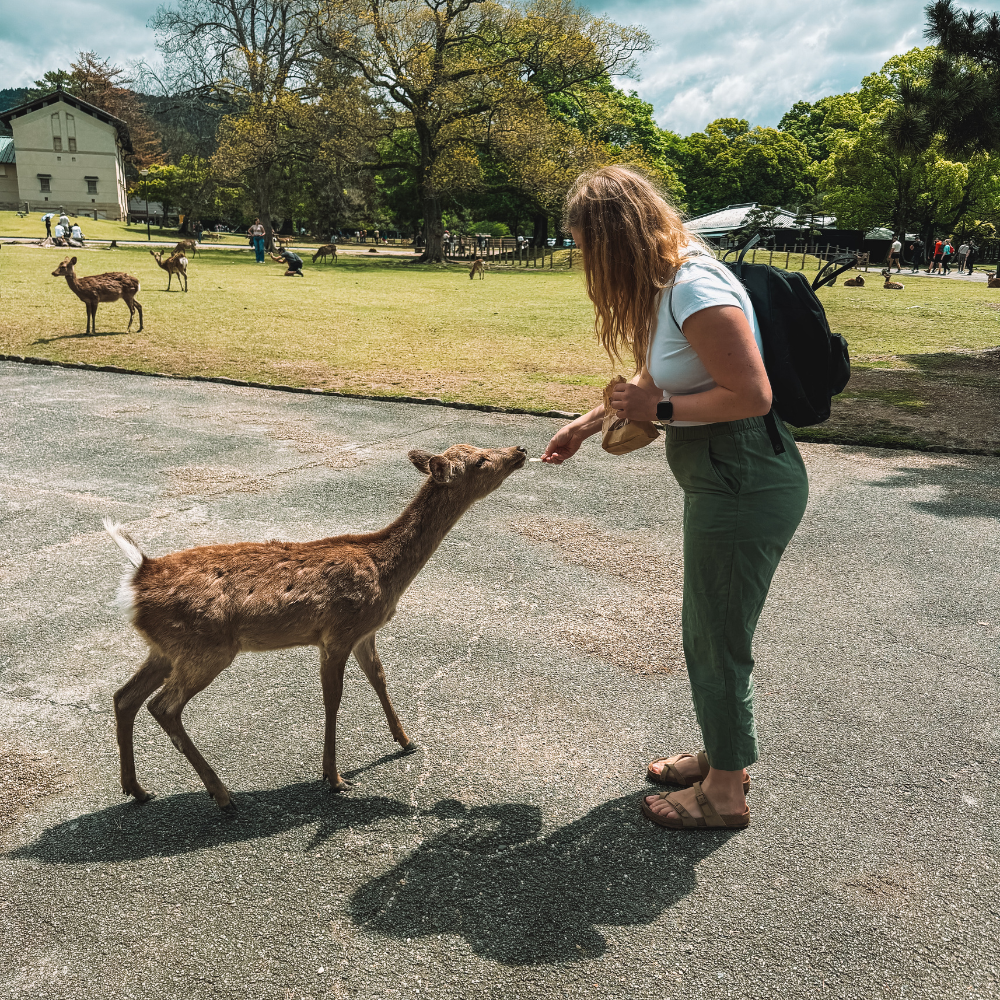
Very easily reachable within about an hour from Osaka, you can visit the famous UNESCO site of Nara Park! Feed the sika deer, walk around the park, and visit amazing sites such as Todai-ji Temple, Kofuku-ji Temple, and Kasuga Taisha Shrine.
Related Article
Dotonbori
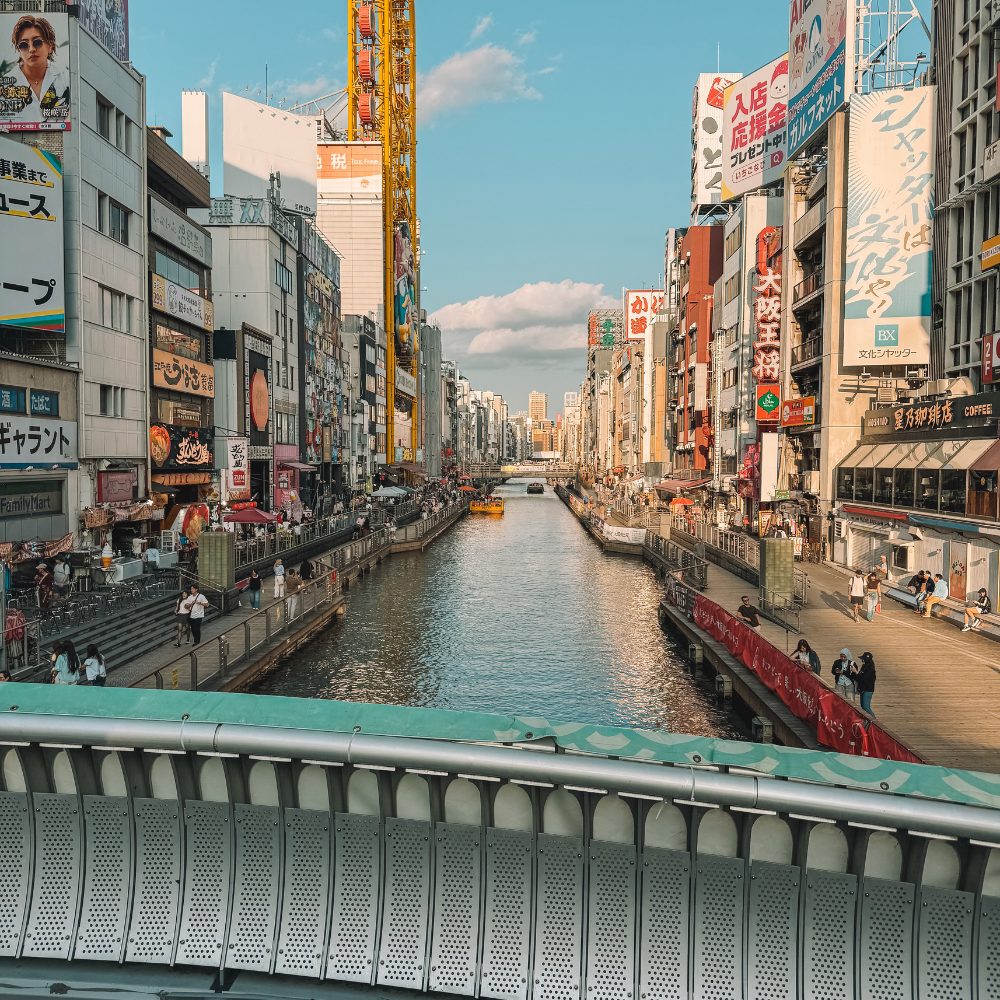
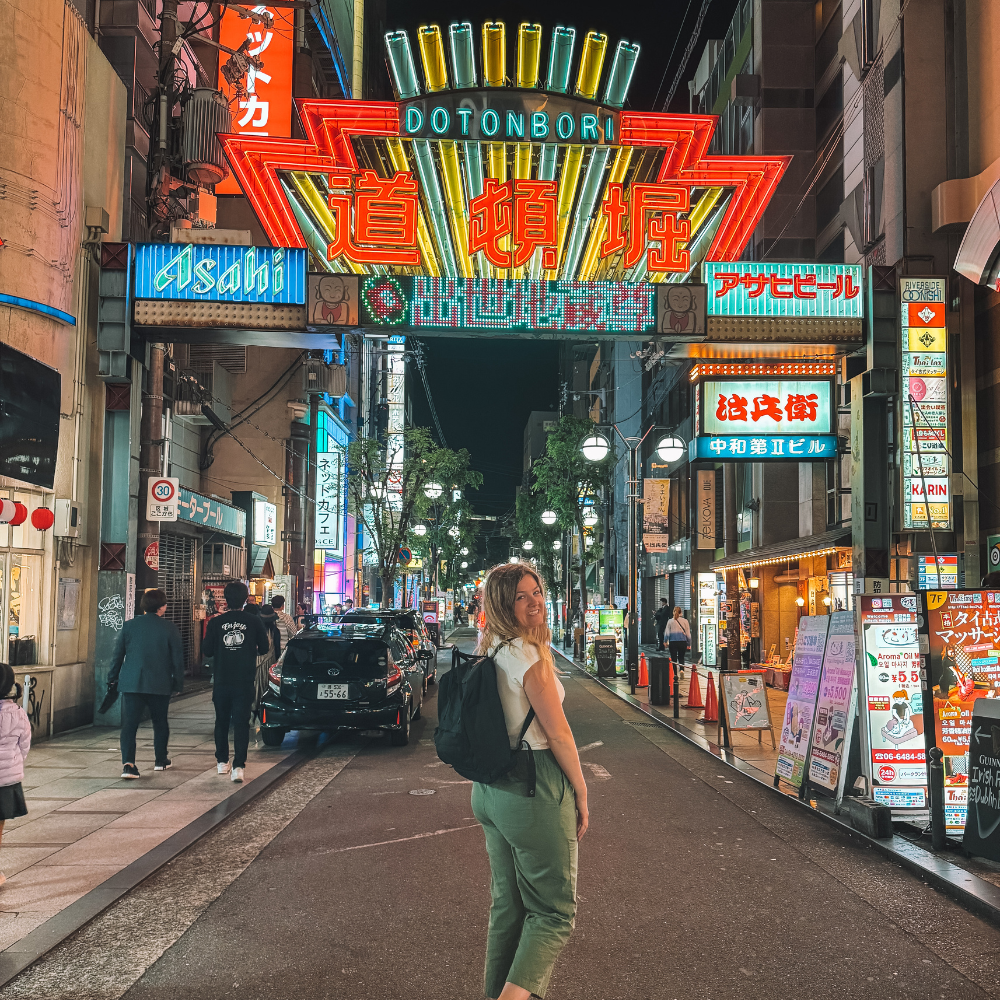
Osaka’s major business and shopping district is worth visiting during the day and night. It’s the epitome of old-school Osaka. You’ll find streets filled with massive three-dimensional storefronts trying to lure you in. This area is well known for massive billboards, food, and live entertainment.
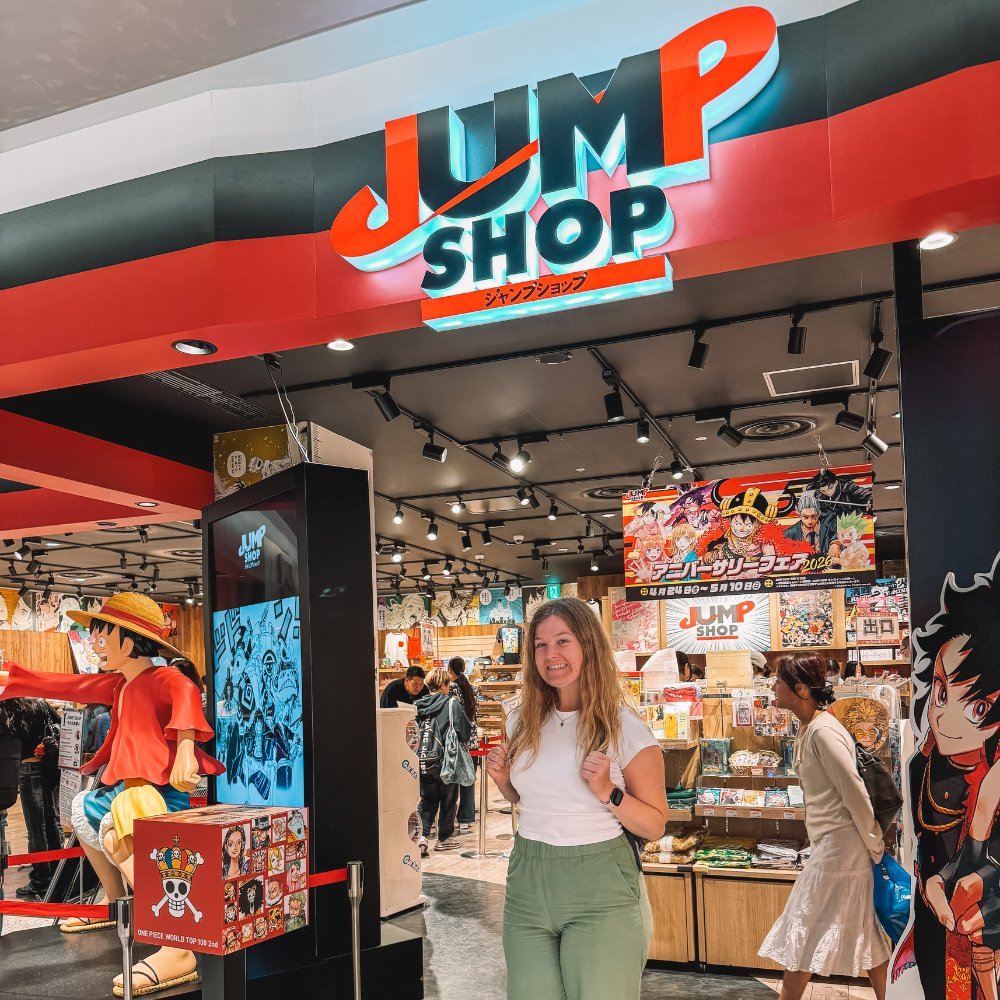
During the day, it’s great to walk around, see the river, and pop into some stores. Some of my favorites were Jump Shop (the manga publisher for my other fans out there), Sanrio Gift Gate, and the Cinnamoroll Cafe. This is a great area to pick up any knick-knacks you might want to take home, particularly if you have your eyes on some of the specialty shops.
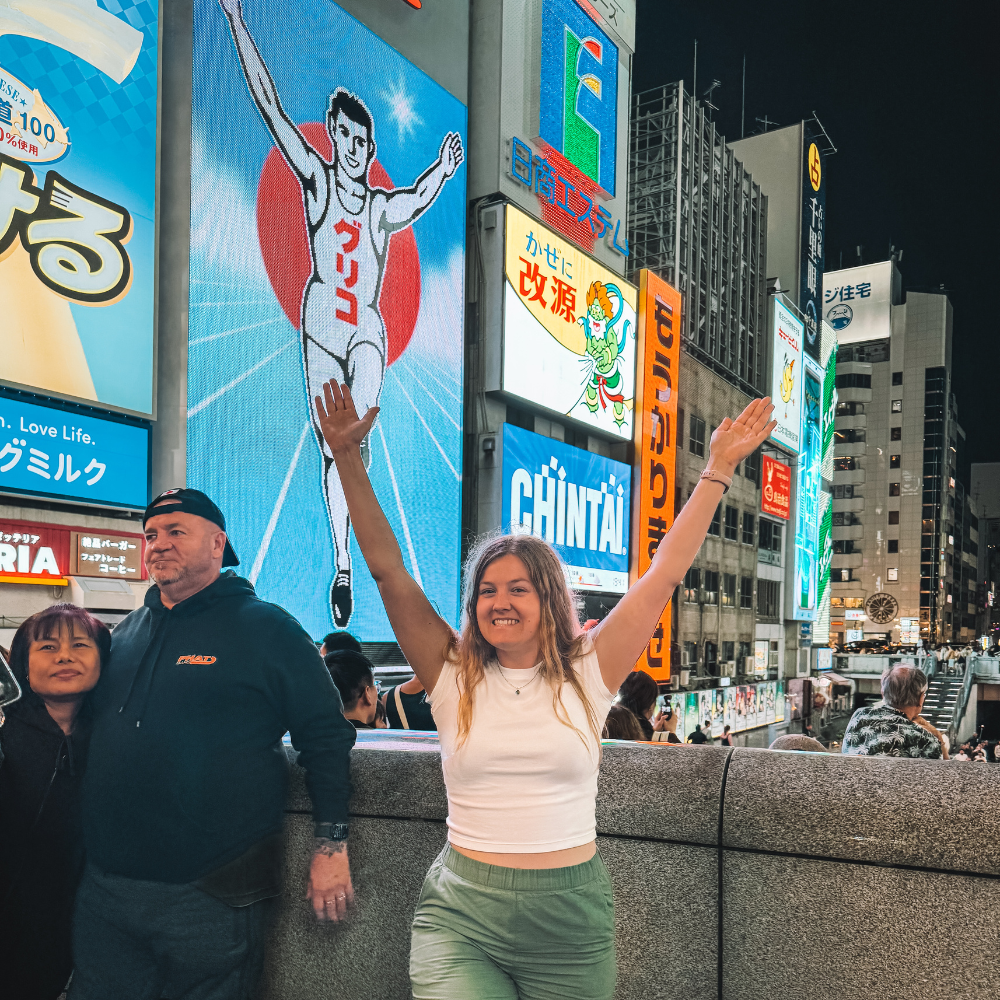
Though beautiful during the day, it’s at night that Dotonbori really gets its magic. All those signs and billboards light up! Think NYC Times Square, but so much better. It will be during this time of day that you’ll experience the higher crowds. I’d highly recommend trying to get a picture on the bridge with the famous Glico Sign, since he’s become the area’s unofficial mascot.
Namba Yasaka Jinja
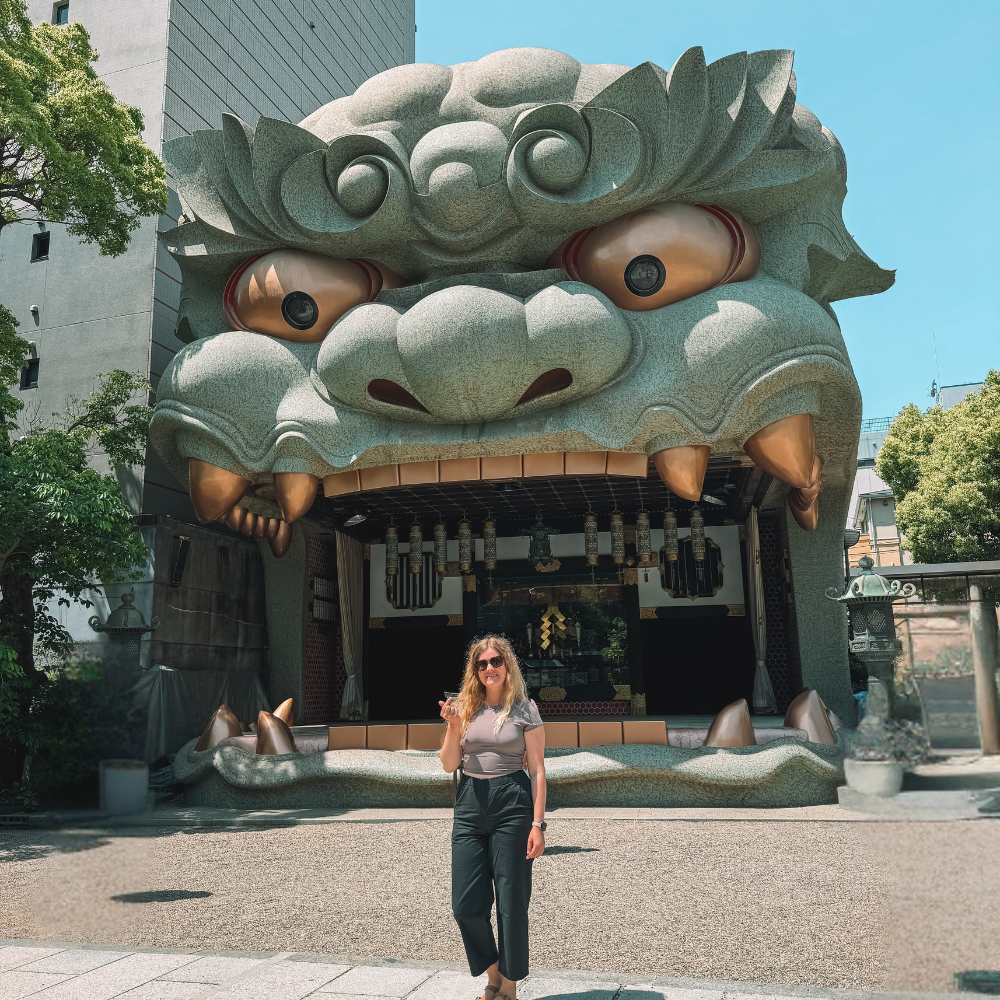
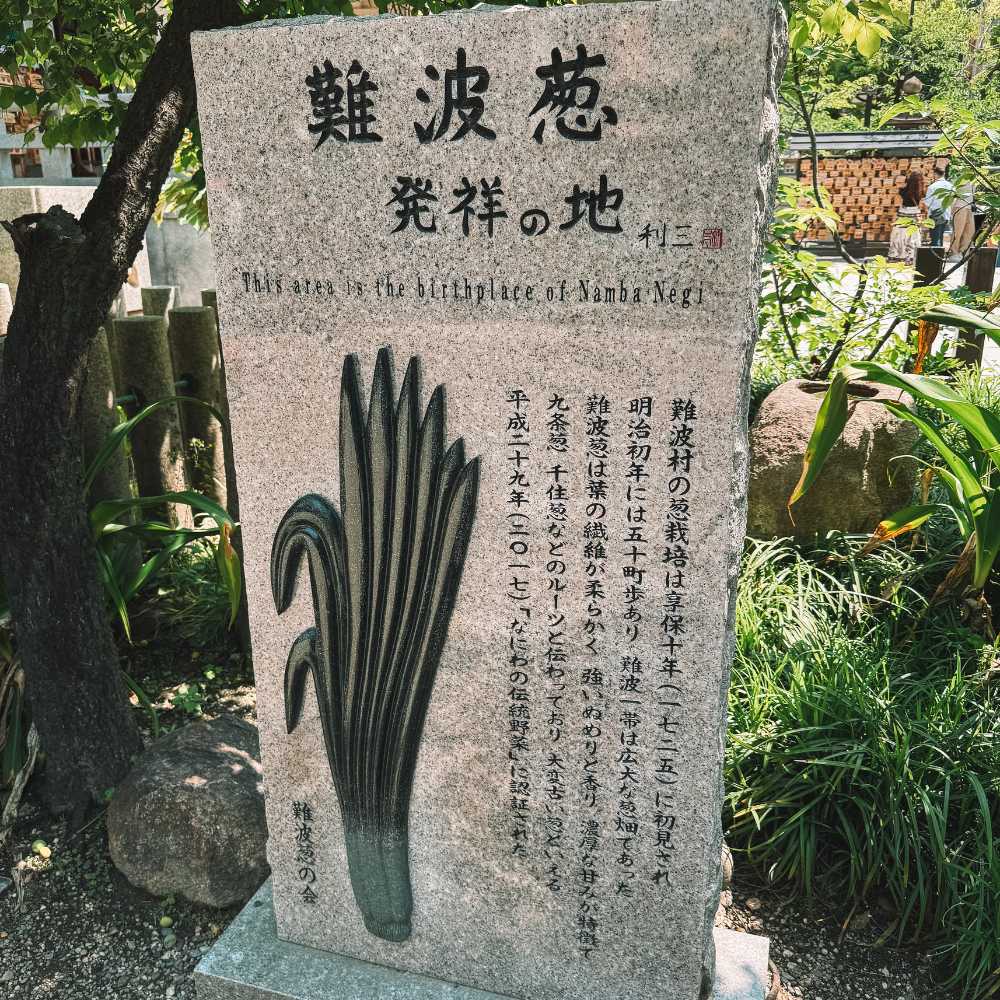
One of the most show-stopping shrines right in the middle of Namba, and home to Namba’s guardian deity. This shrine is quite small, but it is well known for its lion-shaped stage, which is its main draw. A unique place of worship, the stage was built in 1975 with a distinctly retro Osaka feel. The lion’s mouth is believed to swallow evil spirits and bring good luck, particularly to those in school and business matters.
You probably don’t need more than 20 minutes here, tops, since it’s such a small area. Between getting pictures, reading a few signs, and my sister getting her Goshuin, it’s a nice and easy stop!
Osaka Castle
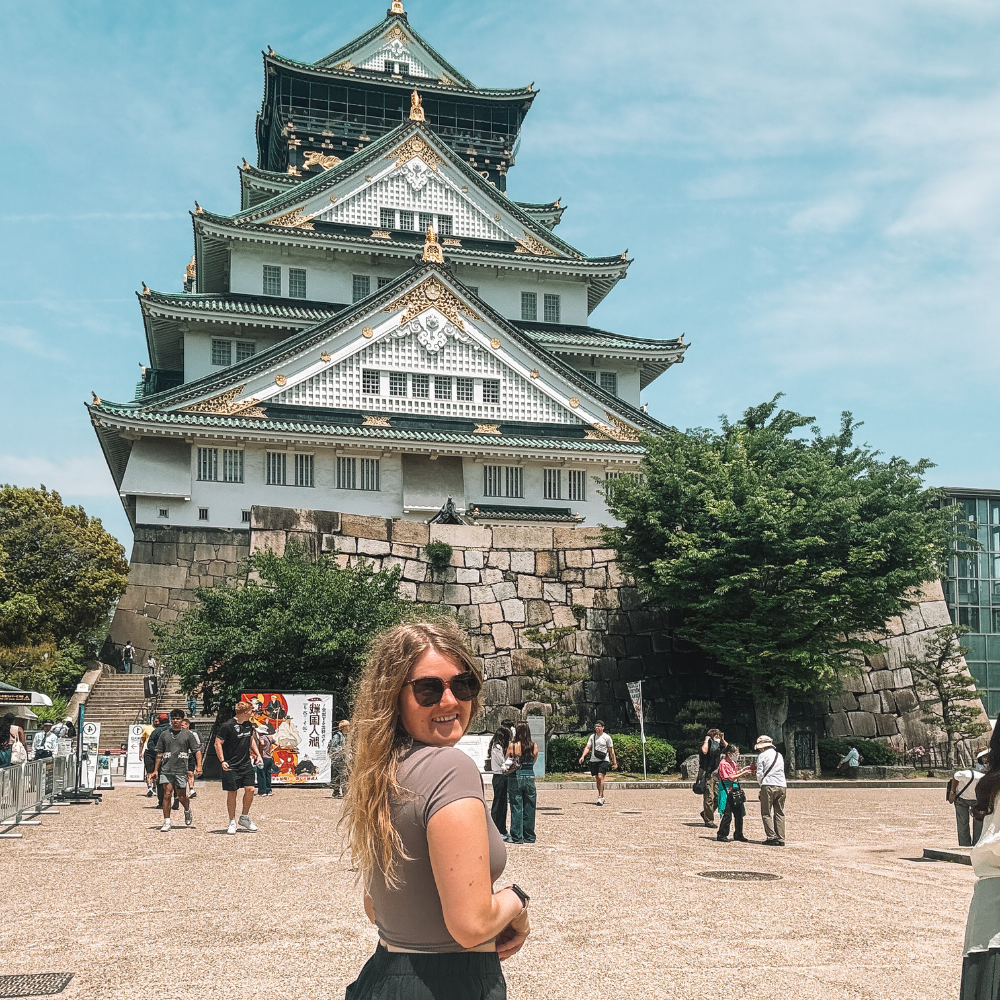
One of Japan’s most famous landmarks, finished in 1597, this castle is jaw-dropping and also played a major role in the unification of Japan during the sixteenth century. Here is where things might get a bit controversial. Prior to my visit, after reading about Osaka and speaking with those who had visited the castle, I opted to view it only from the outside and not go in. This is because the inside no longer resembles a castle and has been gutted to house a museum.
Many have told me the castle was ruined for them once they went inside, and I didn’t want that to happen to me. I viewed the outside, watched a live performance, walked some of the grounds, and was more than content. However, if you do wish to visit the museum, which I wouldn’t blame you for as an avid museum lover myself, that is an option. For those who want to keep the magic of the castle, just view its beauty and visit other museums.
Hokoku Shrine
A Shinto shrine inside Osaka Castle Park, dedicated to Toyotomi Hideyoshi, who built Osaka Castle. The shrine was originally established in 1879 and moved to its current location in 1956. Overall, it’s a more modern feeling and a small area. I’d recommend stopping if you’re already in the area, but no need to make a special visit.
Osaka Aquarium Kaiyukan
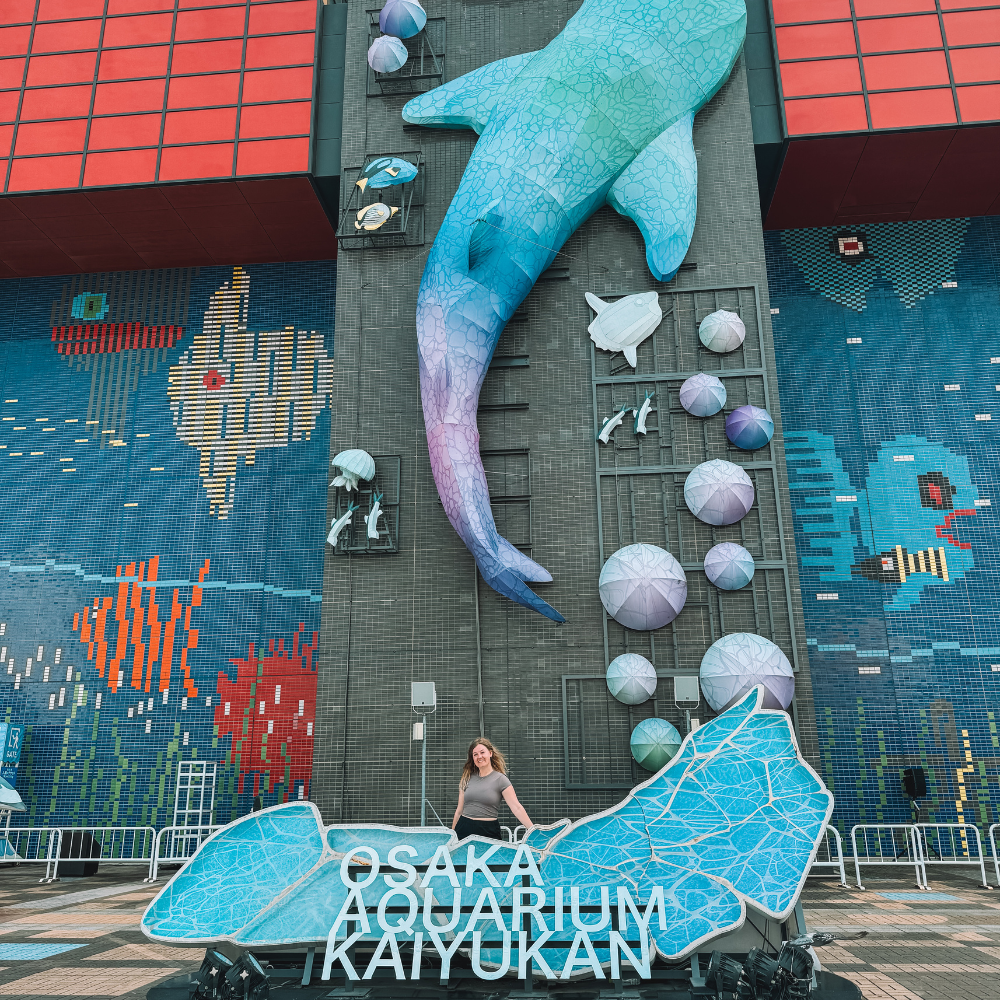
Located along Osaka’s bay, it’s one of the largest aquariums in the world, holding 11,000 tons of water. Once you enter, you’re immediately met with a fish tunnel before heading up to work your way through the different exhibits.
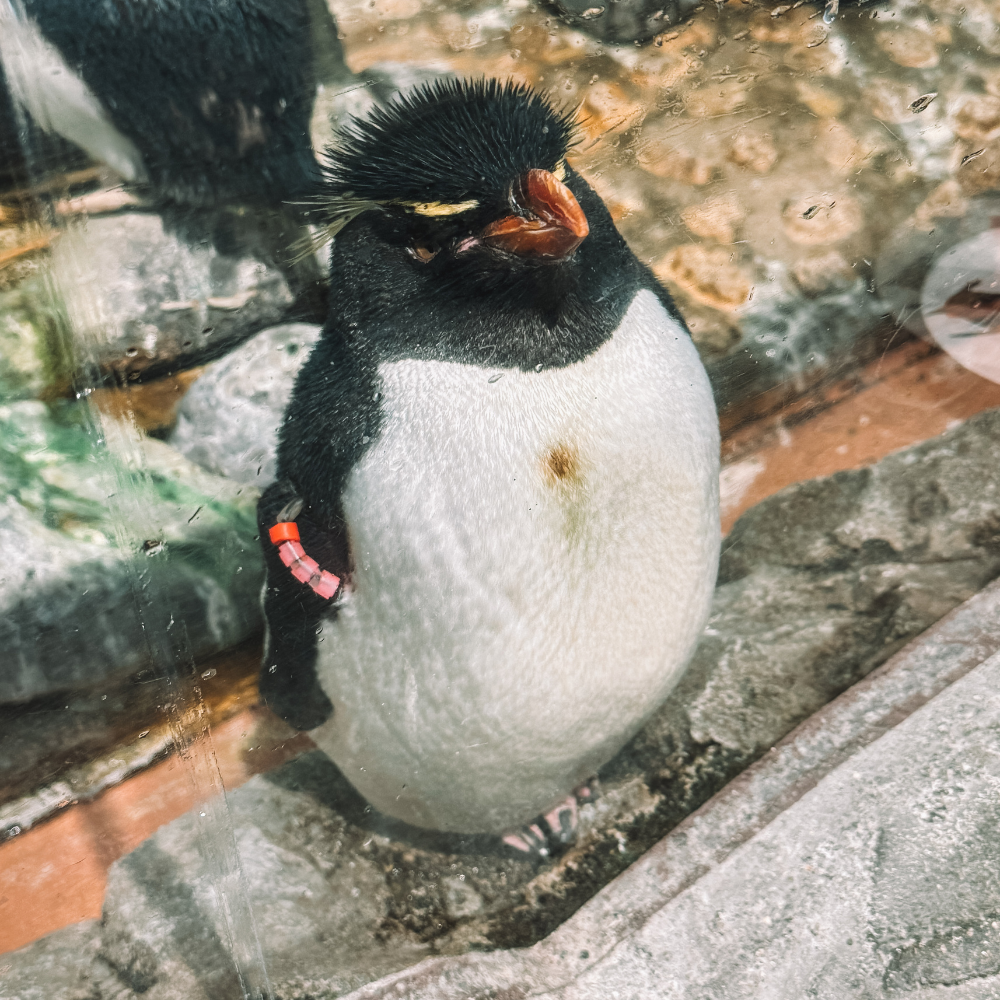
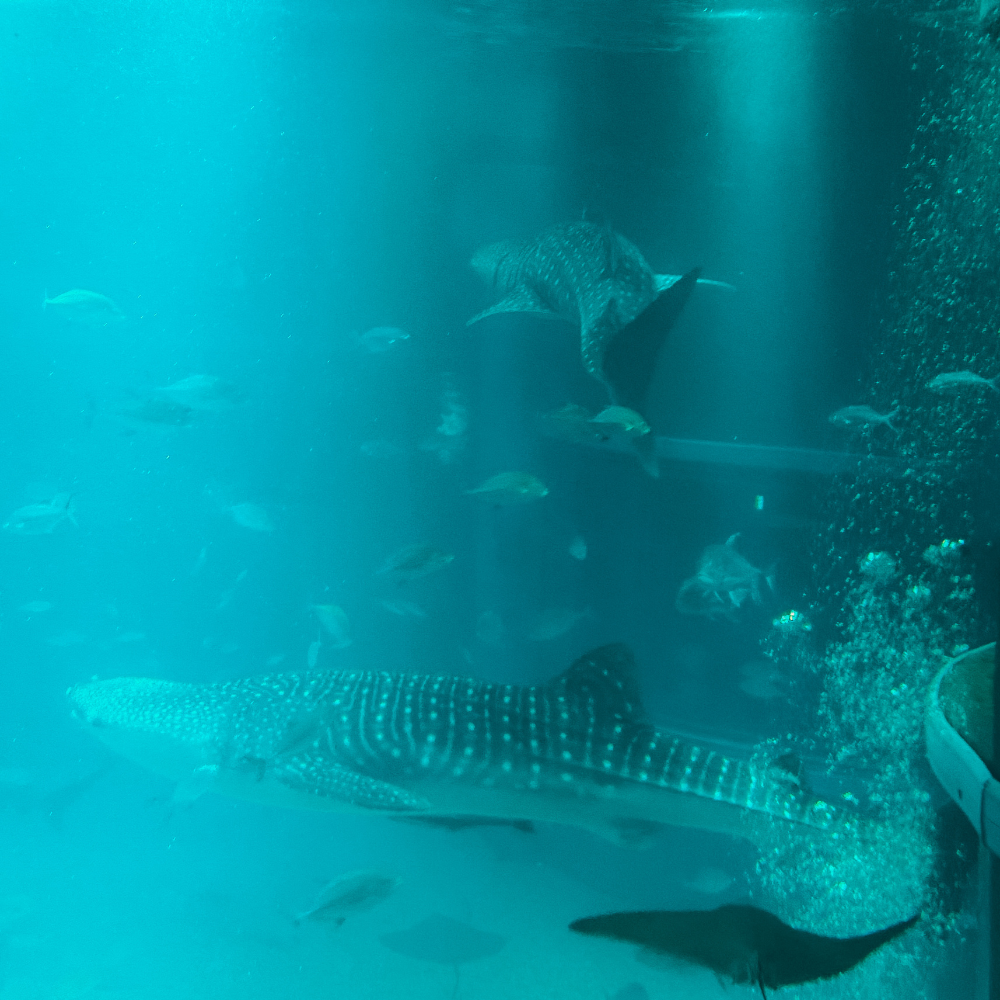
Not only do you get to see many kinds of incredible fish, but ducks, otters, seals, sea lions, dolphins, penguins, spider crabs, eels, and more! The aquarium divides its animals and habitats into different bodies of water, like the Tasman Sea, the Great Barrier Reef, and the star of the show, the massive Pacific Ocean tank, which holds an impressive 5,400 tons. Within this tank, you’ll see not one, but two of the largest known fish in the world, reaching up to 12 meters (33 feet) long, the whale shark.
I spent more time staring into this tank than I’d like to admit, as it really was that fascinating. Once you move on from the large tank, you’ll see a section featuring small, cute fish like garden eels and clownfish!
Museum cafes are not something I often frequent, but there was a whale shark-themed Ramune (Japanese soda) flavored soft serve I very much wanted to try. It was blue, and I absolutely loved it!
Past the cafe, you’ll go down into a dark room where you’ll find a bunch of different jellyfish. Some without the light, I’m not sure how you’d ever spot them in the wild, as they’re just that transparent! Finally, there’s a whole section on coral reefs, very focused on Australia’s Great Barrier Reef and on other efforts to rebuild many reefs that have been dying due to rising ocean temperatures.
Beyond incredible experience and absolutely worth the visit!
Shinsekai Market
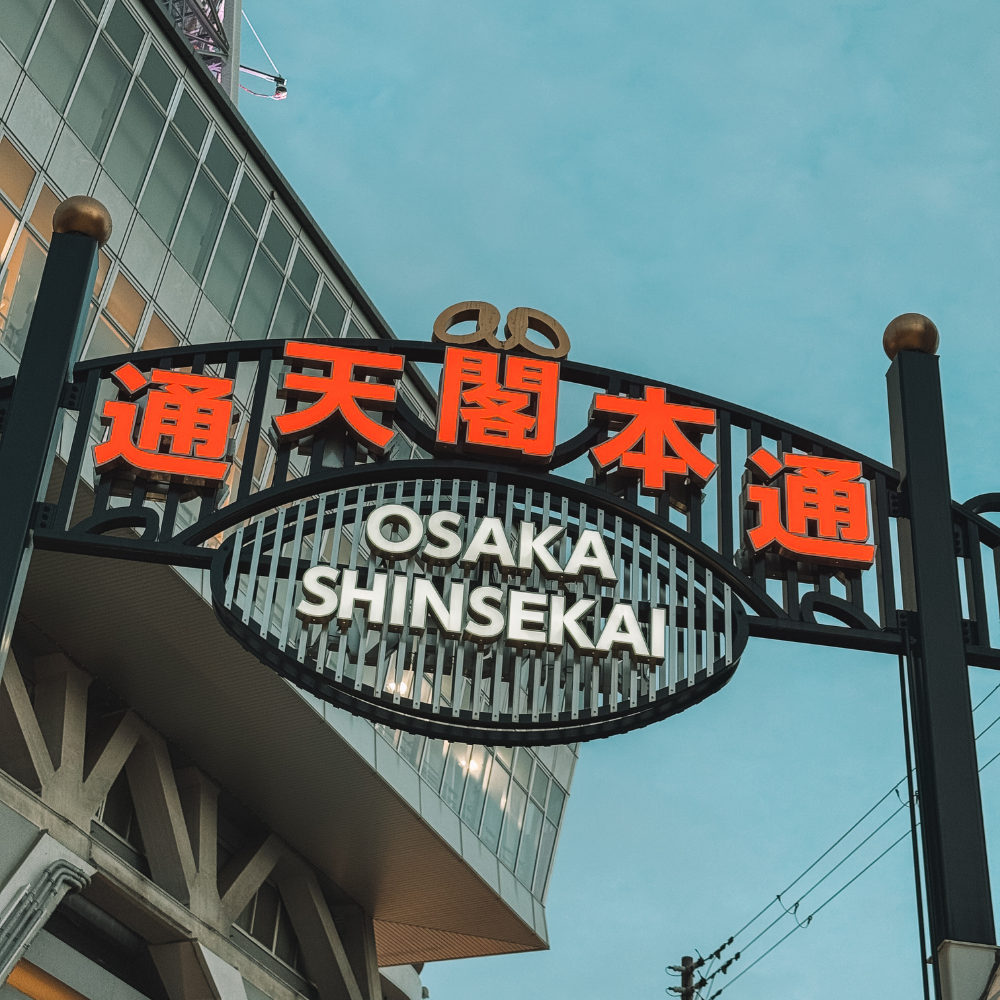
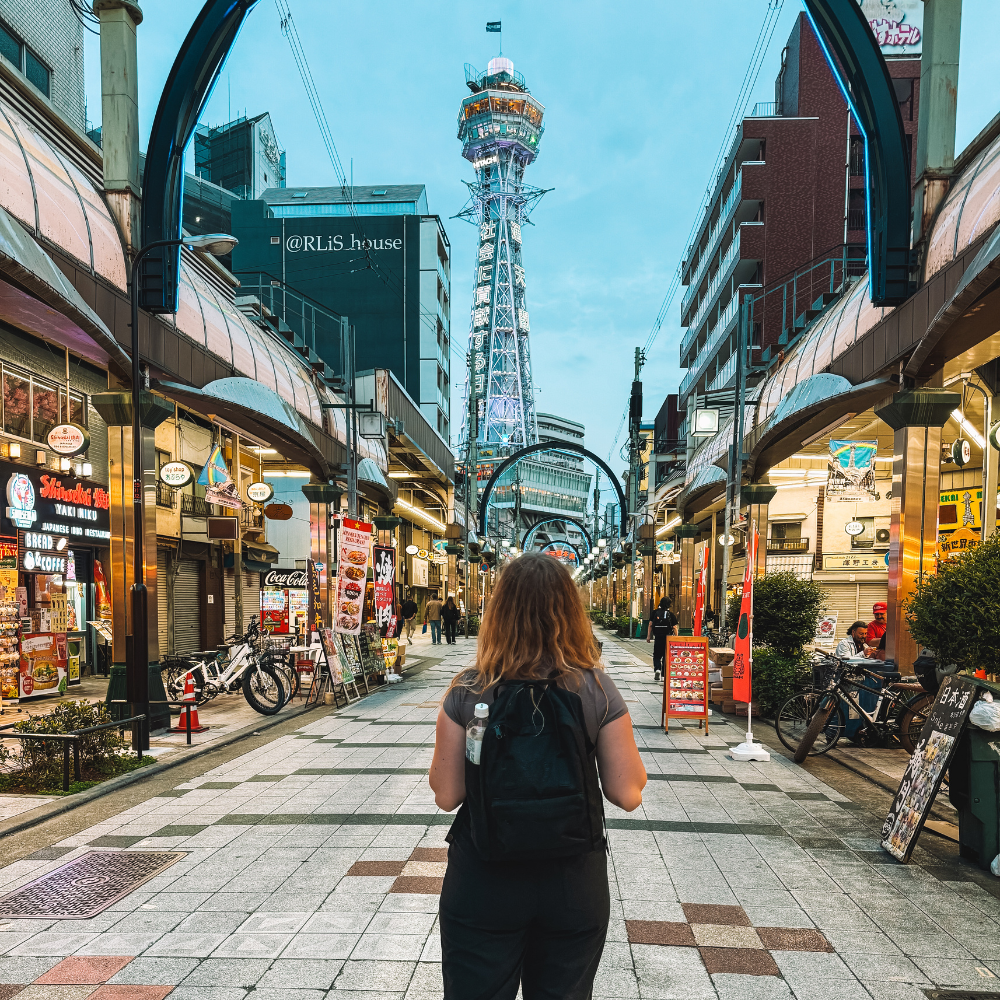
A historic shopping arcade located at the base of Tsutenkaku Tower, known for its retro “Showa” atmosphere, offers a variety of fresh food, traditional crafts, and souvenirs. You can think of it as Dotonbori, but on a smaller scale. It was much easier to walk the streets, with fewer crowds but a very similar feel, thanks to the 3D storefronts.
What I thought helped make Shinsekai stand out is that there are also tons of carnival games you can play, mixed in with all the other fare. There were options from classic shooting games to archery. It really helped bring the whole place to life!
NHK Osaka Broadcasting Center
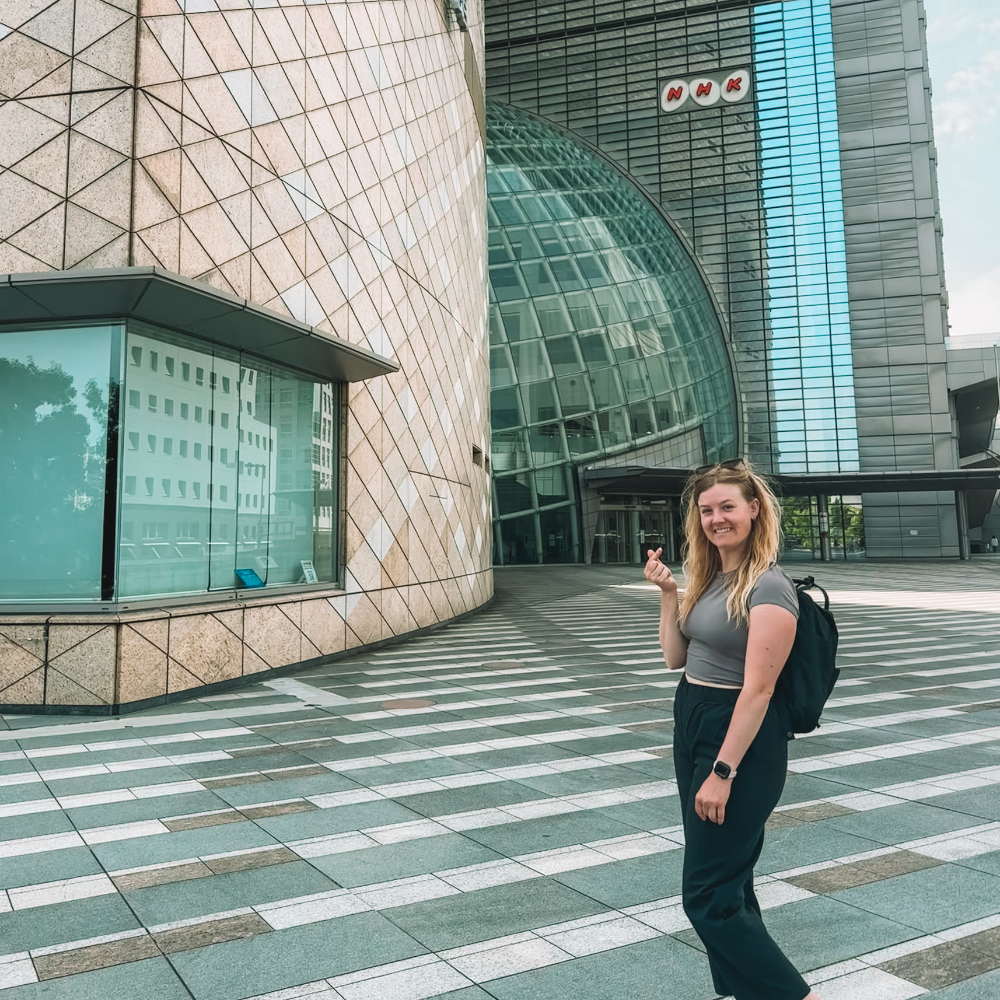
NHK is the Japanese Broadcasting Corporation, headquartered in Tokyo. However, they have a few regional offices, with the Osaka one sharing its space with the Osaka Museum of History. It also has public-access areas, such as BK Plaza and filming studios.
This is an easy photo stop on your own to Osaka Castle, or if you’re visiting the museum.
Tsutenkaku Tower
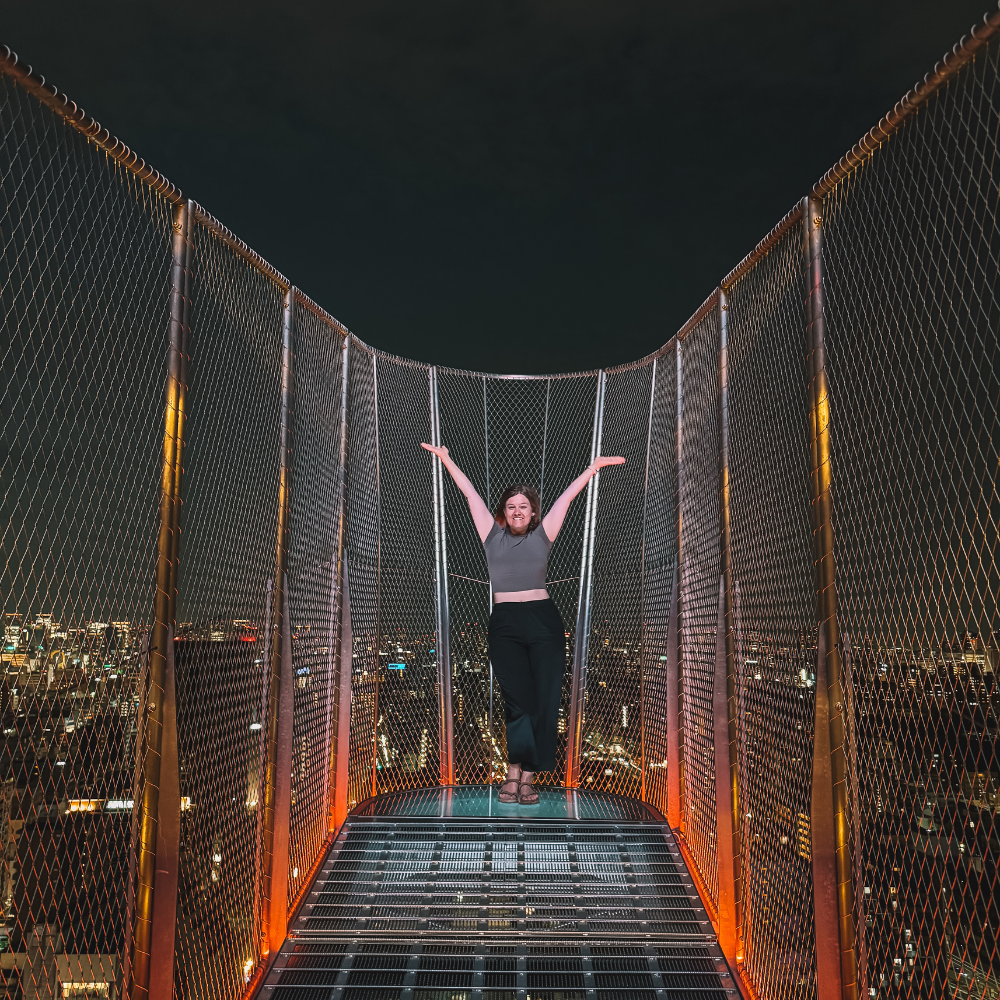
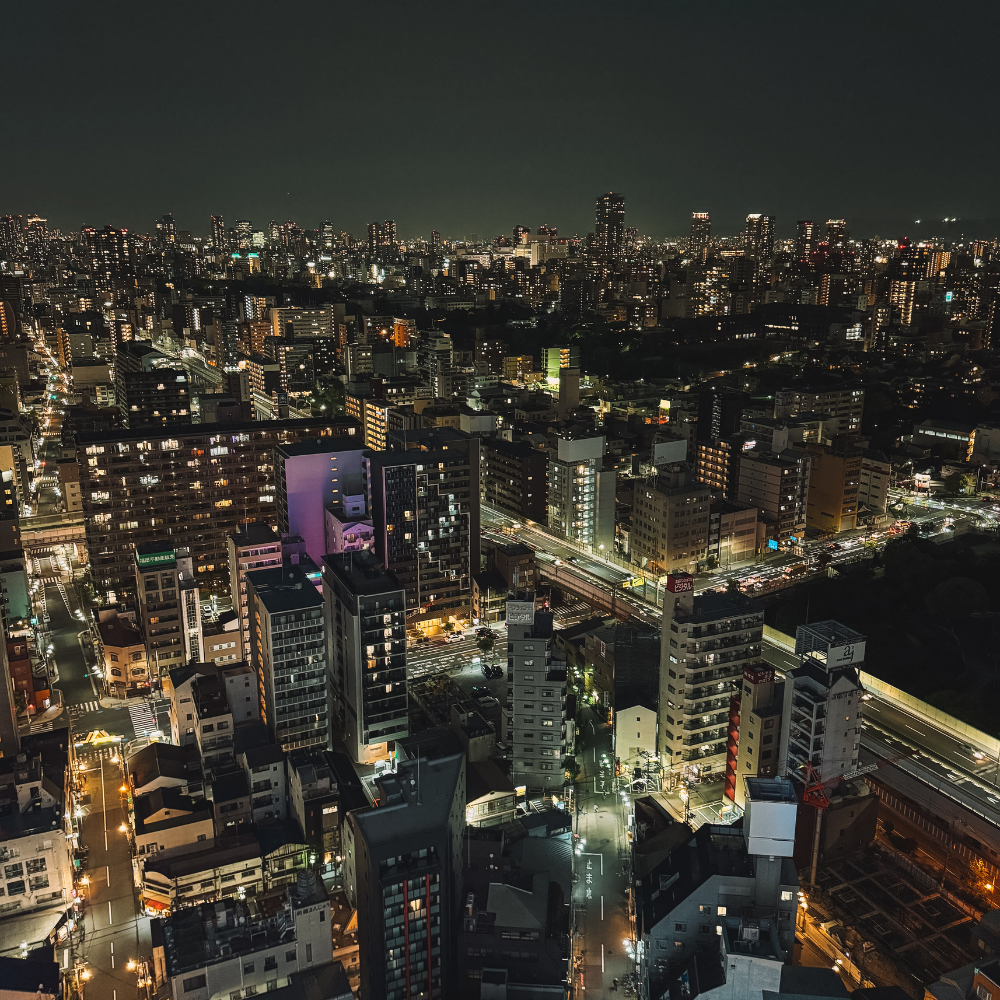
Located right in Shinsekai Market, there are three options to experience this tower: dive and walk, slide, and the observation deck. I opted for the observation deck, and it was a really beautiful view of Osaka at night! I’m sure it’s great during the day, too.
The first part is a walk-around, enclosed space where you can see the market and great views of the city. Once you’ve done this, there are stairs leading up to an outdoor walkway with a very cool photo opportunity hanging over the edge of the tower! After you’re done up here, you follow the stairs back down to head to the ground, where you’ll walk through gift shops. It did not appear as if you were allowed to re-enter the main deck, so make sure you’re content before you do the outdoor portion.
This was a spontaneous activity, and I really enjoyed the view and the chance to see the city in a different way.
Afternoon Tea
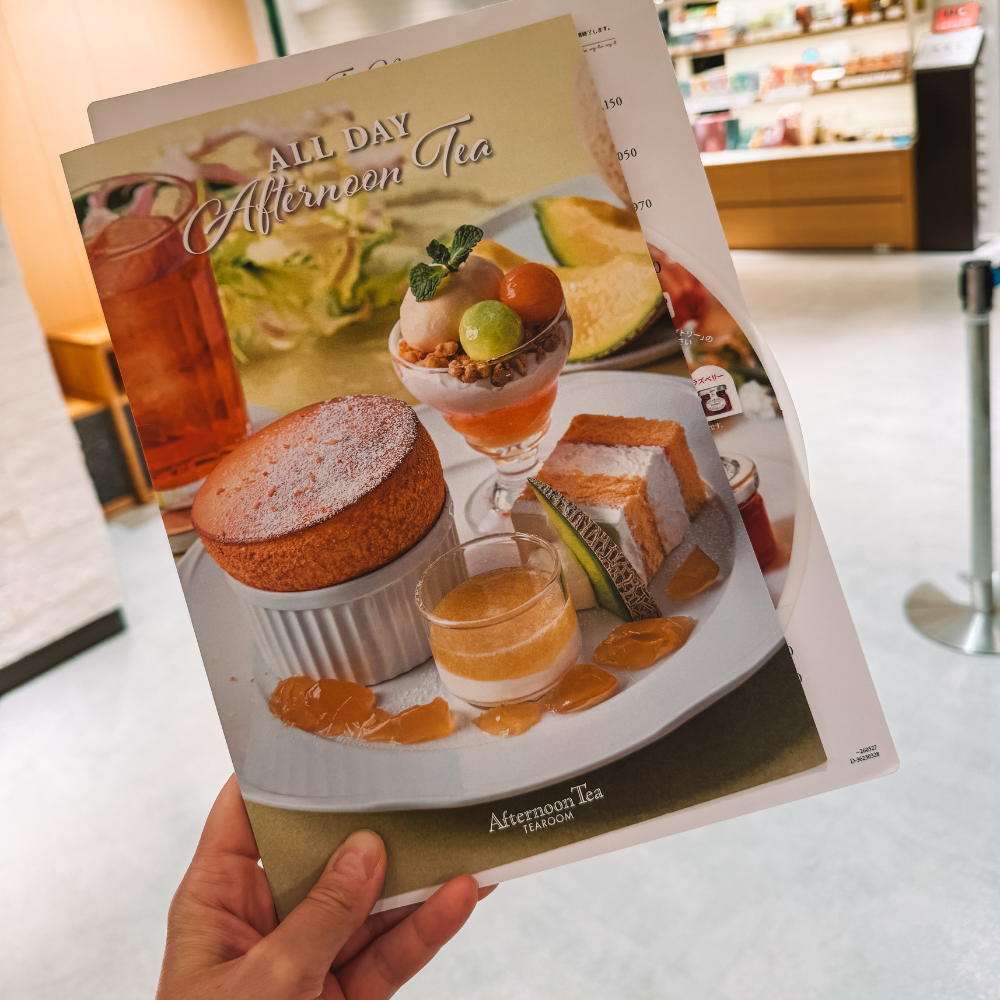
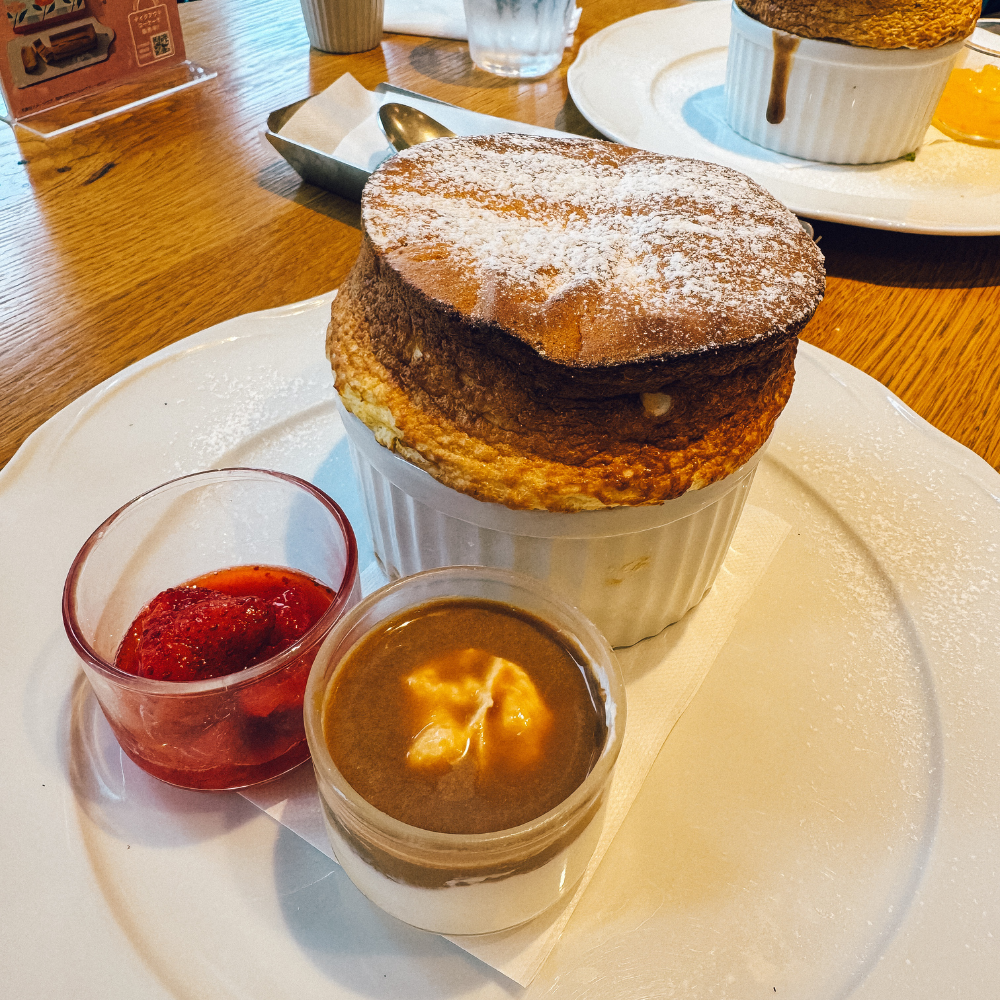
You might not think of afternoon tea as a very Japanese activity, but there’s a chain of stores called Afternoon Tea that makes it just the loveliest experience! Each location has a unique menu, which helps to set them apart. I went to their Afternoon Tea TEAROOM Umeda Hanshin Shop, which served soufflé, and their main highlight was melon. I absolutely cannot stand melon, so I ordered the brown sugar soufflé with strawberries and a milk tea, lemon cream set with Darjeeling. Absolutely superb.
We had a view of Osaka Station, and it was just a lovely break to enjoy a snack.
Umeda Sky Building and Kuchu Teien Observatory
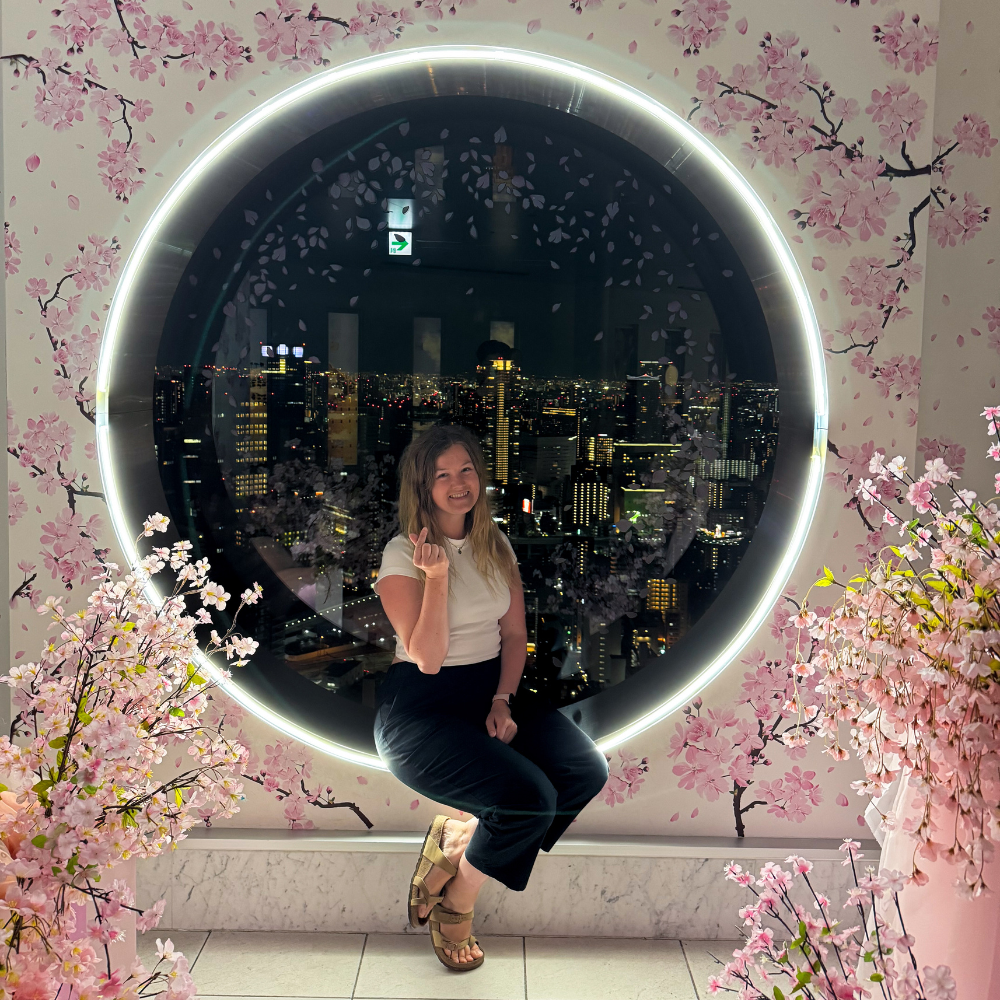
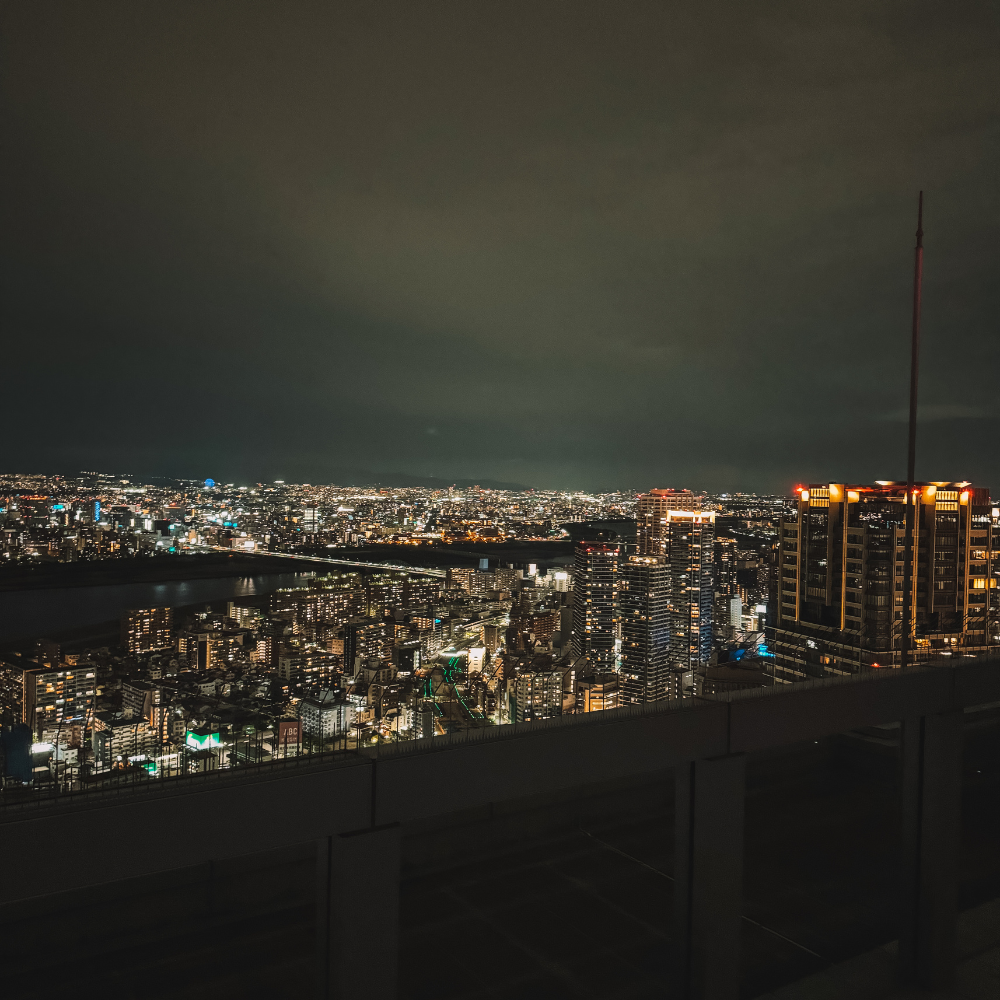
If you don’t do any other observation deck in Osaka, this should be the one you do! The Umeda Sky Building is a 173-meter-tall landmark in Osaka, comprising two 40-story towers linked at the top by the Kuchu Teien Observatory (aka the Floating Garden). From up there, you get incredible 360-degree views over the city! The initial observation deck feels much more spacious than the others I’ve been to and has a ton of information about the building’s architecture. I was here at the end of sakura season, so there was a bunch of cherry blossom decor, which was so pretty!
The biggest highlight is the open-air Sky Walk on the roof! The deck is lined with black lights, so if you’re wearing white, you will glow in the dark! This view of Osaka is truly phenomenal and is what made me really appreciate the city’s beauty.
If you’re keen, there is a cafe on the 40th floor. They had a seasonal Sakura and Matcha Parfait that was prettier than it tasted, and I got to eat it while overlooking the city, so for the experience, I’m not mad.
Shitenno-ji Temple
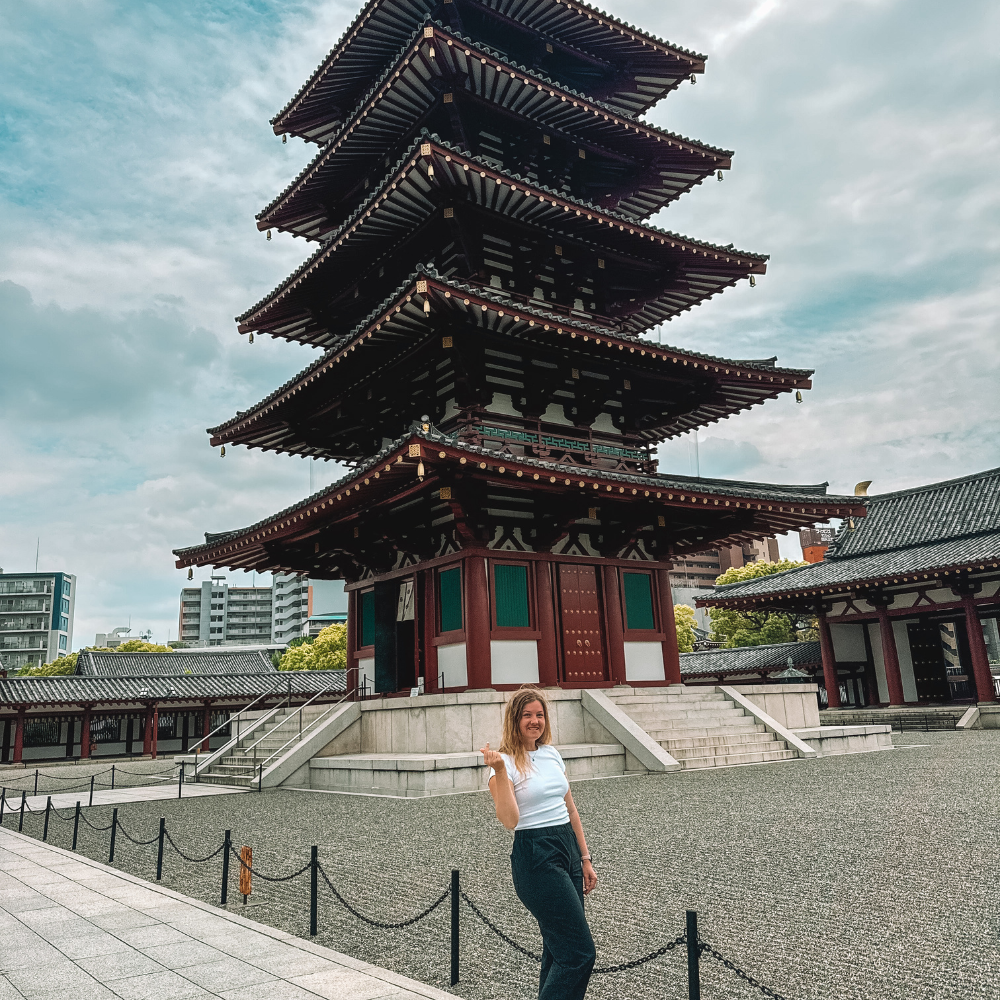
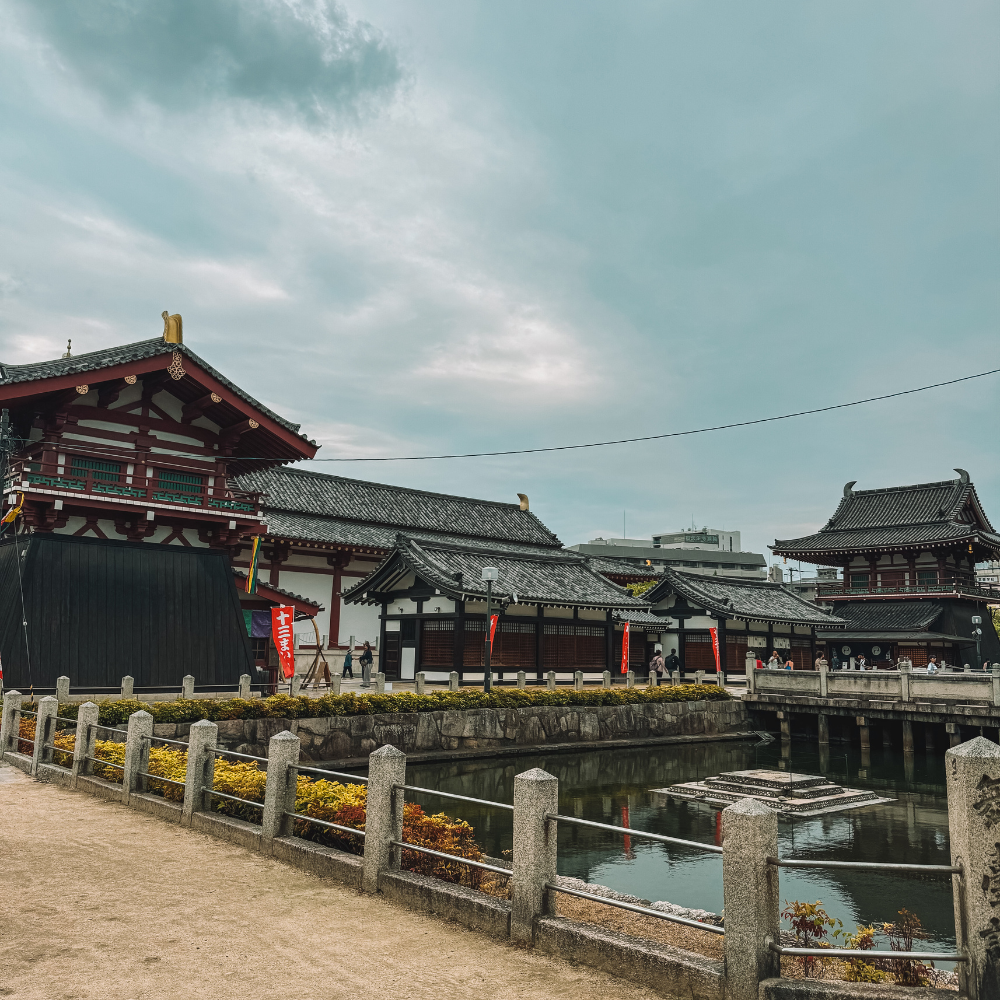
Shitenno-ji Temple is a historic Buddhist temple, founded in 593 AD by Prince Shotoku. It’s recognized as Japan’s first state-sponsored Buddhist temple and the head temple of the non-sectarian Wa-shu school of Buddhism. Unfortunately, the temple’s buildings burned down several times over the centuries. However, they were always carefully reconstructed to reflect the original 6th-century design. So what you see today is not original.
The outer grounds are free to enter! However, admission to the inner precinct, the Gokuraku-jodo Garden, and the treasure house is paid. I only visited the inner precinct and was able to go inside each building, including the five-story pagoda. You can also walk to the top of the pagoda, but you must remove your shoes and carry them in one of the provided bags. It’s a very cool experience, and the stairs aren’t too bad.
Flea markets are held monthly on the outer grounds. They had a used book market during my visit!
Kuromon Market
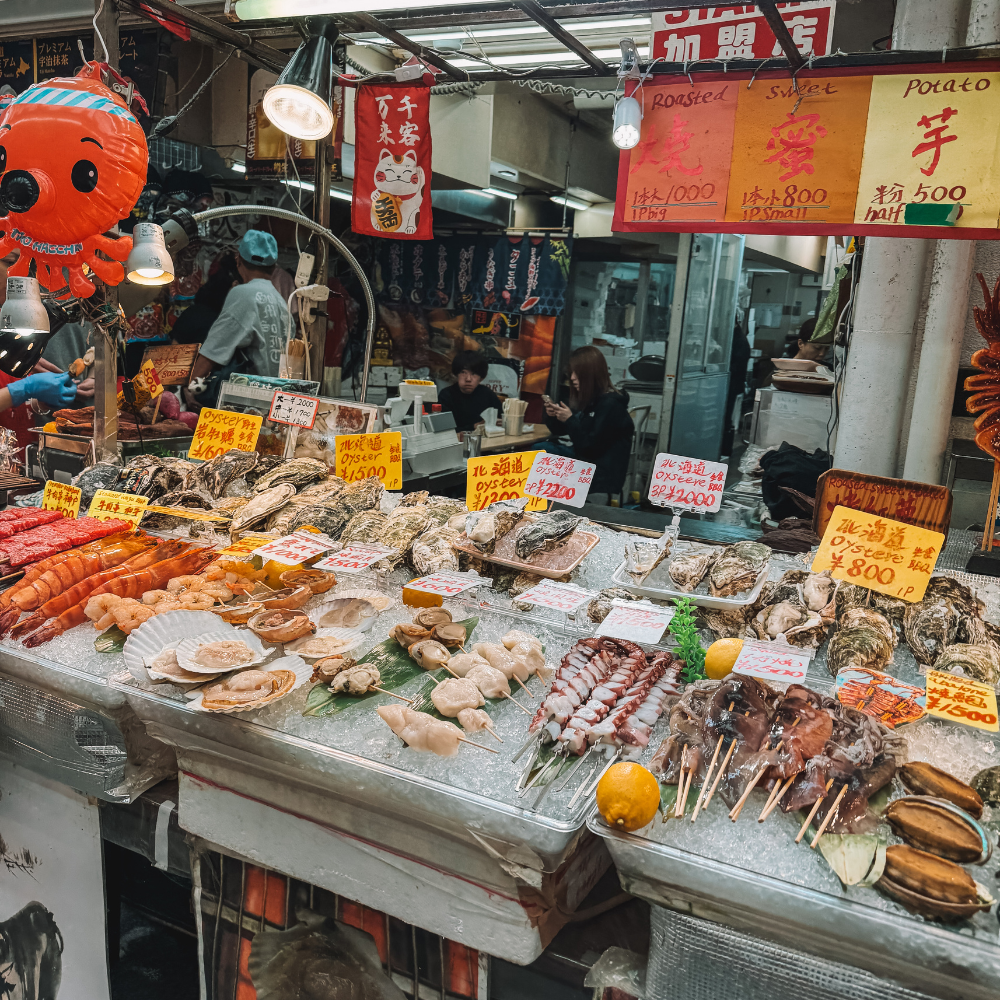
Kuromon Market, often called “Osaka’s Kitchen,” is a lively covered market in Osaka packed with fresh seafood, meat, produce, and classic Japanese treats. Just a short walk from Nipponbashi Station, it has over 150 stalls where you can try sea urchin, scallops, and wagyu beef, with plenty of spots to eat right then and there. Some stalls have signs saying you can’t eat in front of them, though, so look out for those!
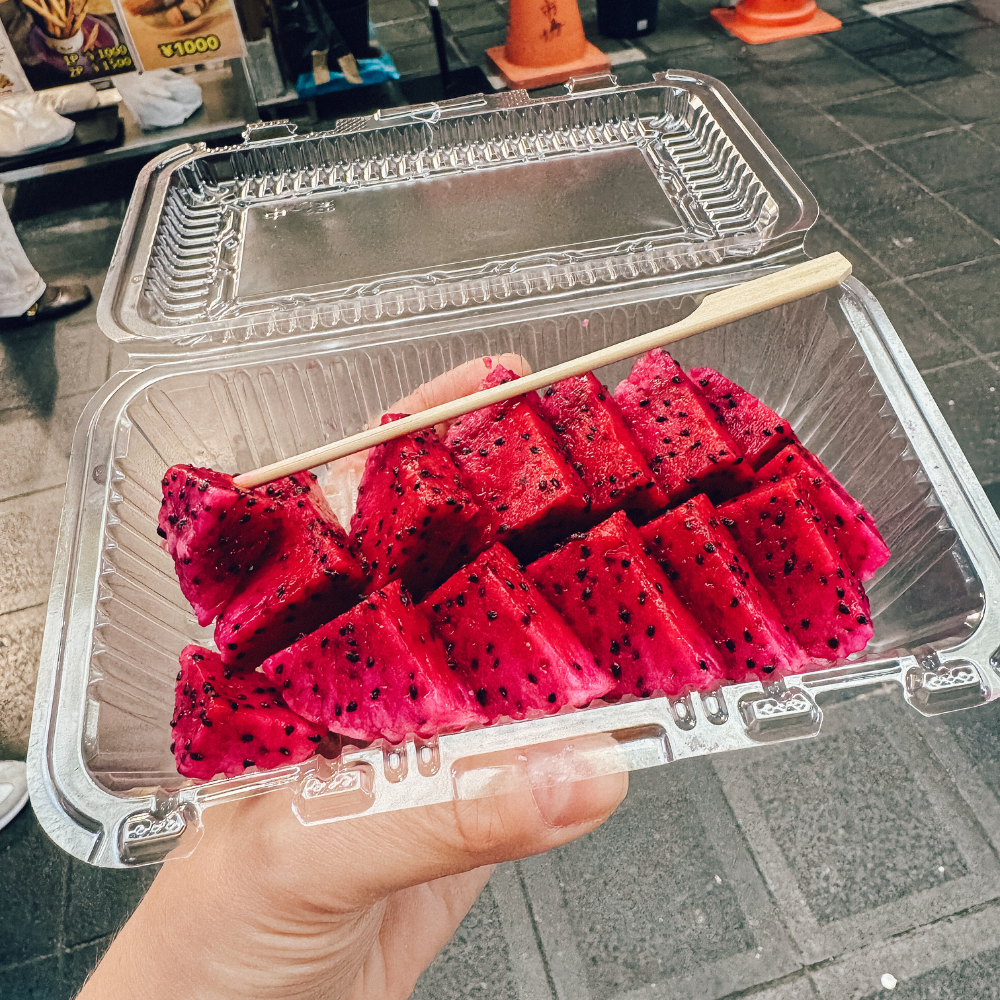
I thoroughly enjoyed walking through the market to see what they had to offer, but the prices are pretty high, given that it’s also a big tourist draw. There was a stand selling fruit where I bought a container of dragon fruit for only ¥250. Good way to get some fiber between all the meat and rice!
Final Thoughts
I’m fully aware that Osaka is one of the big three cities everyone tends to visit when they go to Japan for the first time. Osaka really wasn’t my vibe at first, and I was on the verge of not liking it. However, by day three, that started to shift, and I started to see the appeal.
It’s definitely not my favorite city in Japan, but a place I would go back to and try to appreciate more. There’s a lot I missed, particularly when it comes to their food scene!