



A Brief History of Kyoto
Kyoto was founded in 794 AD and was Japan’s imperial capital for over 1,000 years. It became the heart of Japanese culture, filled with beautiful temples, shrines, and traditional architecture. Even after the capital moved to Tokyo in 1868, Kyoto kept its historic charm. Today, it’s known as one of Japan’s most iconic cities, where old traditions and modern life come together.
Kyoto Railway Museum
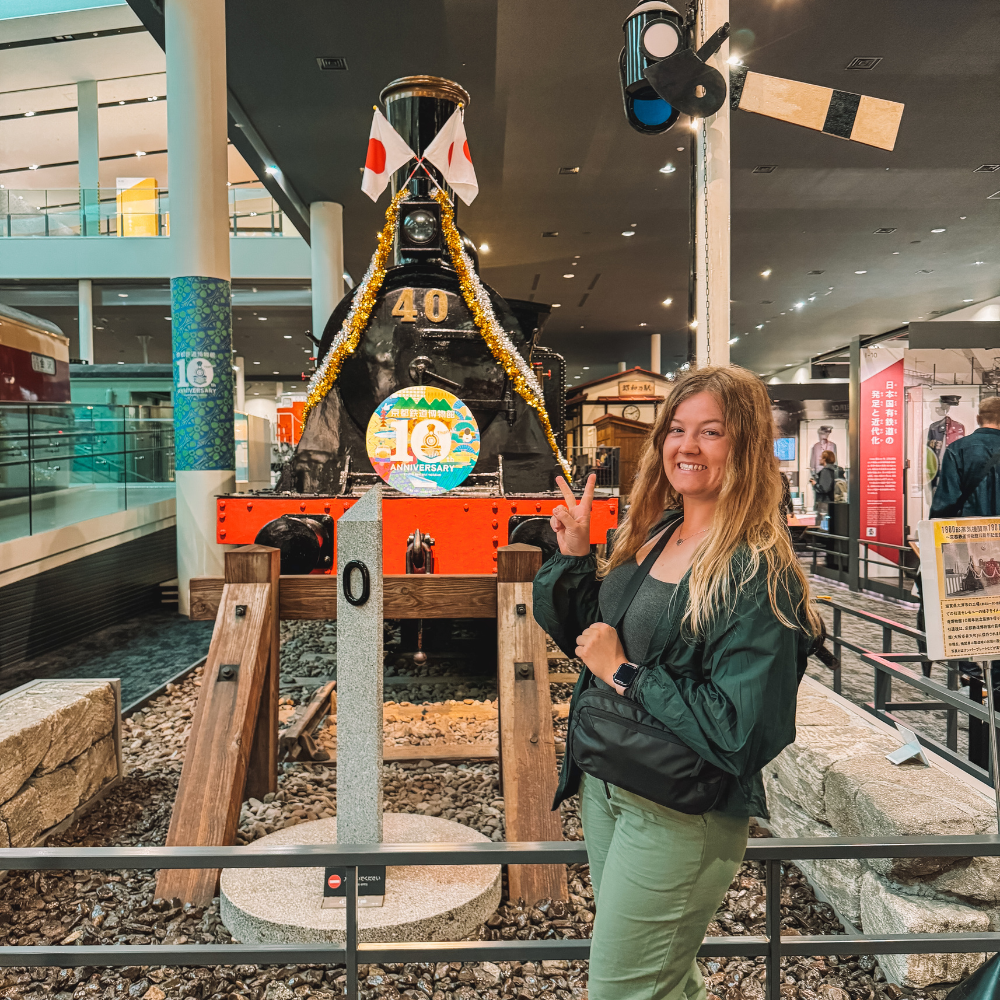
Japan learned about trains and essentially perfected the system. Even if you’re not a major train enthusiast, I’m not myself, it’s truly incredible how the Japanese have developed one of the best rail networks in the world. You enter this museum and are immediately greeted with a free souvenir photo (yes, it’s really free, but additional packages are available for purchase). There are full trains outside for you to see before you even go in for three levels of Japanese train history.
The first floor is the most intense, so you can spend most of your time there. There’s a fair amount of interactive materials and activities to help you understand and learn about the mechanics of trains! The second floor has some more displays and information, and there’s even a short live train show! The entire thing is in Japanese, but it was still fun to watch the models, so don’t worry if you’re not fluent (I’m definitely not!). On that note, there’s enough English on things you’ll get the gist of what you’re looking at, worst case, you can always use a translator that can read images, like Papago or Google Lens. There are also QR codes you can scan that offer multilingual options. On the third floor, it’s more of a quick walk-through gallery, so if you decide to skip it, you’re not missing much.
This was a very fun and affordable museum for only ¥1,500. I also happened to be there for their 10th anniversary, which was cool!
Kyoto International Manga Museum
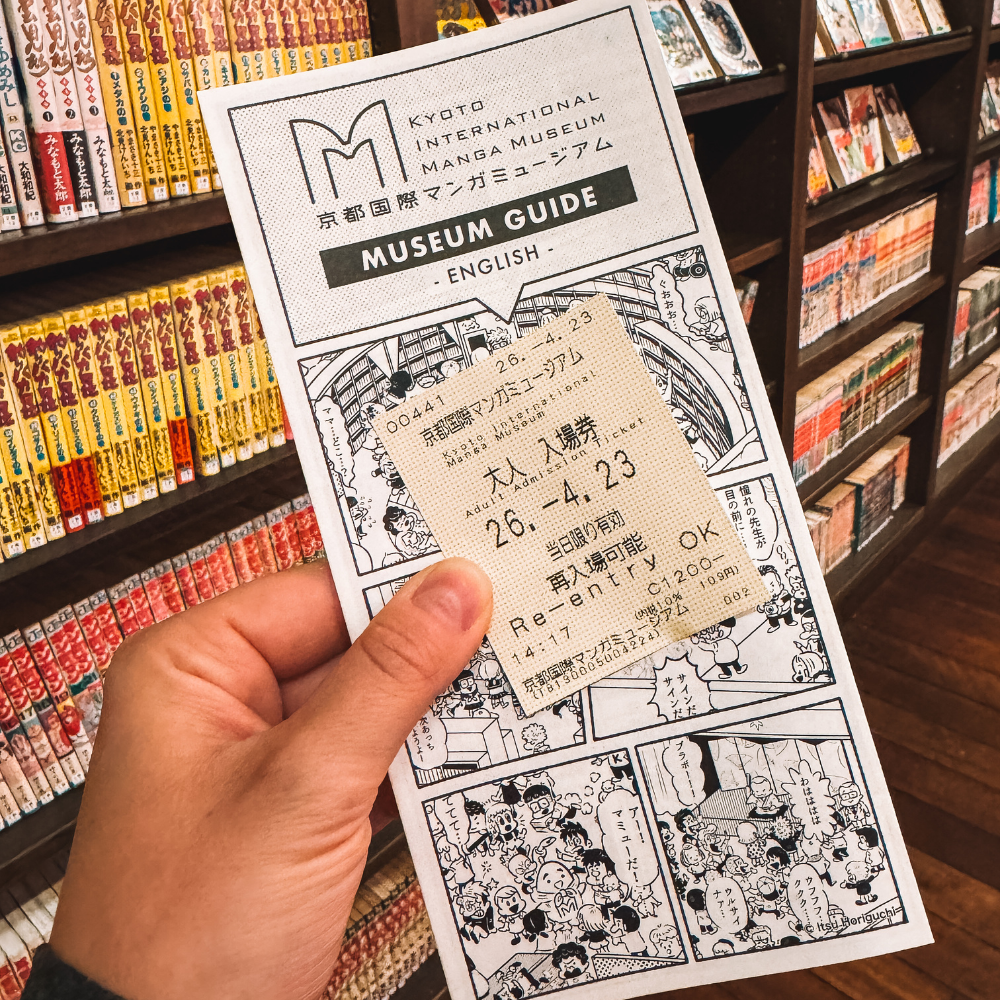
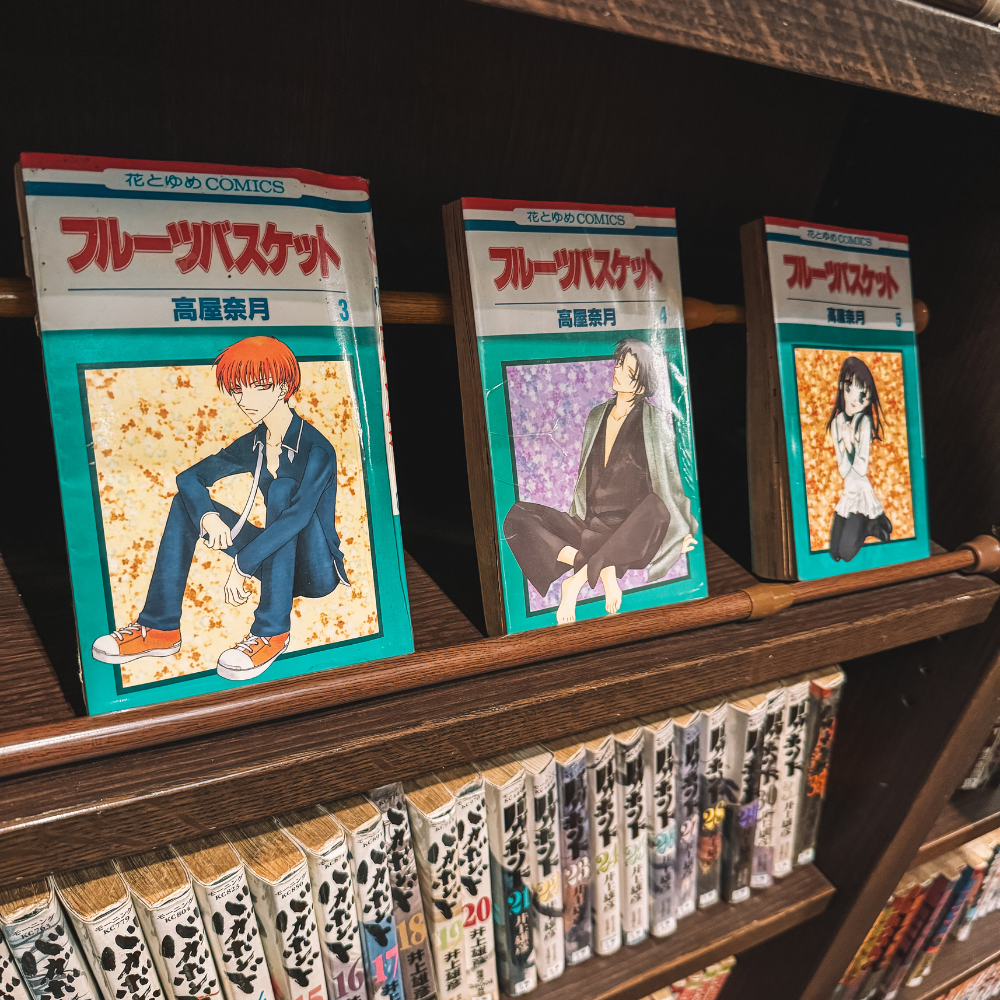
As an avid manga reader in my youth, I found this place incredibly cool to see! It’s not the only manga museum in Japan, but it’s a relaxed and very interesting place that covers the history of manga as a printed medium and its impact on the international stage.
From the get-go, you have rows and rows of manga that have been translated into different languages that were donated by various publishers. There’s an entire reading room on the ground floor, and as you head upstairs, that’s where the main exhibit and major information is.
The main collection in this museum consists of thousands of volumes organized by publication year, dating from the 1920s to 2005. You can pick up and read these books! Granted, these are in Japanese, and all seem to be from their original time periods. You’ll also find information on what manga is, its impact, types of publication, categories, etc. Everything was super informative, and it was fun to find and see original Japanese titles I’ve read the English versions of.
There are other galleries focusing on manga history, those who have contributed to preserving it, manga artists, and rotating special exhibitions. Towards the end of my visit, I read an entire volume of an English manga that caught my eye. This is a very relaxed place to visit. I spent about 2.5 hours here in total.
As a note, they do have free lockers that require a ¥100 deposit, and entry costs only ¥1,200.
Nishiki Market
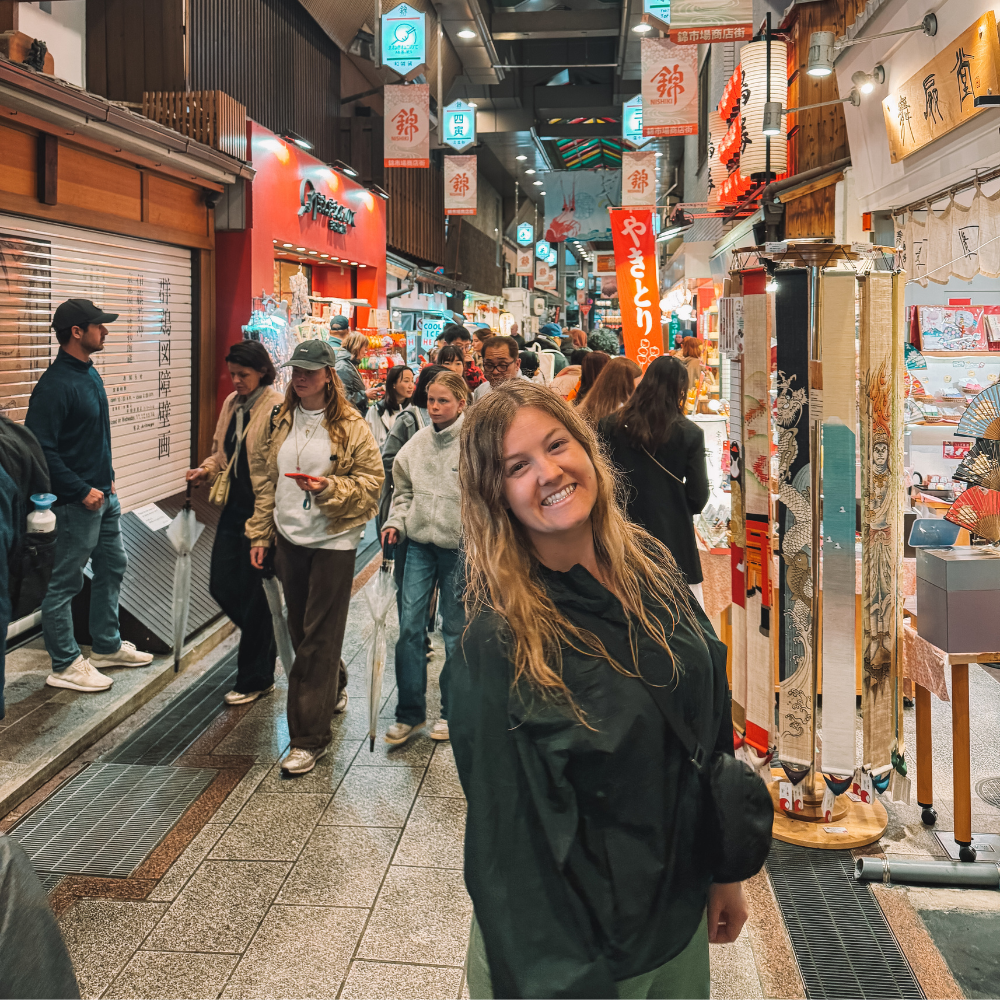
This outdoor, covered market street is a great place to grab a bite, find some souvenirs, or sightsee. The day I came, it was raining, so this is actually a great gloomy day activity since the street is covered by a roof.
There are tons of vendors, but do be warned that prices are higher since it’s a very tourist-heavy area. Personally, I just looked around, absolutely fascinated like a fat kid in a candy store. This market is also connected to the Teramachi and Shinkyogoku shopping streets, which feature higher-end stores.
Wendy’s First Kitchen
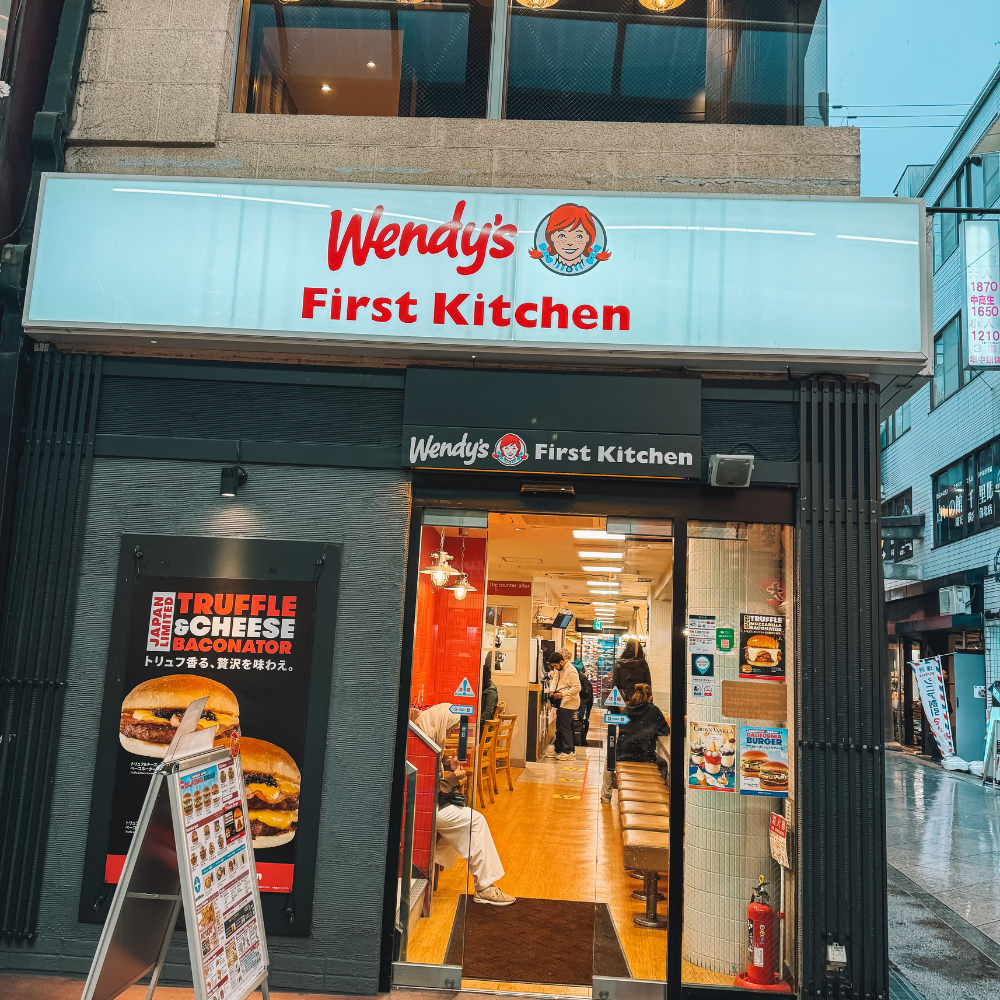
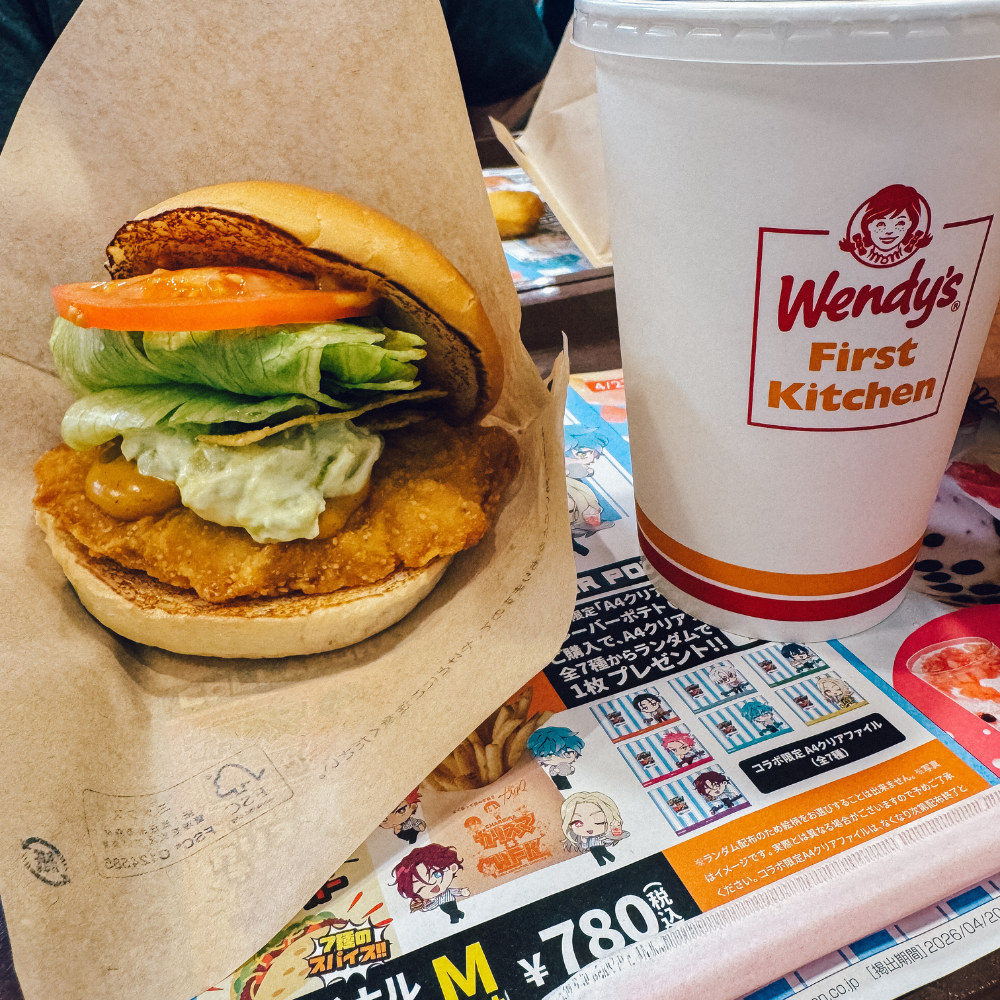
People RAVE about getting McDonald’s in Japan, and I’m not saying don’t do that, but if you want to try a much rarer Japanese version of American fast food, Kyoto has a Wendy’s! It’s also right in Shinkyogoku, which is connected to Nishiki Market. The menu, off the bat, is pretty different from the US version, but it does share some items, like the Baconator and their famous spicy chicken sandwich.
While I was craving a standard American spicy chicken sandwich, knowing this was a rare opportunity, I opted for their promotional “American Journey California Burger”. Specifically, the chicken version, because I really wanted chicken. It was Mexican-influenced, but what interested me more were the seasoned fries. You can absolutely just get standard salt, but you can also add flavors for no extra charge, and I went with dashi. I really enjoyed the umami this added to them!
The Nintendo Museum
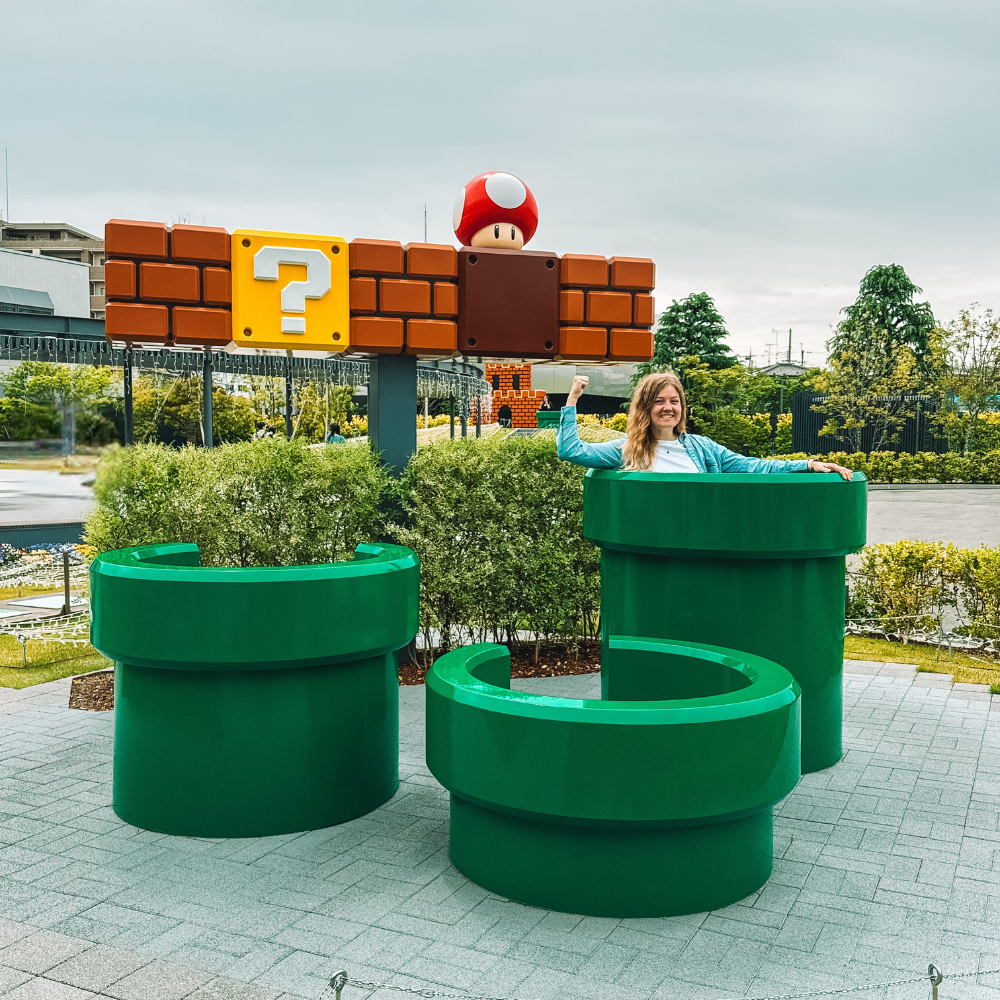
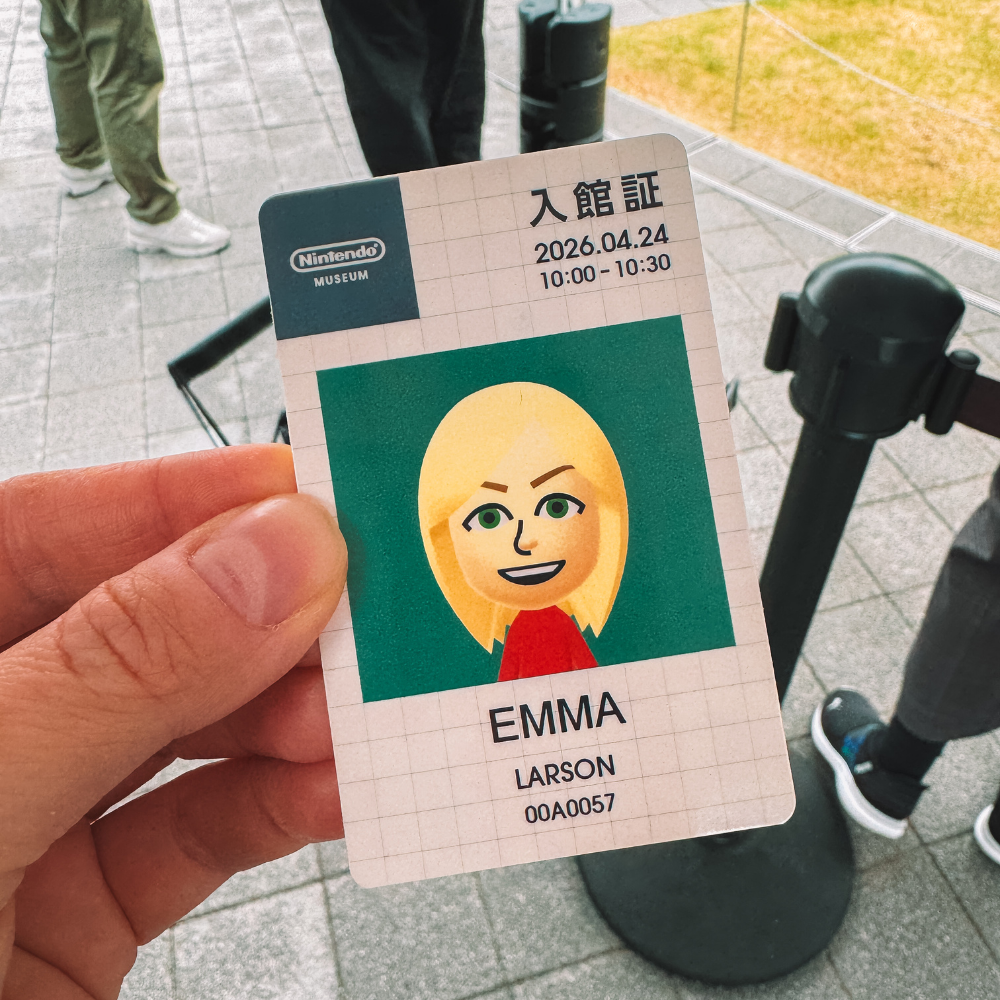
Gaming nerds or anyone who simply grew up fist-fighting their siblings over Mario Kart losses, this museum is a childhood dream come true. This is the ultimate collection of Nintendo memorabilia. It takes you from the company’s humble beginnings, making playing cards, to the powerhouse they are today.
This is a great way to spend about five hours, and I wrote a whole separate guide on it! Tickets are a bit hard to get, so you need to pre-plan!
Fushimi Inari-taisha
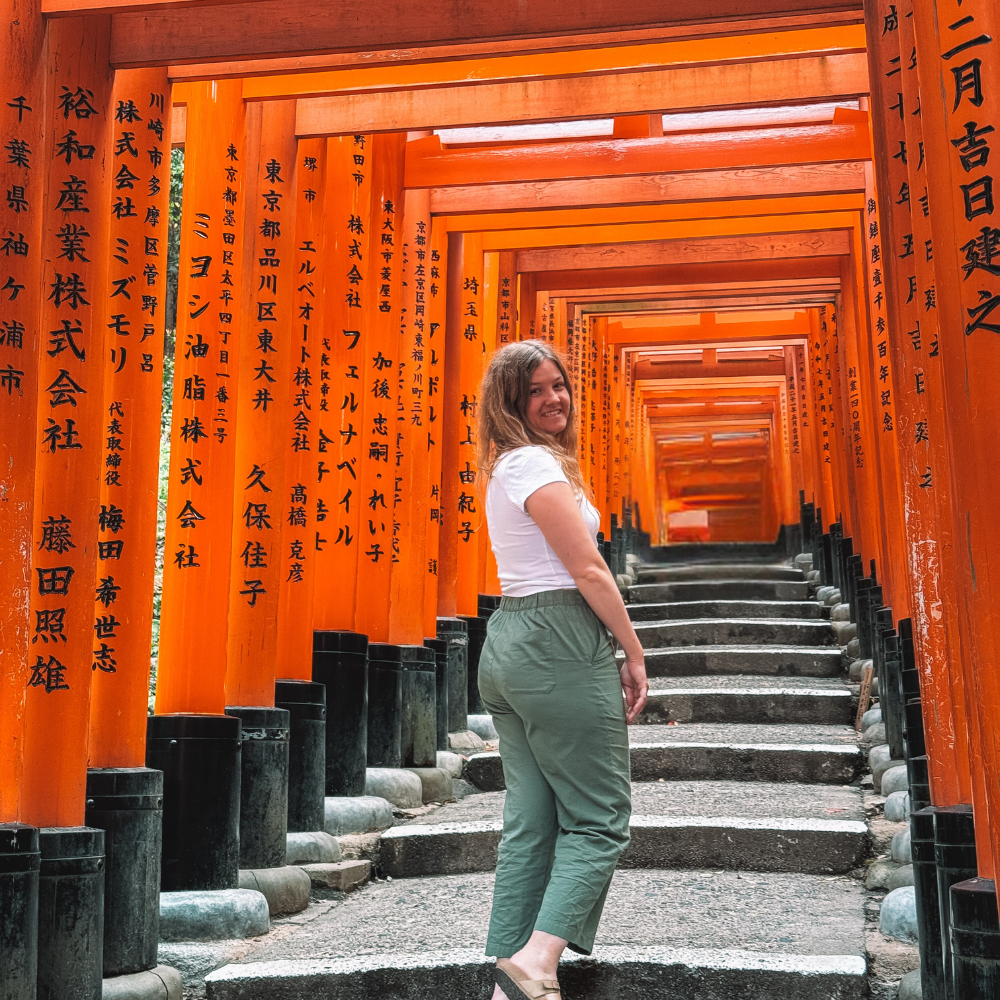
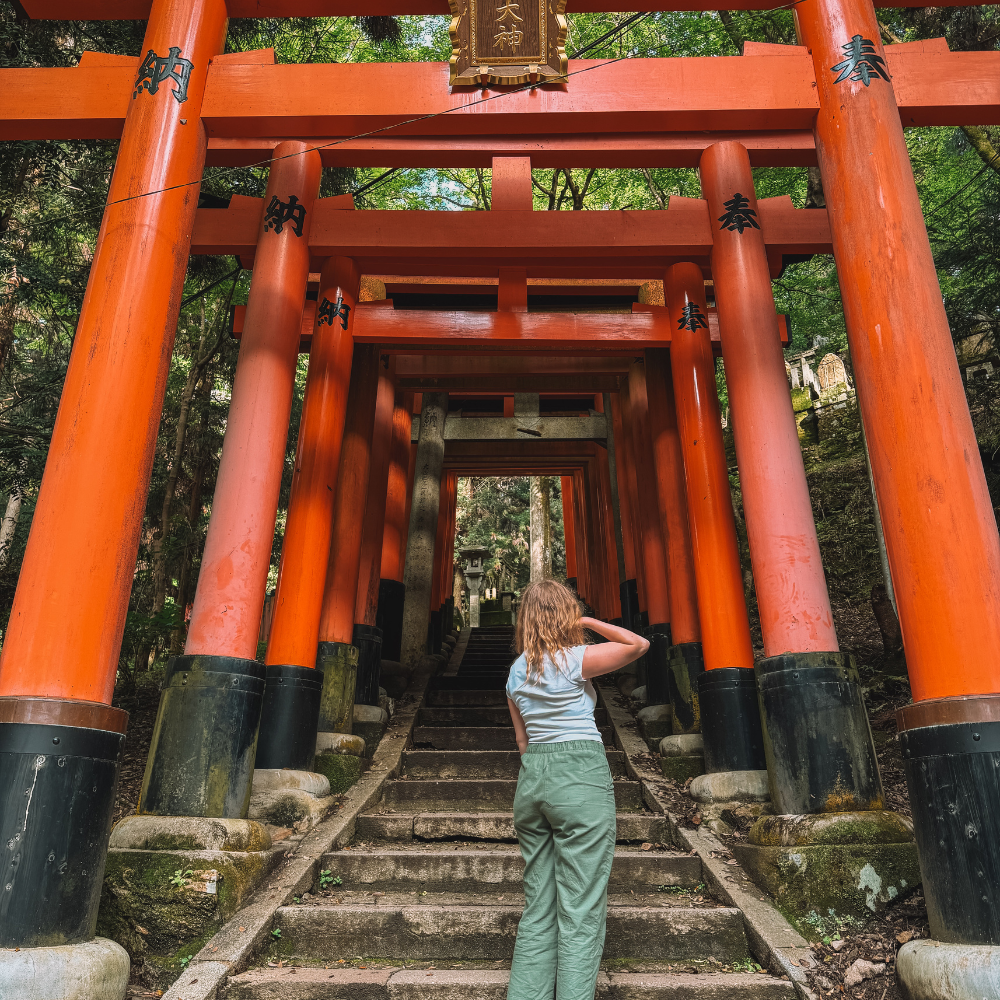
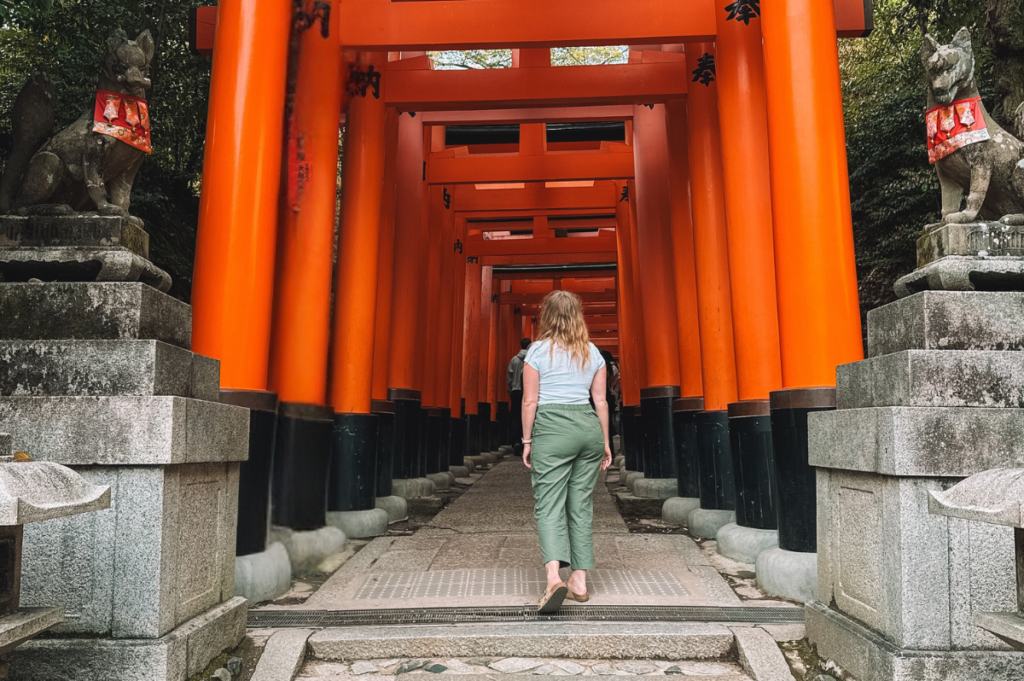
The home of the thousand tori gates, this shrine is way bigger than I realized and positively breathtaking! This is an extremely popular spot for getting photos with the gates as they go on and on. Unless you want to get there super early to try and beat the crowds, your best bet would be to pass the first few sets and to get much deeper into the mountain, where there’s less foot traffic.
This shrine does sit on a mountain, so there can be quite a bit of uphill climbing. I did all of this successfully in Birkenstocks, but my lungs weren’t the most thrilled. Just an FYI for those like myself who haven’t been keeping up with their cardio. Do also remember this is a sacred place where people leave offerings and pray. While it might be an amazing place to visit, also be respectful of those trying to pray and keep an eye out for “private property” signs, as there are a few.
I was there in the middle of the day, which was fine, but this would have been a better morning activity to try to avoid crowds. Truly believe this is one of the cannot miss spots here!
Tenryu-ji
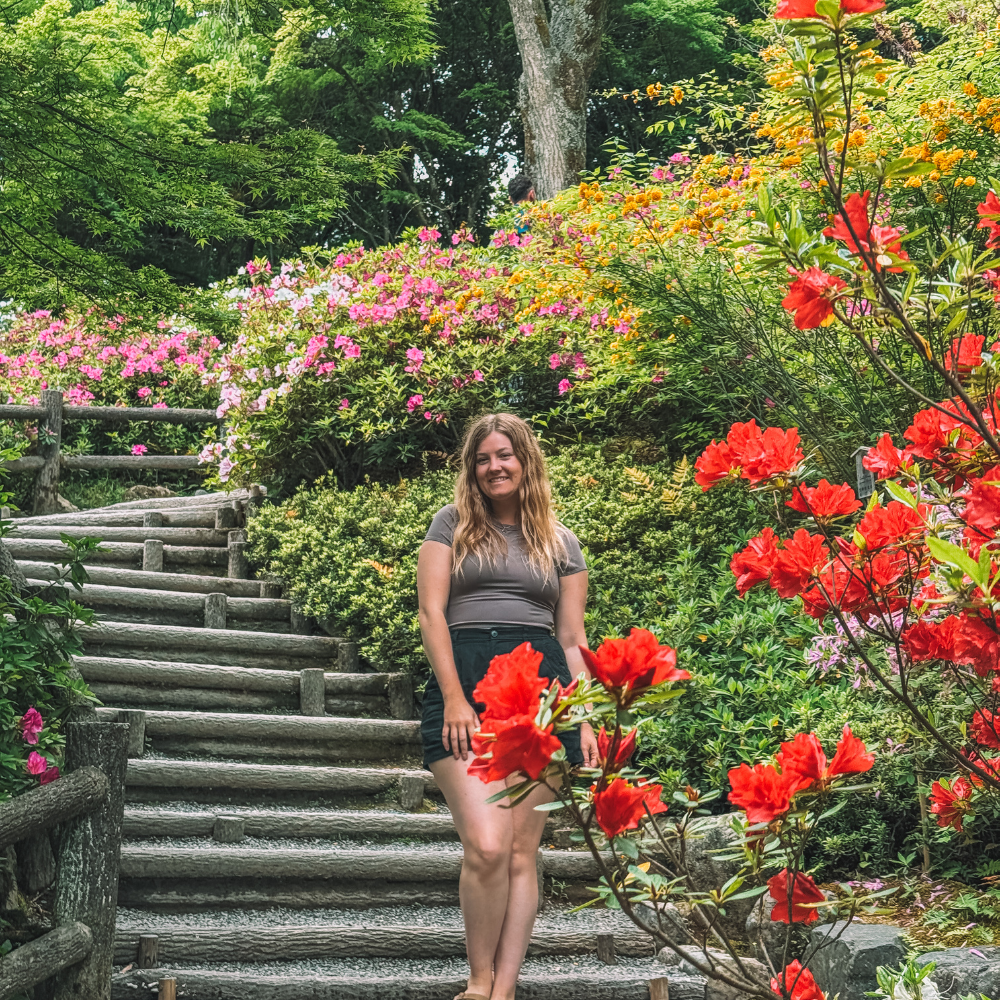
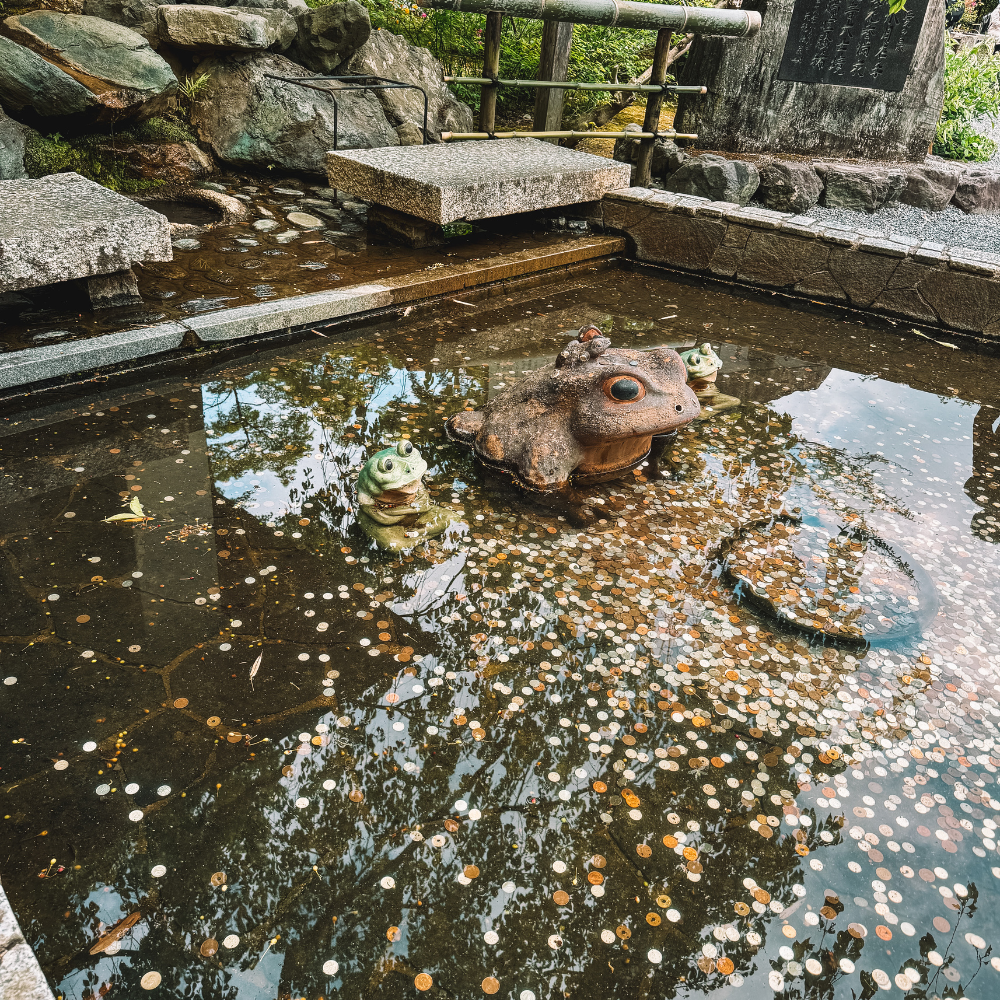
These grounds, a major Rinzai Zen temple and UNESCO World Heritage site, are pretty incredible! Each piece of the temple is priced individually, and we opted to just take a stroll through the gardens. There are a lot of really beautiful flowers, and as it’s all along the main building, you don’t feel like you’re missing much, as there are many parts where you can see inside.
Stopping here was a bit of “it’s right there, so let’s just go.” However, I’m glad we did, because it was a really nice time. The gardens also lead into the bamboo forest!
Arashiyama Bamboo Forest
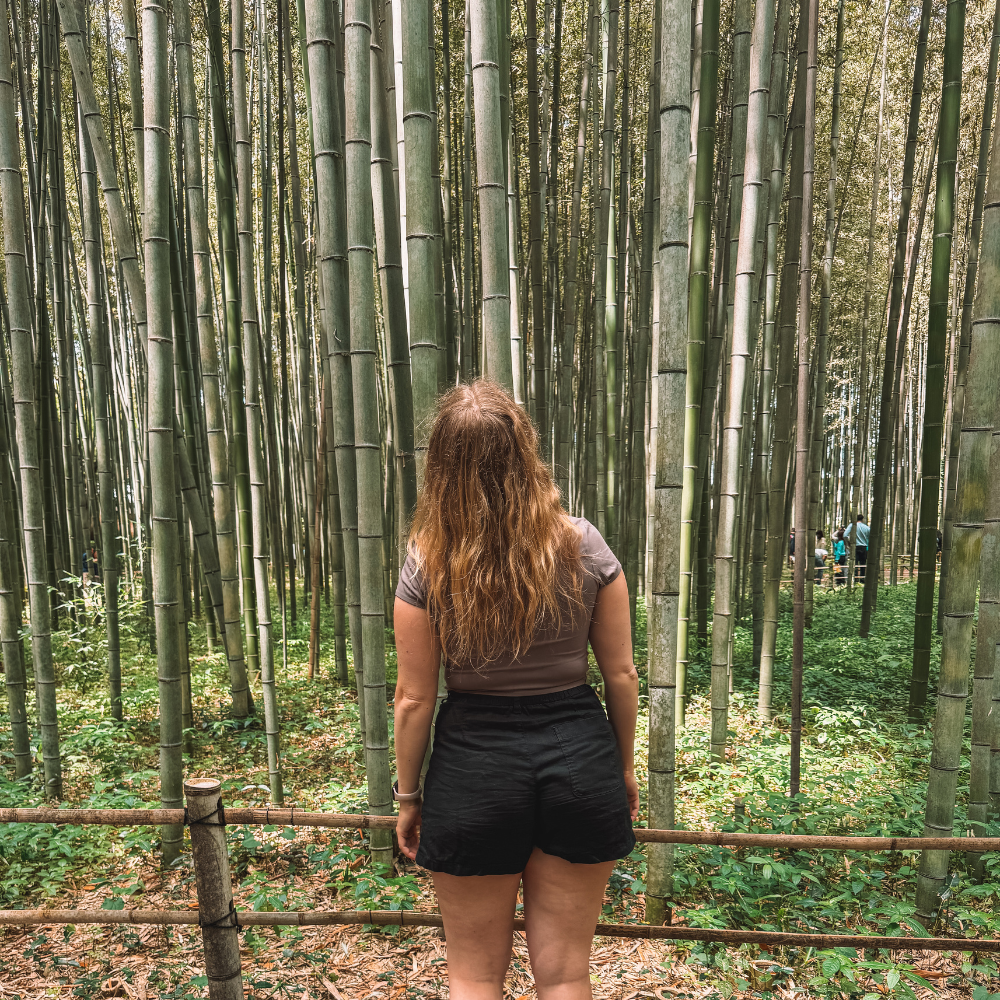
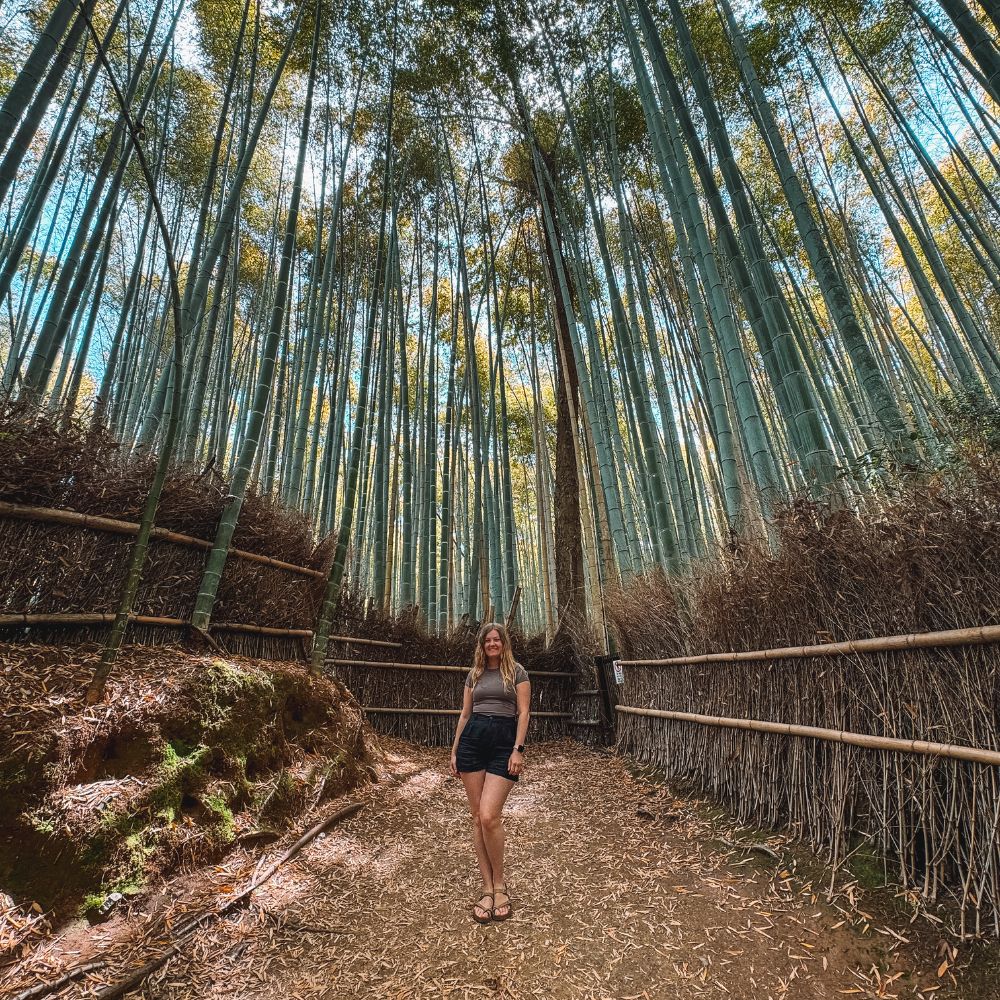
Walking through this forest is totally free, which is great! I will say when it said “forest,” I expected windy paths through rows and rows and rows of bamboo, but it just isn’t the case. When you first start your loop, there’s a pretty wide, dense walkway with trees on both sides. This did get pretty crowded, and at first, I was worried that it was all there was. You’ll want to keep going to the Bamboo Forest Walk, where there is more of that “stroll through the forest” feel and a much greater chance of not getting other people in your photos.
This forest is beautiful, and seeing so much bamboo is incredible, but it’s definitely not quite how it sounds online once you’re actually there. Still absolutely worth visiting!
Togetsukyo Bridge
This bridge connects different sections of Arashiyama and offers some really beautiful views of nature and the mountains!
Arashiyama Monkey Park
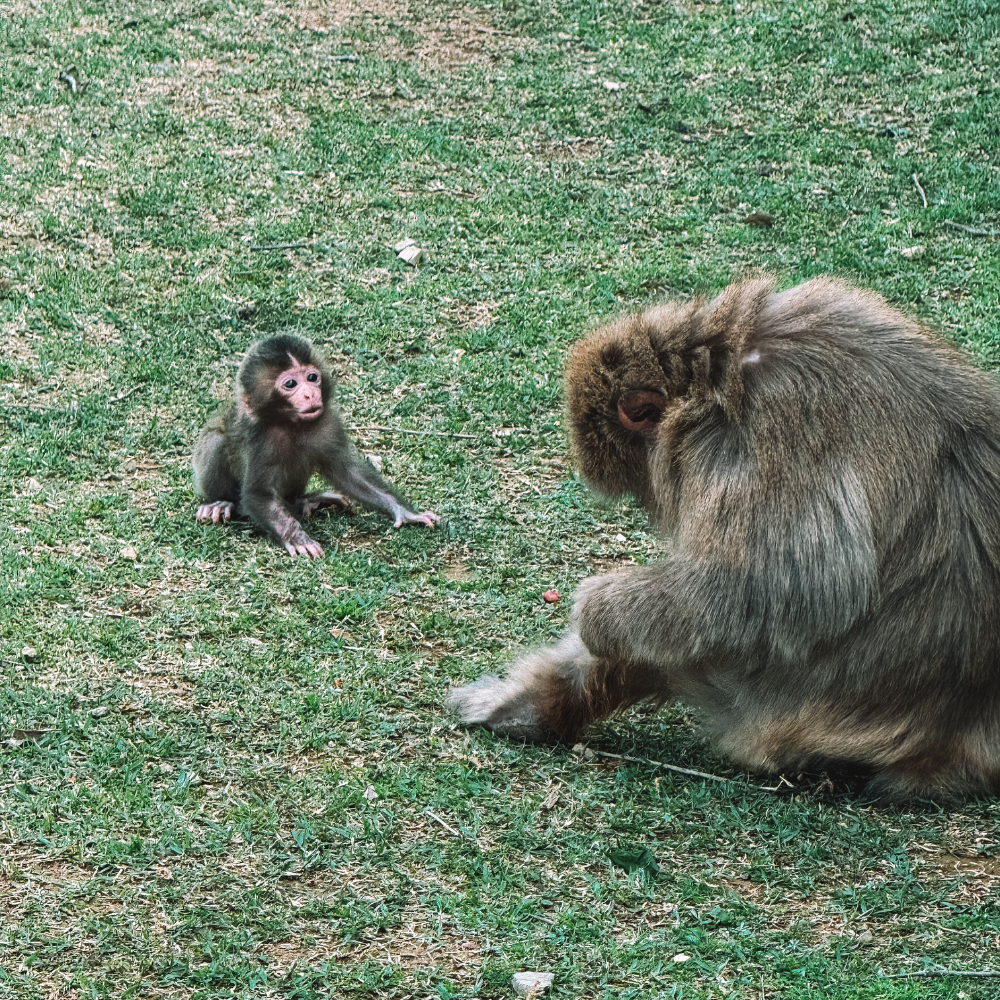
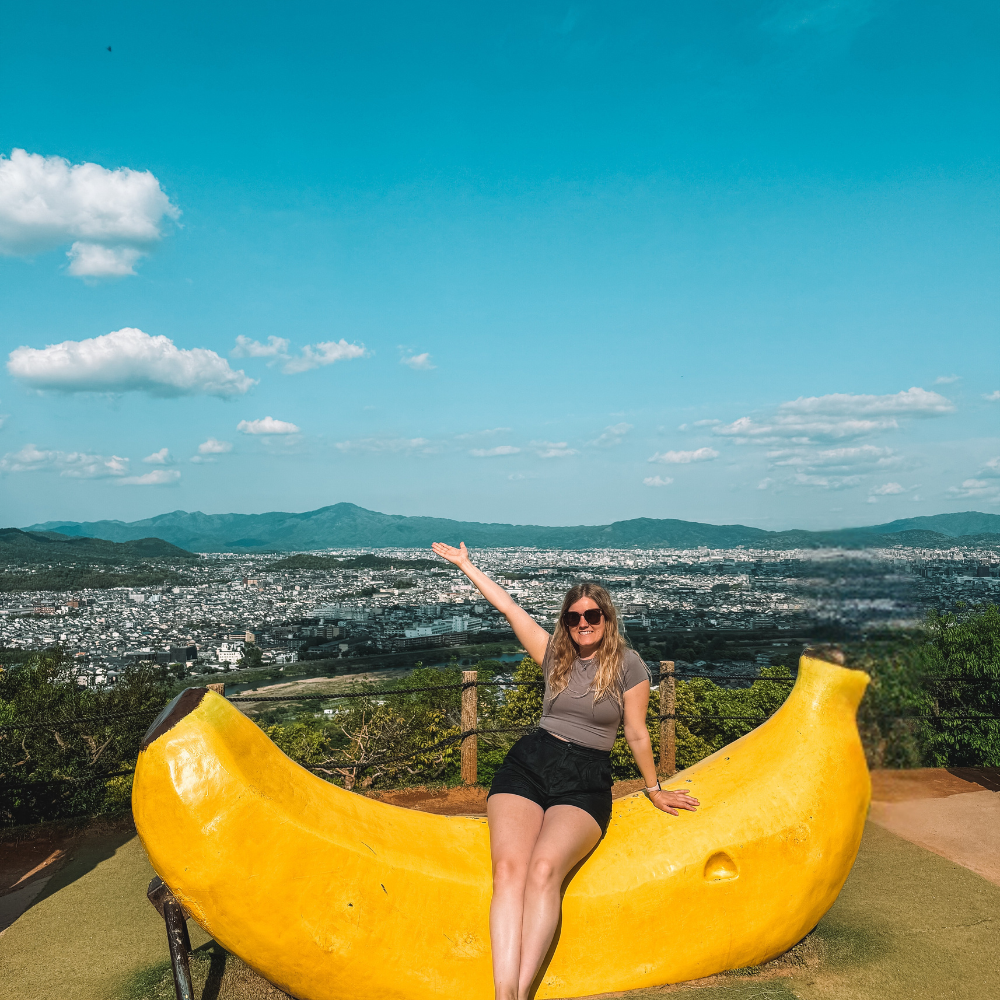
Hope you’ve been building up your cardio for this one. This is an open-air monkey park at the top of Mount Iwatayama, home to over 120 wild Japanese macaques. There are no cages!
The ticket booth is cash only (¥800 for adults)! Once you have your ticket, it’s a 20-minute hike up the top of the mountain to the park. They make you WORK to see these monkeys. However, once you make it to the top, it’s an absolutely beautiful view of the city, and the animals are quite literally just walking around. As they are wild, you do want to keep your distance, they say at least two meters. You can also feed them by purchasing specific food from the visitor center and feeding it through the gates. If you’re a stamp collector, there’s one inside!
When I was there, they also had a baby that was so young he couldn’t really hold himself up too well. Absolutely melted my heart.
Pokemon Center Kyoto
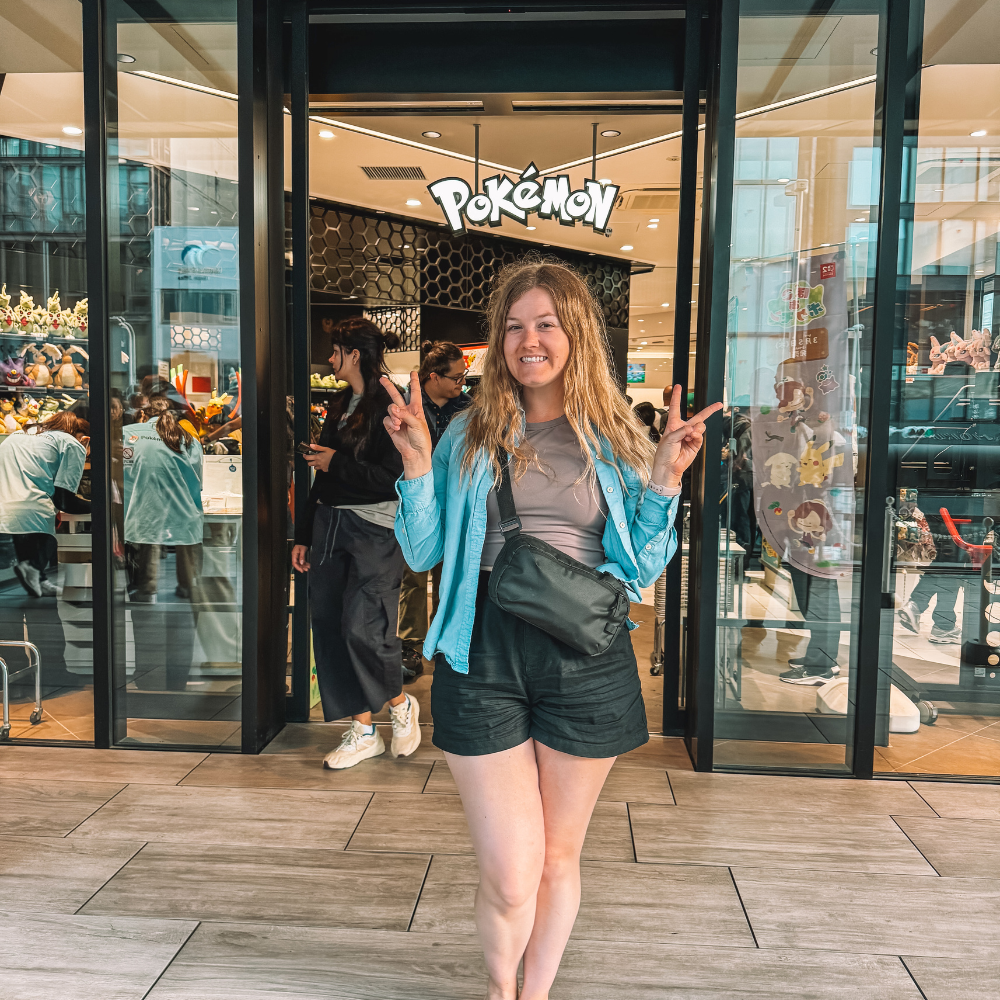
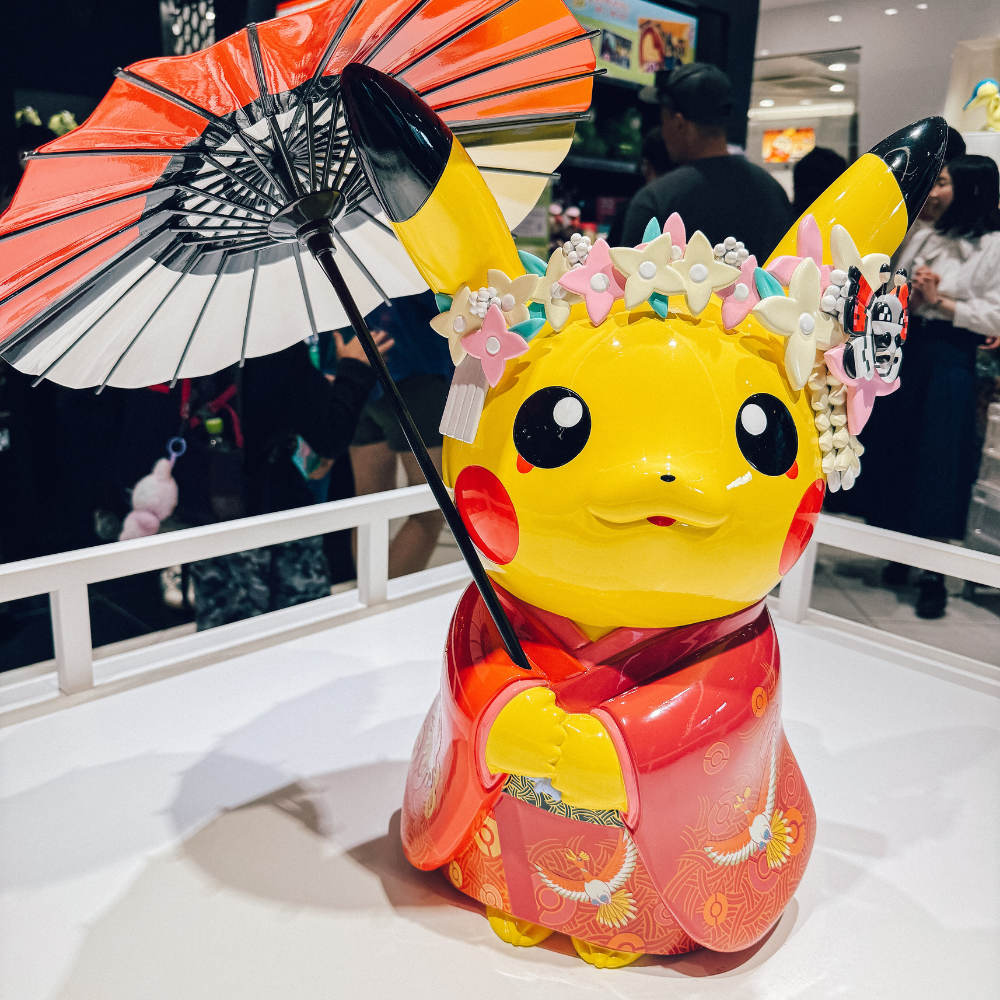
It is simply a Pokémon store and far from the only one in Japan, but it’s the first one I ever visited, and it’s just super cool to see! I mean, as you walk in, they have Pikachu in a kimono! How adorable is that??
Nintendo Kyoto
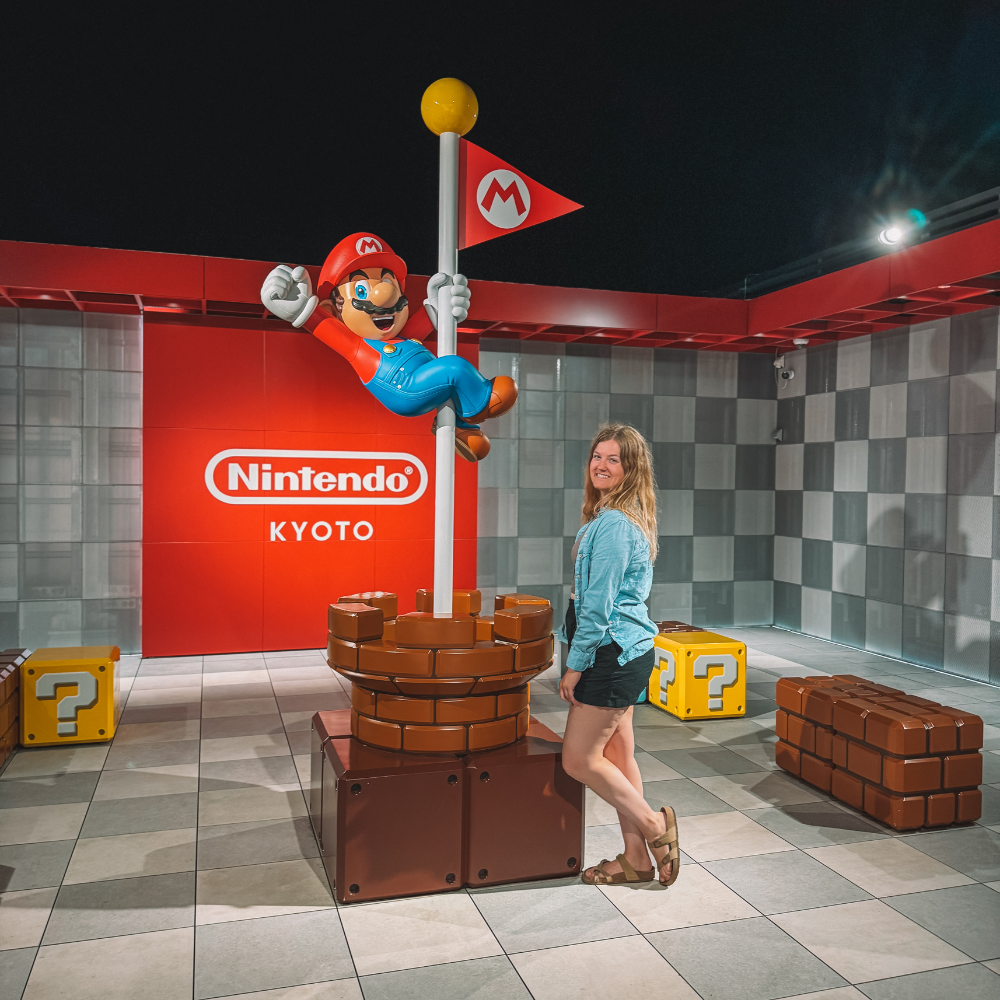
My second-ever Nintendo store in the world (the first was in New York City)! This one is a bit multi-layered. Before you even get to the floor with the store, there’s a giant Mario statue on the ground floor. In the store itself, there’s a ton of fun Nintendo-themed merchandise and store-specific items. Think “Nintendo Kyoto” t-shirts.
You’ll want to go upstairs again because there’s a rooftop with a photo op of Mario on a completion pole, from Super Mario Bros., with Nintendo Kyoto as the backdrop. The entire experience is great for lovers of the Nintendo Universe.
Visit an Onsen
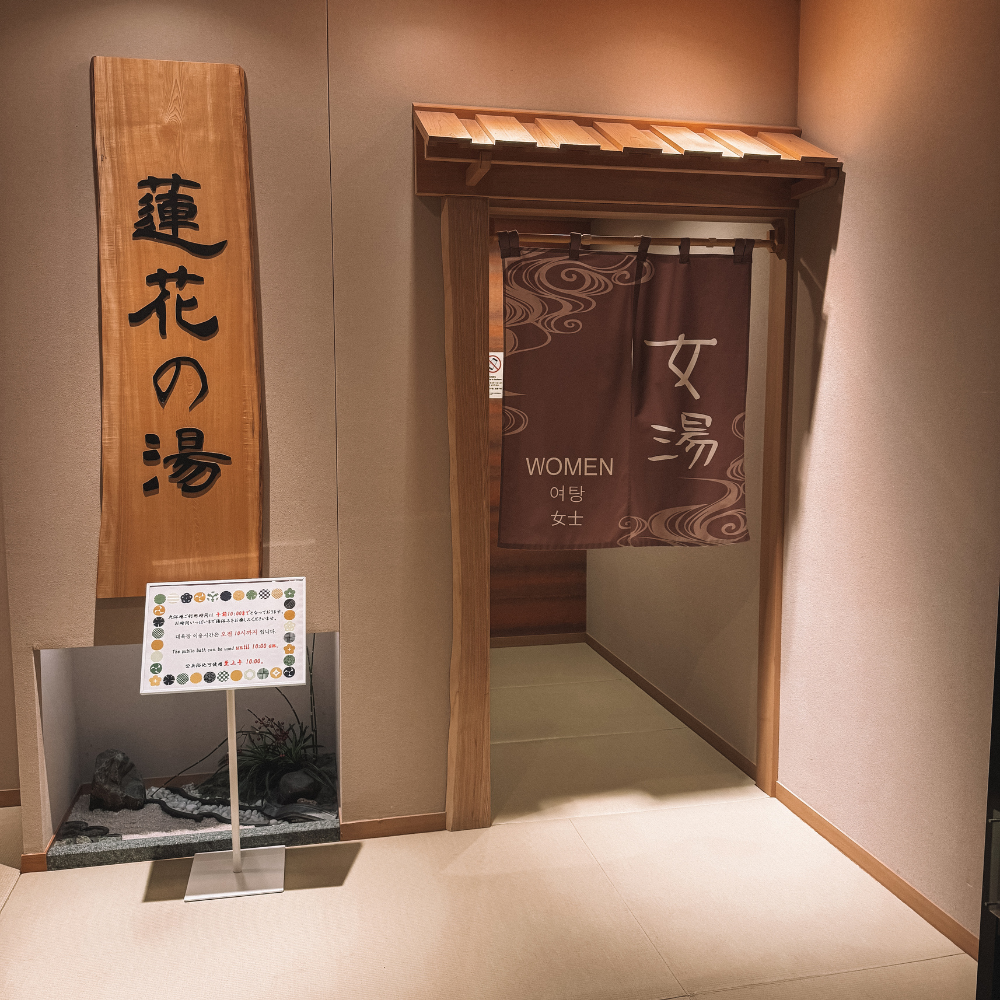
An onsen is a Japanese hot spring and the traditional inn or bathing facilities built around it. Defined legally by the Hot Springs Act as “water, vapor, or gas gushing from underground at a temperature of at least 25°C (77°F) or containing specific mineral content.” Water is geothermally heated, not artificially.
The water typically contains sulfur, iron, or sodium. These have been noted to have healing and therapeutic properties. Bathing does require strict etiquette, such as cleaning your skin before entering the bath and being nude in sex-separated areas.
People with tattoos are usually not allowed to bathe. This ties into Japan’s history with the Yakuza (gangs). This is slowly shifting, and you can find tattoo-friendly ones.
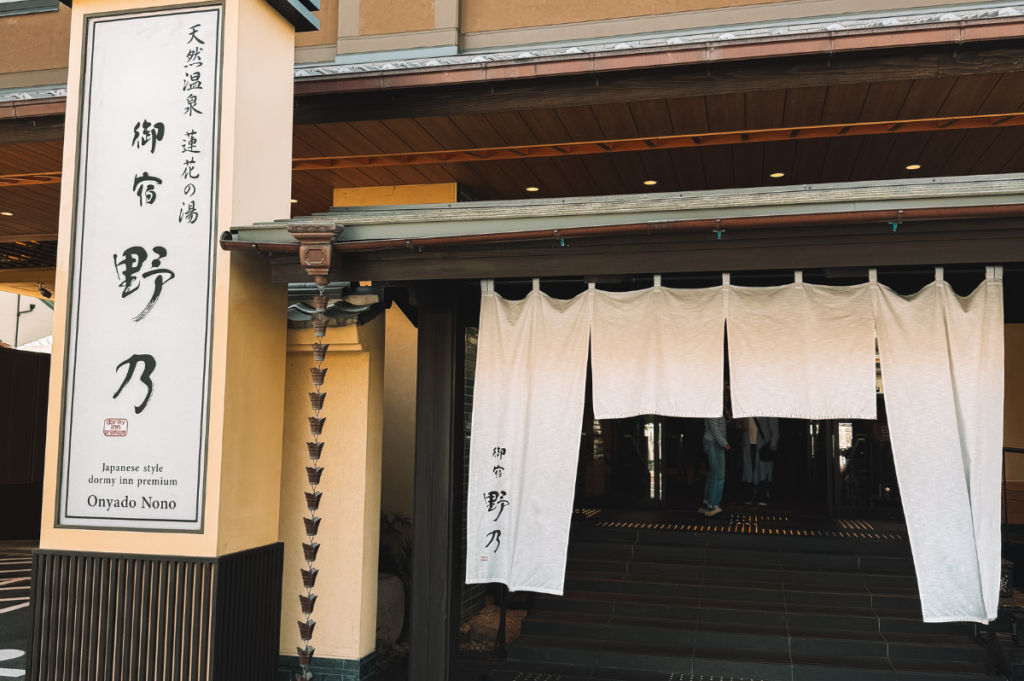
I stayed at Onyado Nono (no tattoos allowed) during my visit to Kyoto, which is an onsen hotel! I highly recommend it, but you can also find a day onsen to try out.
Related Article
Final Thoughts
Kyoto is that old-world, cultural part of Japan that is really so intoxicating. As the country’s former capital, it holds an incredible amount of history, temples, and shrines that leave you in total awe. This was the first city in Japan I spent any real time in, and I’m grateful for that. I believe it gave me a different perspective than starting in Tokyo would have.
From Fushimi-Inari to the Nintendo Museum, Kyoto has so much to offer and left a special place in my heart!