



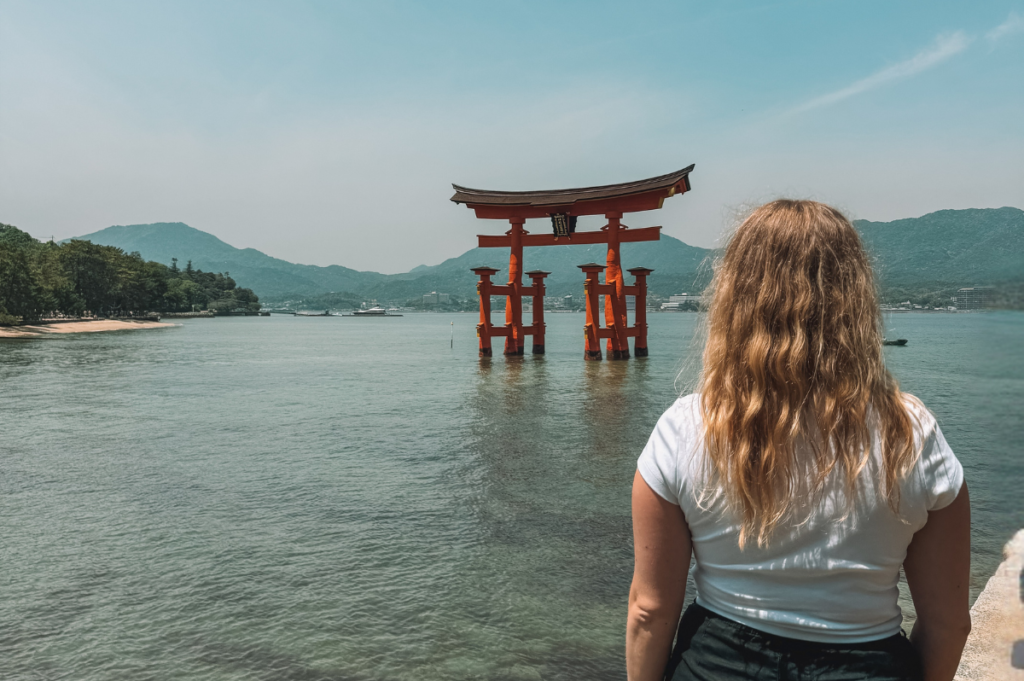
Escape to the incredible island of Miyajima and experience the beauty of its iconic floating torii, shrines, and incredible food!
A Brief History of Miyajima
Miyajima, officially called Itsukushima, has been seen as a sacred spot for centuries. Way back in the day, people believed the island was so holy that regular visitors weren’t even allowed to step on it, so they’d admire it from boats instead.
In the 1100s, Taira no Kiyomori helped build Itsukushima Shrine, the famous shrine that appears to float on the water. Over time, the island became a popular pilgrimage stop, and now it’s a go-to destination known for its iconic torii gate, friendly deer, and amazing street food!
How to Get to Miyajima
Since Miyajima is an island, you’ll ultimately need to take a ferry to reach it. The ferry is compatible with the IC card, but not the Japan Rail Pass. Thankfully, it’s also pretty close to a few popular cities, making it an easy day or half-day trip if you don’t want to stay overnight.
From Iwakuni Station, it’s an easy 30-minute train ride to Miyajimaguchi Station and then another 10 minutes on the ferry.
From Hiroshima Station, it’s a 30-minute train ride, followed by the ferry.
A bit farther out, starting from Shin-Osaka Station, the fastest way is to take the Shinkansen to Hiroshima, approximately 1.5 hours. Then transfer to the train for 30 minutes to Miyajimaguchi, then take the 10-minute ferry. You’re looking at just over two hours in travel time one-way, as long as everything runs smoothly. If coming from Osaka, this is doable as a day trip, but you’ll want to leave early and return late to make it worthwhile. Another option would be to spend a day in Hiroshima, then Miyajima, to reduce travel and maximize your time.
Deer of Miyajima
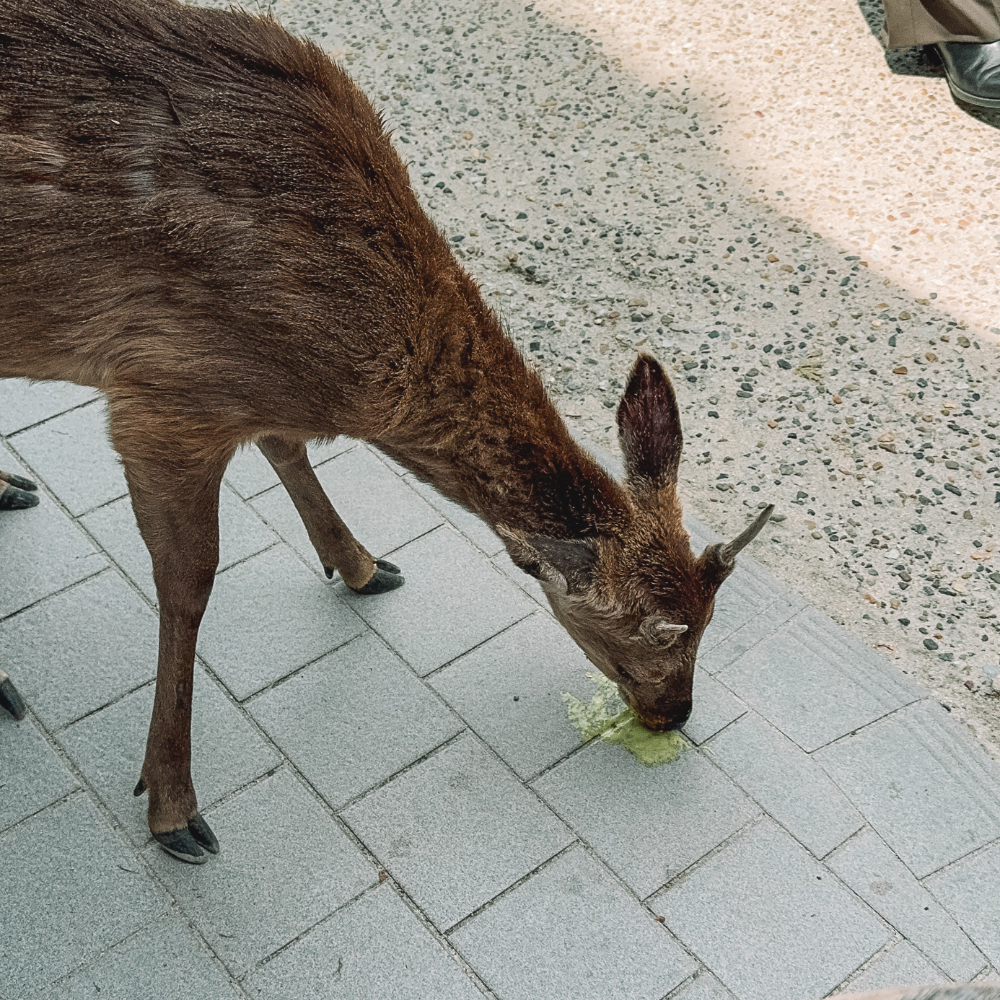
If you’ve been to Nara, you might be familiar with wild sika deer. If so, you’ll be pleased to know you can also find them walking around Miyajima. The deer on the island are also wild. However, these ones you’re not allowed to feed and tend to be better behaved.
Still be cautious, as I saw a male deer steal someone’s ice cream while they were sitting. My bag was on the ground while I took a photo, and I had to stop a deer from trying to get into it, even though I didn’t have any food in there. There are announcements in English and Japanese about the deer, so you can’t say you weren’t warned! They’re still super cute, and you can take photos of and with them if you’re careful.
O-Torii Gate of Itsukushima Shrine
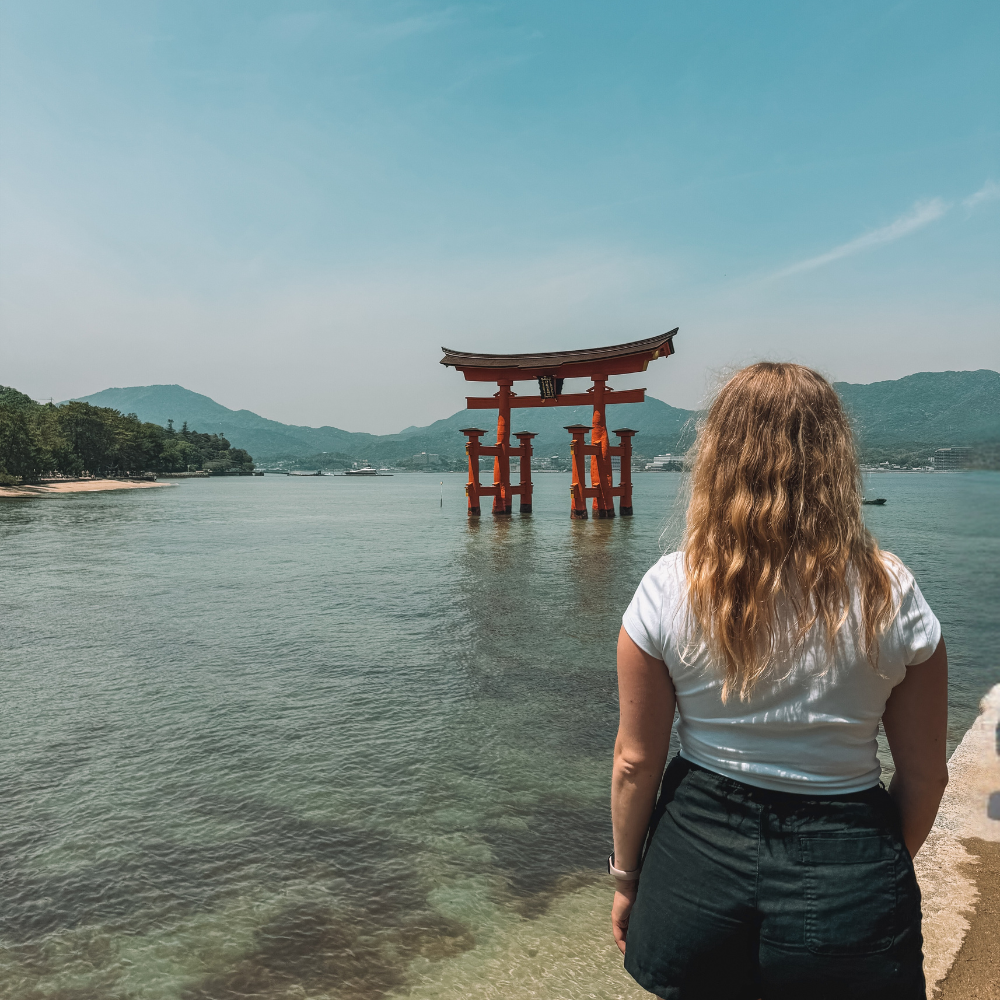
Probably the most recognizable great torii gate in Japan, it stands in the sea, about 16.8 meters high, and during high tide appears to be floating. The present O-Torii construction is based on the Ryobu-torii style, a wooden Shinto gate design characterized by four supporting pillars.
The most popular spot to get a picture is on the dock right in front. However, I visited during Golden Week. So, not only was there an insane line, most likely at least a two-hour wait, but you had to pay to take a photo there. During non-holiday weeks, I was told you can usually go up without issue, free of charge. If you’re ok with a slight angle, there are plenty of other great places to get a picture, which is what I did.
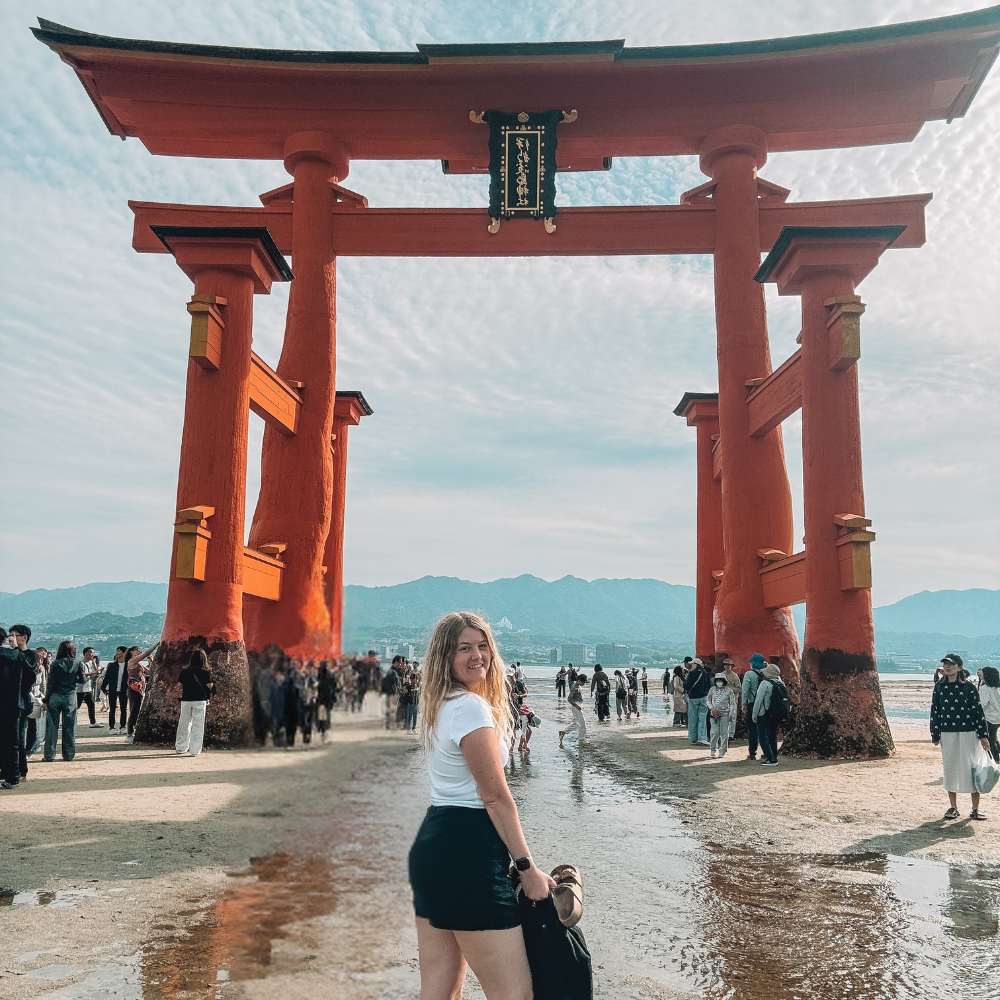
During high tide isn’t the only time to get a picture, either. I wouldn’t wait to get your floating photo if you want one, because the tide shifts during the day, revealing the sand. You can walk straight up to it! It was very cool getting to walk under and get close to the gate!
Daisho-in Temple
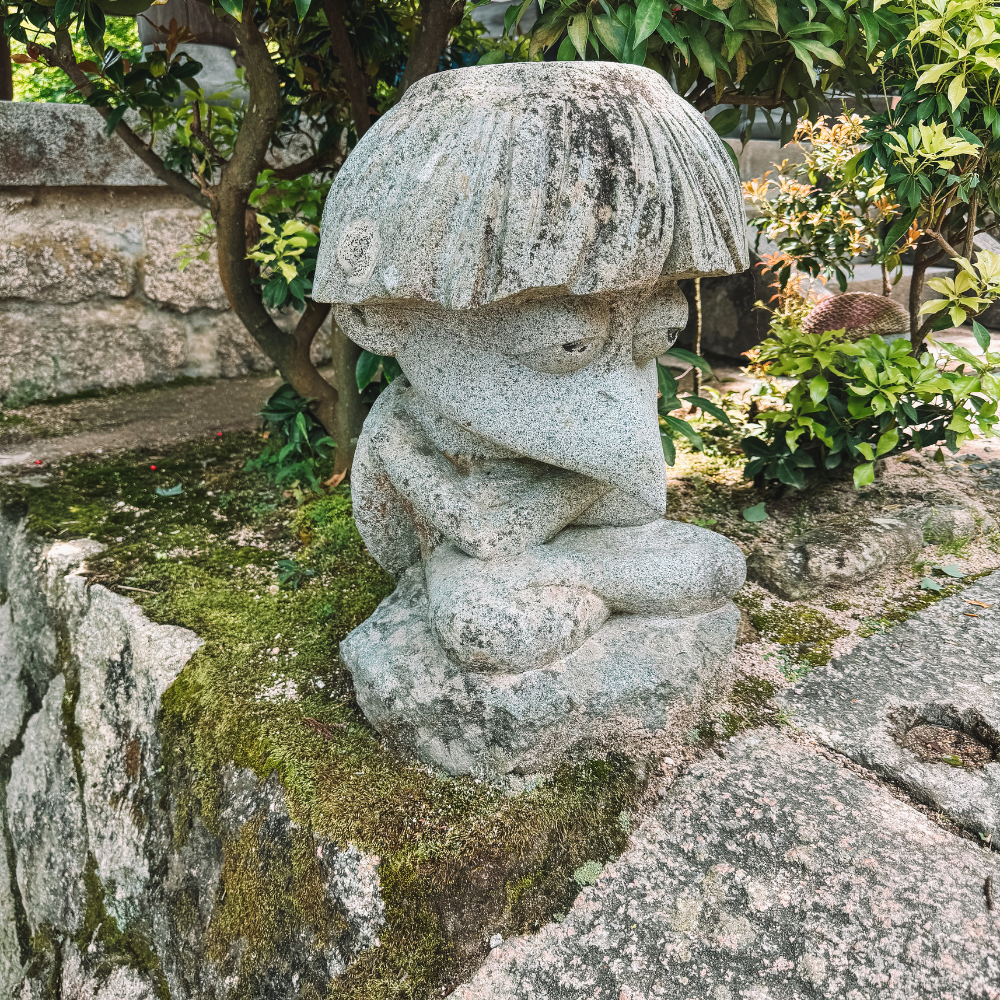
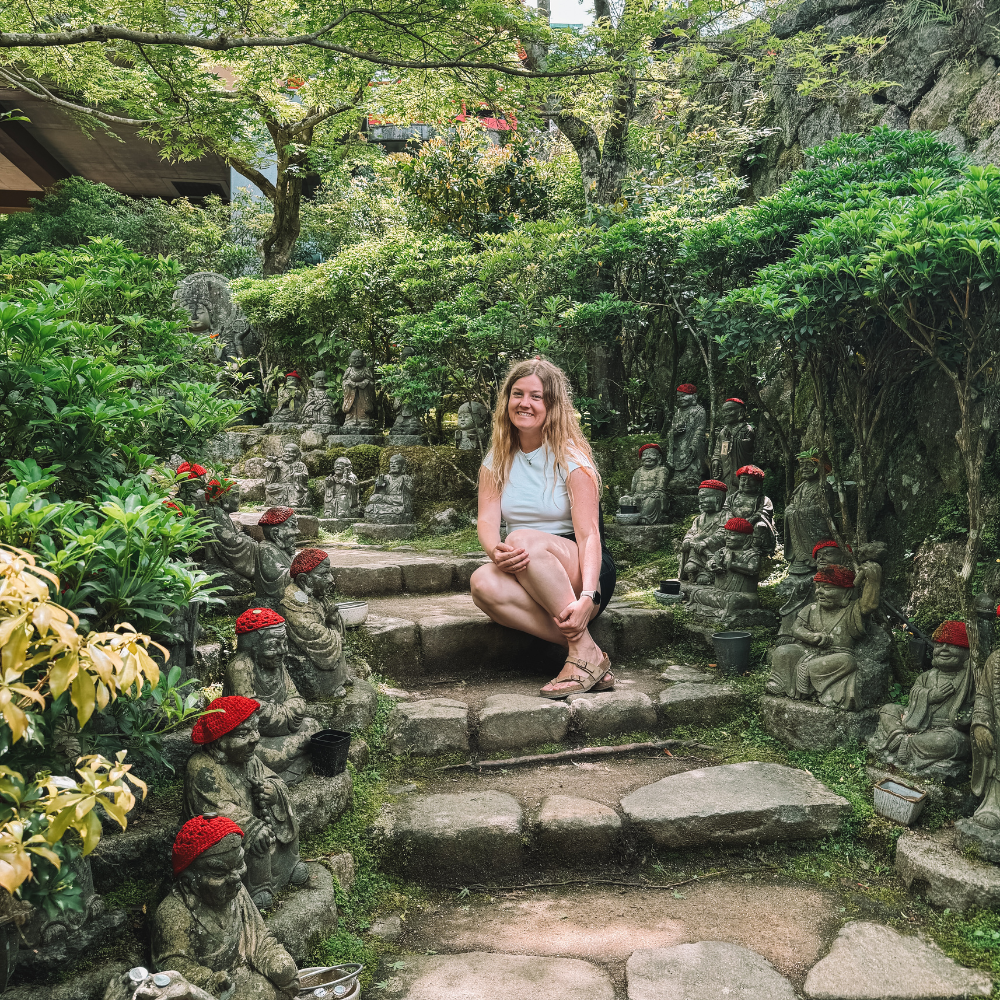
Daisho-in Temple is the oldest and most important Shingon Buddhist temple on Miyajima, dating back to 806 AD. Sitting at the base of Mount Misen, it’s known as one of Japan’s top temples for warding off bad luck and bringing good fortune. It’s accessible via a short hike up stone staircases, with many interesting statues and sights along the way.
My favorite feature of the temple was Gohyaku-rakan, a long stone staircase with 500 statues of Buddha’s disciples. The best part is they’re all wearing little red knitted hats, and it’s absolutely adorable.
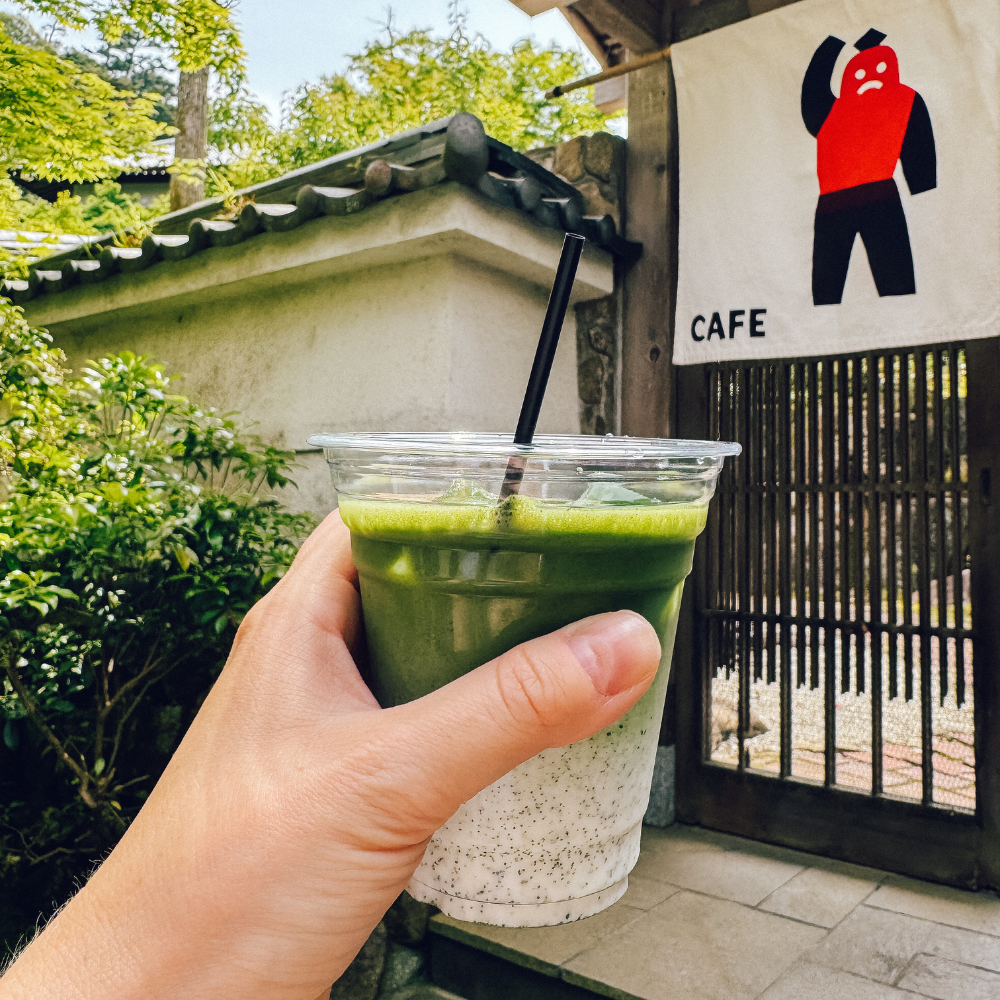
There’s also a cafe where the proceeds support the temple. I had an iced matcha latte, which ran me ¥900, not cheap, but I can think of it as a donation with a perk.
Miyajima Omotesando Shopping Street
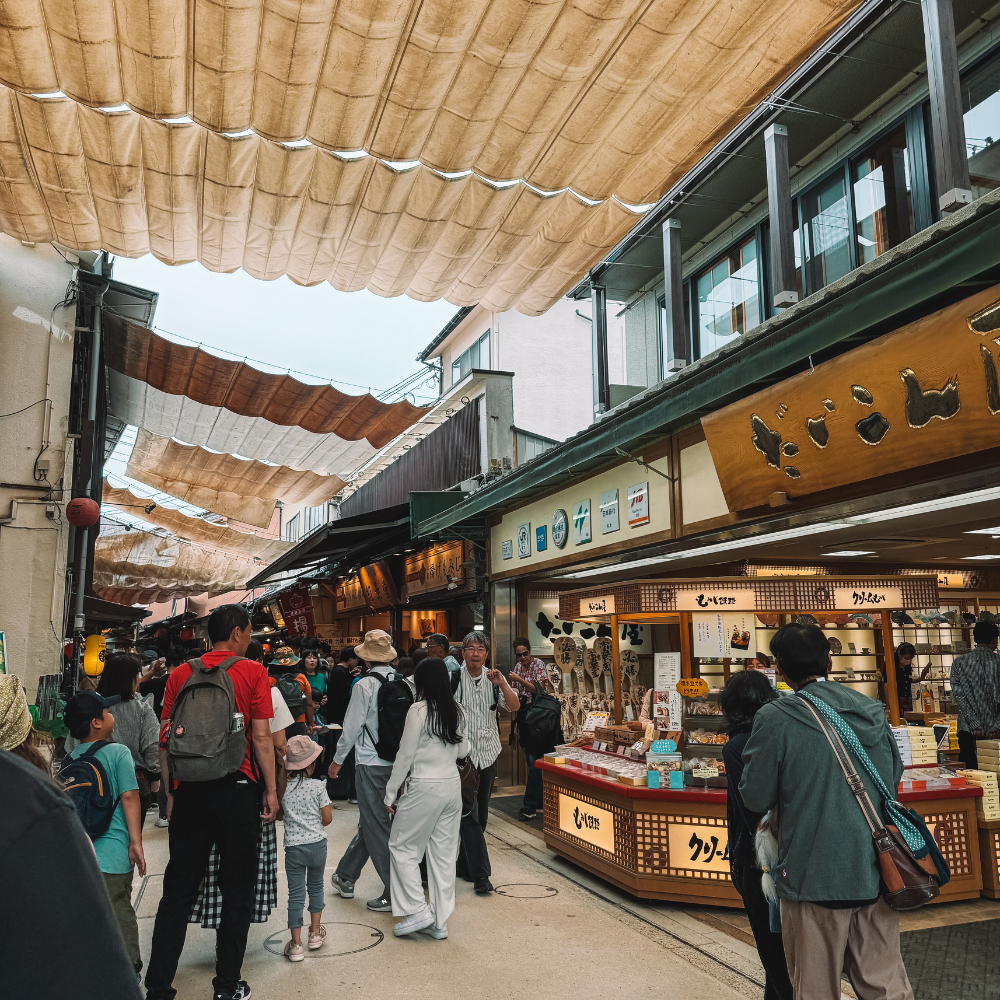
This is the main commercial hub on the island, featuring 350 meters of pedestrian-only street lined with local street-food vendors, restaurants, and souvenir and specialty shops. There are tons of places to get local delicacies and treats, including grilled and fried oysters, conger eel, fish cakes, and momiji manju.
If I weren’t traveling carry-on-only, I absolutely would have taken some things home from the soy sauce shop! Make sure to have cash on hand, as most stalls don’t take cards.
Miyajima Oysters
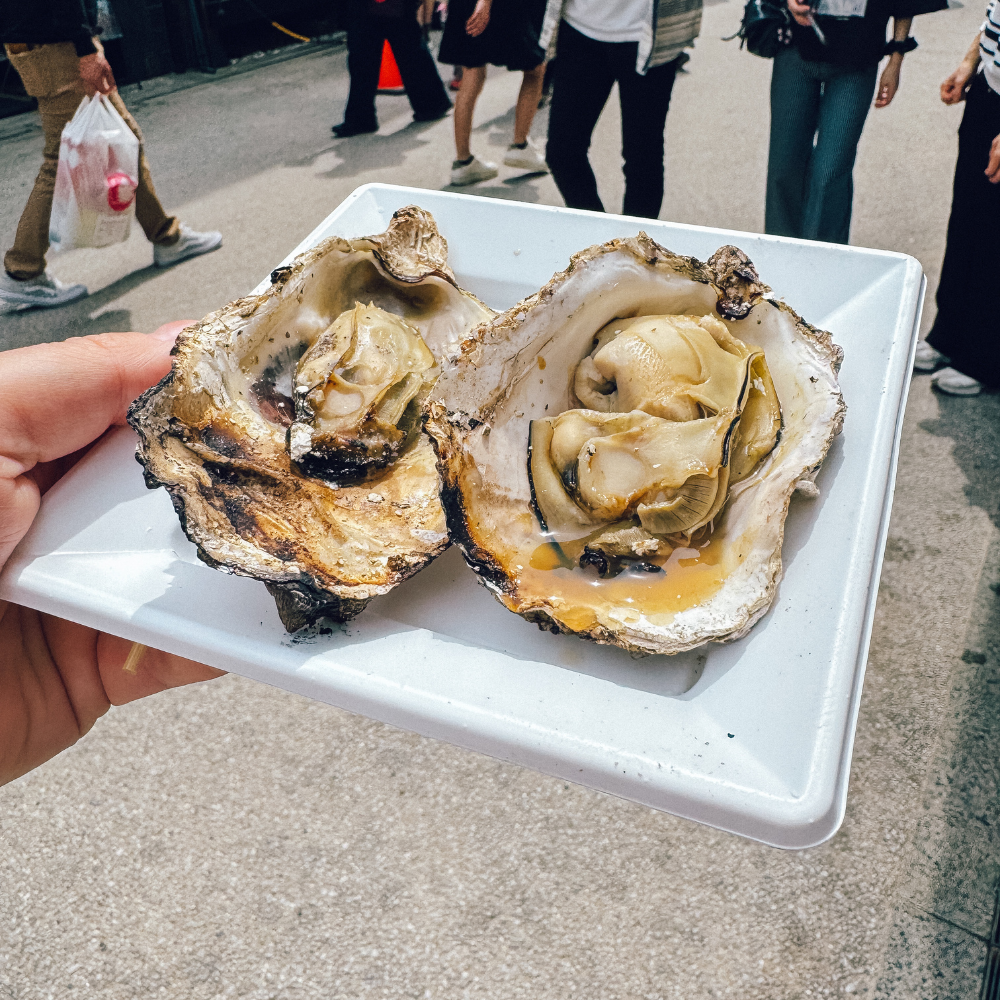
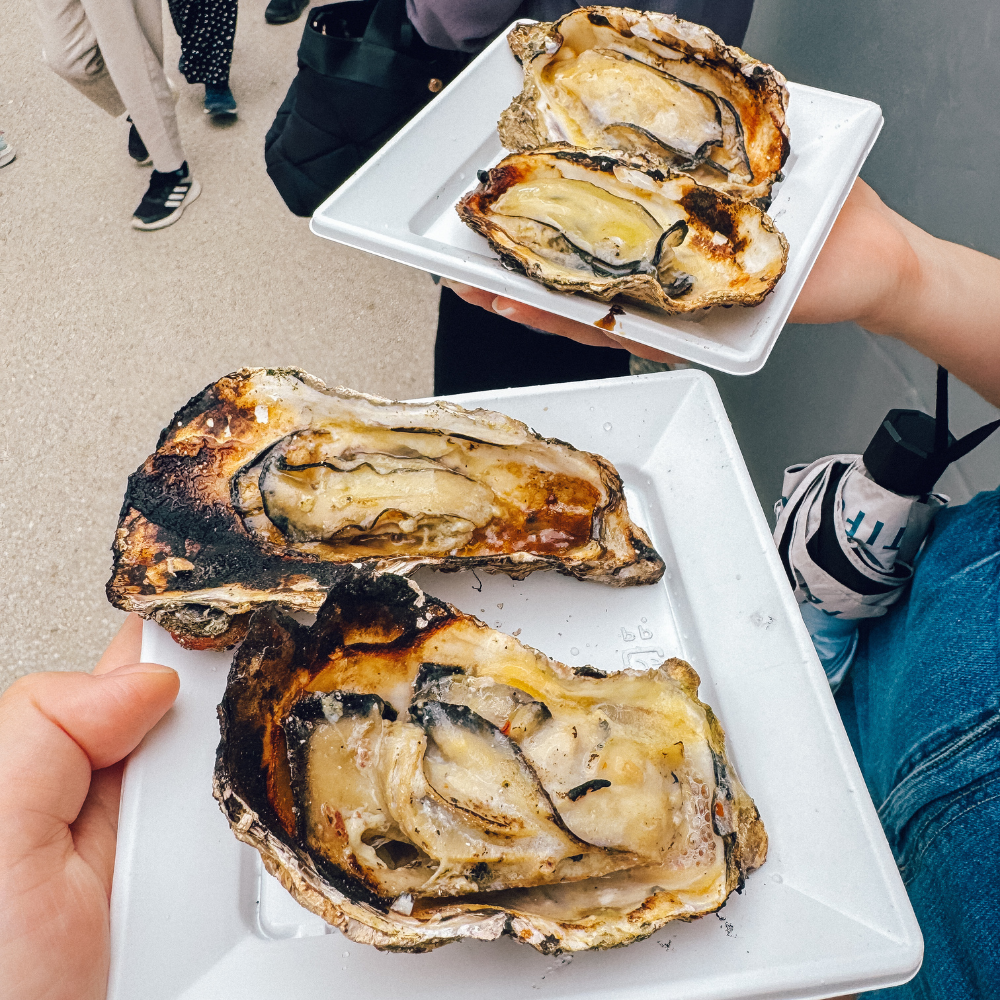
Prized for their large size and plump, rich, sweet meat, resulting from the nutrient-rich waters of the Ono-Seto bay, the oysters of Miyajima are a treat! You can find stalls and restaurants up and down Omotesando Street selling these in many forms, from grilled and fried to sandwiches, udon, and more. I personally love oysters on the half-shell, but all the options were cooked.
Most oysters came in sets of two, starting at around ¥600. At the first stall, I got two plain grilled oysters: one I ate on its own and the other with soy sauce, since that’s what everyone else was doing. They’re coming fresh off the grill, so do be careful, but they are divine! At the next stall, my sister and I got grilled with garlic butter and ajillo sauce, each having one. The extra flavor on them was lovely.
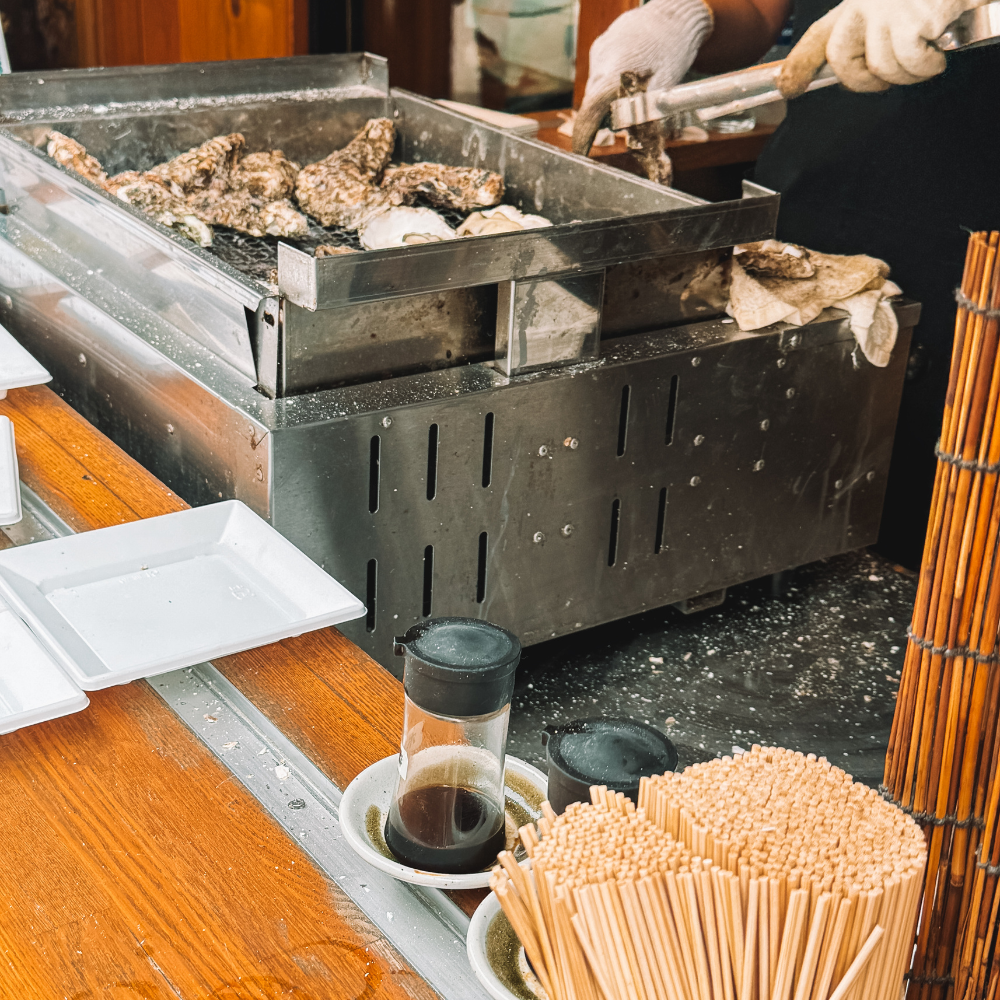
Unfortunately, I did not try the oysters in any other form, but I highly recommend getting the grilled ones. If you want to be more adventurous, inside the visitor center, there’s an oyster vending machine.
Momiji Manju
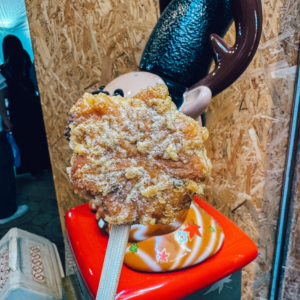
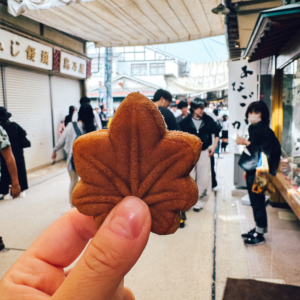
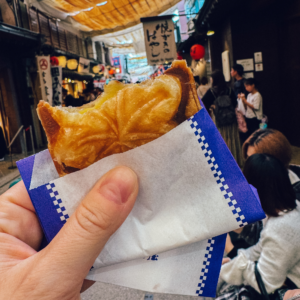
Shaped like a maple leaf, this castella-style cake is delectable and comes in many forms, including croissant, fried, ice-cream-filled, dipped, and stuffed. Traditionally, the cake is steamed. I took it upon myself to try four different kinds and ate six total over the course of the day.
In order, my favorites were the croissant (only one stand sells this style), the fried, the stuffed, and the ice cream-filled. I did not try the version you dipped in cream. The best fillings were sweet potato, custard, and red bean. No matter what your tastes are, these are great, and you should try at least two types!
Miyajima Drink Stand
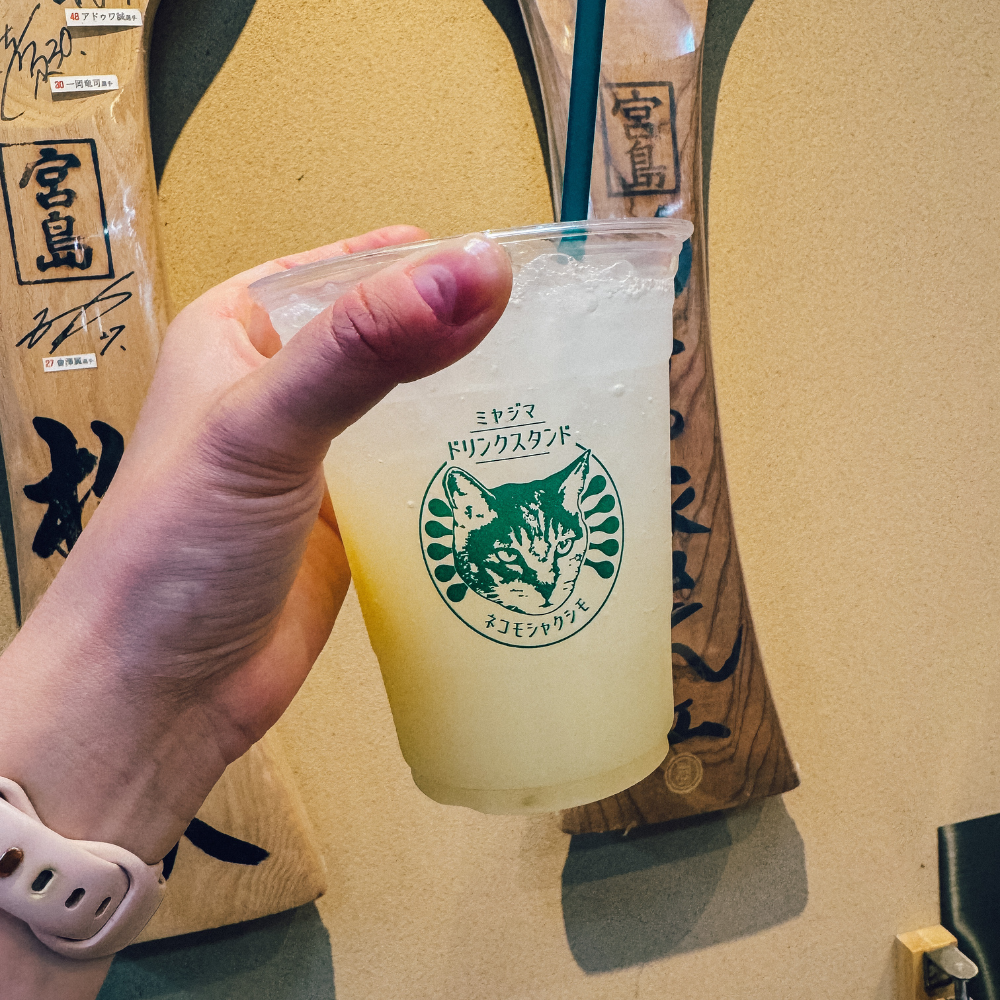
There are many places to get beverages, but I really enjoyed this spot! You order from a vending machine and give the employee your ticket. On less busy days, there’s a shop cat, but as it was Golden Week, the crowds were high, and sadly, they were nowhere to be seen.
I genuinely enjoyed the store’s cat-focused vibe and ordered the probiotic lemon soda sour. It was creamy, lemony, fizzy, and perfect! Mine had alcohol in it, but you can get an alcohol free version.
Ice Cream with Miyajima Cookies
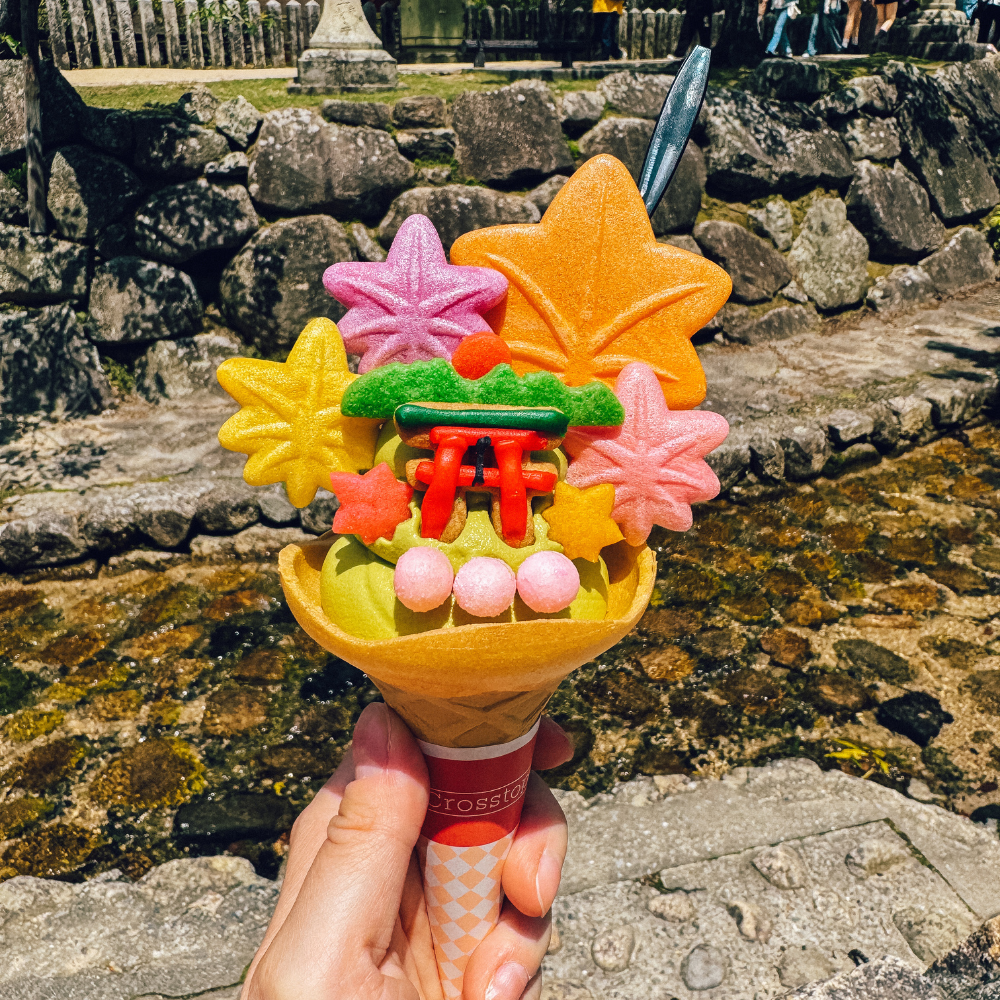
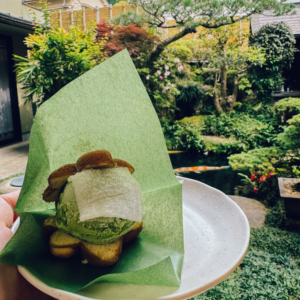
This is definitely more for Instagram, as there are plenty of places to get ice cream, but there’s a stall that serves soft-serve decorated with cookies and wafers in the island’s theme. It’s just fun and super cute! I got matcha, and it only cost ¥500 (cash only).
Miyajima’s Giant Rice Scoop
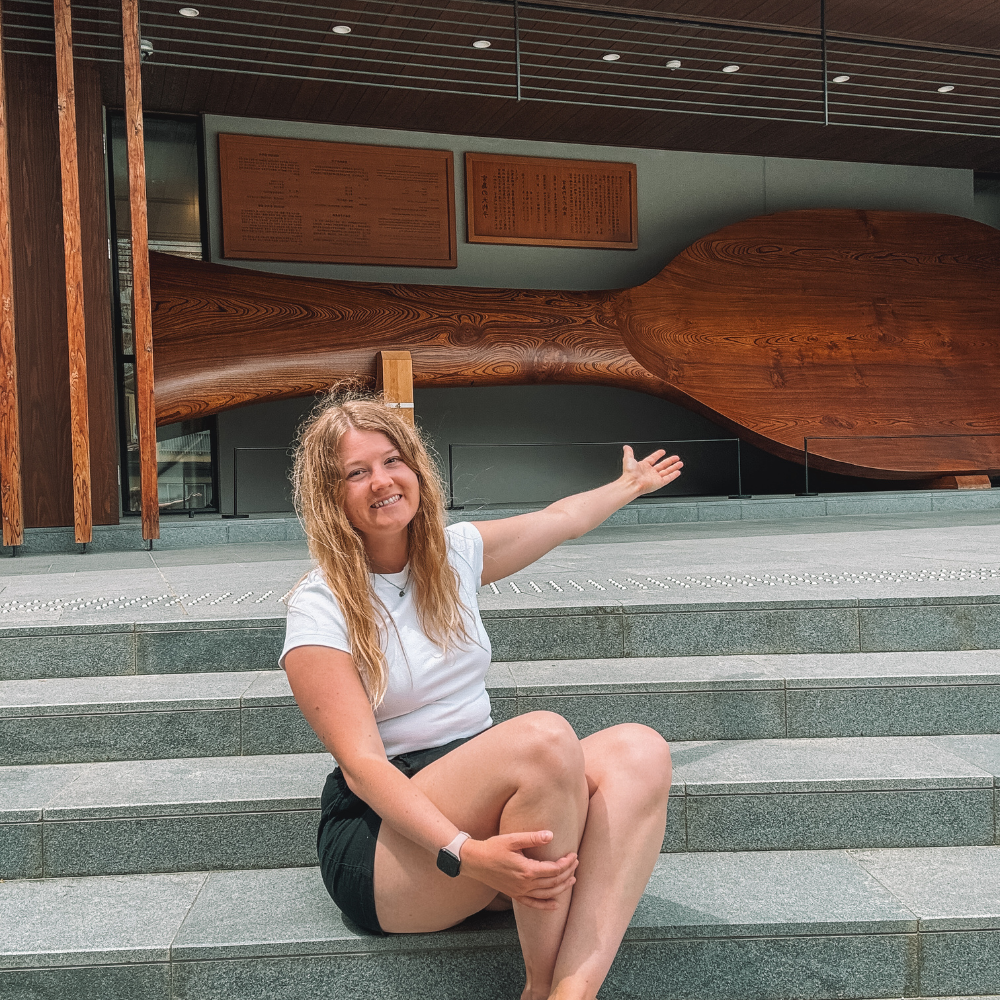
The largest rice scoop in the world, crafted from a 270-year-old Zelkova tree. It measures 7.7 meters (25 feet) in length, 2.7 meters (9 feet) in width, and weighs 2.5 tonnes. It represents Miyajima’s traditional woodcrafting heritage. Legend has it that Monk Seishin was inspired by a dream of the goddess Benzaiten to create the first rice scoops. They’re believed to bring good luck and health.
Originally displayed on Omotesando shopping street, it was relocated outside the Etto Miyajima Exchange Center in April 2021.
Final Thoughts
This island has a ton to offer, and so much that I missed. Sadly, halfway through the day, my sister rolled her ankle, which slowed us down dramatically. You could spend the whole day here hiking, visiting the aquarium, the folklore museum, and various shrines. There are plenty of places to stay, so you could make it an overnight trip as well.
Visiting Miyajima is really magical, and even on a half-day trip, I absolutely loved seeing the great torii gate, trying the oysters and momiji manju, and seeing the deer. It’s such an easy trip from Hiroshima, Iwakuni, and even Osaka, and it would be a shame to miss.